Zelensky survives his worst week since war began
Ukraine’s president is politically and militarily exposed after sacking defence minister and army chief

Adrian Blomfield
https://www.telegraph.co.uk/world-news/ ... sia-war%2F
25 July 2026
It has been one of the most tempestuous weeks of Volodymyr Zelensky’s https://www.telegraph.co.uk/volodymyr-zelenskyy/ presidency.
Indeed, the sackings the Ukrainian leader has made to try to end the turmoil could also make it one of the most consequential weeks of the war with Russia.
The latest storm – like similar upheaval a year ago – was largely of Mr Zelensky’s own making. Back then, he angered his people by trying to limit the independence of the country’s anti-corruption bodies.
This time, he riled them by sacking Mykhailo Fedorov, https://www.telegraph.co.uk/news/2026/0 ... o-fedorov/ his popular young defence minister, just six months after appointing him – a move many Ukrainians saw, rightly or wrongly, as another attempt to protect vested interests and resist genuine reform.
On both occasions, Mr Zelensky was forced into retreat, though this time not as far as the protesters who poured onto the streets of Ukraine’s biggest cities demanded.
After six days of crisis talks, he swung the axe again, yielding to their calls to dismiss Oleksandr Syrsky, https://www.telegraph.co.uk/world-news/ ... -protests/ the commander-in-chief whose bitter feud with Mr Fedorov had paralysed the military’s top leadership.
Whether Mr Zelensky also bows to demands to reinstate the defence minister https://www.telegraph.co.uk/world-news/ ... r-fedorov/ he ousted remains to be seen. The two men have repeatedly met to discuss his future.
In the meantime, Mr Fedorov has already secured a significant victory, prevailing on the president to appoint his close ally, Mykhailo Drapaty, a swashbuckling battlefield commander and military moderniser, as Ukraine’s new commander-in-chief.

Yevgeniy Khmara (left), the acting defence minister, with Mykhailo Drapaty, the new commander-in-chief of the armed forces Credit: Getty
Even before the saga has run its course, its political, societal and, above all, military implications are becoming clear. Yet again in Ukraine, https://www.telegraph.co.uk/ukraine/ the street has spoken.
The country has a long history of popular protests overturning the political status quo. Demonstrations have swept away Moscow-backed strongmen, overturned fraudulent elections and forced governments to reverse unpopular policies.
This time they ultimately cost the country’s top general his job, forcing out a decorated war hero who had become so unpopular in the ranks that many brigade commanders referred to him as “the Butcher”, for what they saw as his willingness to squander soldiers’ lives.
Ukraine’s constitution bars elections during wartime. Yet many Ukrainians argue that the fact that protests are not only tolerated, but produce tangible results, demonstrates that democracy and accountability remain alive.
Contrast that, they say, with Russia, where someone holding up a blank sheet of paper in Red Square would barely have time to count to 10 before being bundled away by Vladimir Putin’s https://www.telegraph.co.uk/vladimir-putin/ ubiquitous security forces.

Activists took to the streets to protest against the dismissal of Mr Fedorov as defence minister Credit: AP
Yet for all that, the episode has been deeply damaging. As one MP from Mr Zelensky’s own party acknowledged, the appearance of dysfunction and division plays into Russia’s hands, at a moment when momentum on the battlefield has begun to swing back towards Ukraine.
The MP, a Zelensky loyalist who opposed the decision to remove Mr Fedorov, told The Telegraph:
The Kremlin will undoubtedly relish the fact that the affair has weakened Mr Zelensky’s authority.We have given Putin a gift.
Once again, said Volodymyr Fesenko, a political analyst in Kyiv, an unforced error has left the Ukrainian president politically exposed. It has, he said, fuelled criticism at a time when his standing had already been dented by the scandals that culminated in the resignation of his chief of staff, Andriy Yermak, https://www.telegraph.co.uk/world-news/ ... rom-grace/ in November.
Mr Fesenko said:
He has successfully overcome these crises. However, the escalating trend of these crises, and the domestic policy mistakes that cause them, is dangerous for Zelensky.

Mr Zelensky’s authority has been weakened by the fallout from his sacking of his defence Credit: Shutterstock
Like many leaders, Mr Zelensky has his flaws. Yet in this instance, he has found himself caught in a predicament that, for better or worse, could help redefine not only Ukrainian politics but the way Ukraine fights.
The political ramifications are significant. The military ones may prove far more enduring.
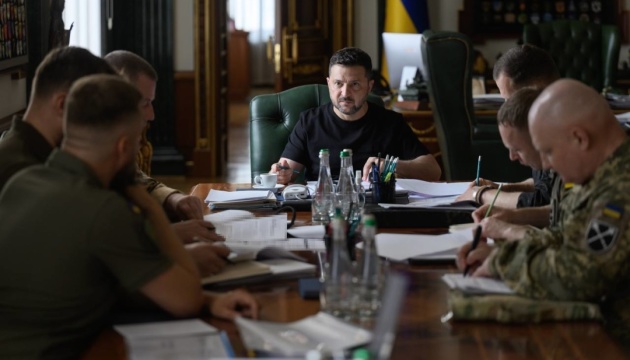
For months, Mr Zelensky vainly attempted to maintain the peace between Mr Fedorov and Gen Syrsky and to keep the squabbling away from public view.
Every recent meeting involving the two men reportedly simmered with tension – hardly surprising given their radically different visions for the future of Ukraine’s armed forces.
A quarter of a century older than the 35-year-old Mr Fedorov, Gen Syrsky was the embodiment of the old guard. Unquestionably courageous, with a string of strategic successes to his credit, he planned the defence of Kyiv in 2022 and the astonishing counter-offensive in Kharkiv later that year.
But for many younger officers, he had become, in the words of one drone commander, a “dinosaur”: steeped in a Soviet mindset, willing to risk his men’s lives needlessly and, above all, incapable of grasping the technological demands of a rapidly evolving battlefield.

President Zelensky and Gen Oleksandr Syrsky, described by younger officers as a ‘dinosaur’ for his aversion to hi-tech warfare Credit: Getty
Mr Fedorov, by contrast, was the archetypal disruptor, viewed by old-school officers as a T-shirt-wearing upstart who spoke the same incomprehensible patter as the Silicon Valley tech entrepreneurs with whom he mixed so easily. To Gen Syrsky, his enthusiasm for autonomous warfare and AI at the expense of more conventional methods amounted to a flirtation with disaster.
A clash of wills between the hyperactive reformer and the unyielding traditionalist was almost inevitable.
Mr Fedorov argued that Ukraine’s drone strategy was paying dividends, with long-range strikes crippling Russia’s energy sector and sustained attacks on supply routes into occupied Crimea repeatedly disrupting Moscow’s logistics.
The success of Ukraine’s drone campaign during Mr Fedorov’s brief tenure was undeniable. But Gen Syrsky griped that it had come at a price, with funding diverted from ammunition procurement, particularly artillery shells.
The two men repeatedly found ways to undermine each other. Mr Fedorov launched an audit that uncovered £5bn of overspending, subjected officials to lie detector tests, and, according to allies, infuriated parts of the defence establishment by blocking attempts to steer lucrative contracts towards favoured companies.

The president appointed Mykhailo Fedorov defence minister six months ago Credit: Reuters
Mr Fedorov also increased pay for front-line infantry, proposed merging underperforming brigades and transferring soldiers to stronger but understaffed units, reformed troop rotation and championed technology designed to reduce casualties.
Gen Syrsky saw many of these reforms as an encroachment on his authority. He responded by creating additional brigades, breaking up some of Ukraine’s strongest units and frustrating attempts to strengthen technically innovative formations, according to Jack Watling of the Royal United Services Institute. https://www.rusi.org/
His supporters argue that his concerns were not without foundation. An excessive focus on drones and innovation at the expense of more conventional capabilities carries obvious risks, they say.
Unlike Mr Fedorov, whose lack of military experience inevitably narrowed his perspective, Gen Syrsky had spent decades commanding across the full spectrum of warfare. That Mr Zelensky initially chose to dismiss his defence minister rather than his commander-in-chief, despite intense pressure to do the opposite, suggested he shared at least some of those reservations.
Whatever the merits of that debate, argues Mr Watling, open defiance of defence ministry orders is incompatible with a country seeking closer integration with Europe, where civilian control of the military is a fundamental democratic principle.

After he was axed, Mr Fedorov accused Gen Syrsky of hindering reform and dividing Ukraine Credit: Getty
It is a point Mr Fedorov himself made during a dramatic press conference in an underground Kyiv car park after his dismissal. In an unusually blunt public critique of Ukraine’s wartime leadership, he challenged the narrative that the war effort was functioning smoothly, accusing Gen Syrsky of blocking reform at every turn.
He said:
Rather than finding new ways to defeat Russia, Gen Syrsky had insteadWe faced a complete blockage of all our initiatives.
figured out how to split the country,
argued Mr Fedorov.
It was a startling intervention, one that only galvanised the protesters, who perhaps saw in Mr Fedorov’s travails their own struggle against Ukraine’s old way of doing things.
By ultimately yielding to their demands, Mr Zelensky effectively acknowledged that a generational shift is under way. Gen Drapaty, the new commander-in-chief, is 43 and shares Mr Fedorov’s zeal for innovation, along with a reputation for compassion that eluded his predecessor.
Whether Mr Fedorov himself returns to his position is now almost beside the point. His vision is in the ascendancy. As one protest placard declared:
The younger generation has spoken. The president has yielded. The way Ukraine wages war may never be the same again.Fedorov is innovation. Old grandpas are degeneration.