
Fourteen Years, Same Outcome: Is It Time to Rethink the UN's Approach to Eritrea?
Daniel Teklai
https://eritreanext.substack.com/p/four ... come-is-it
Jul 07, 2026
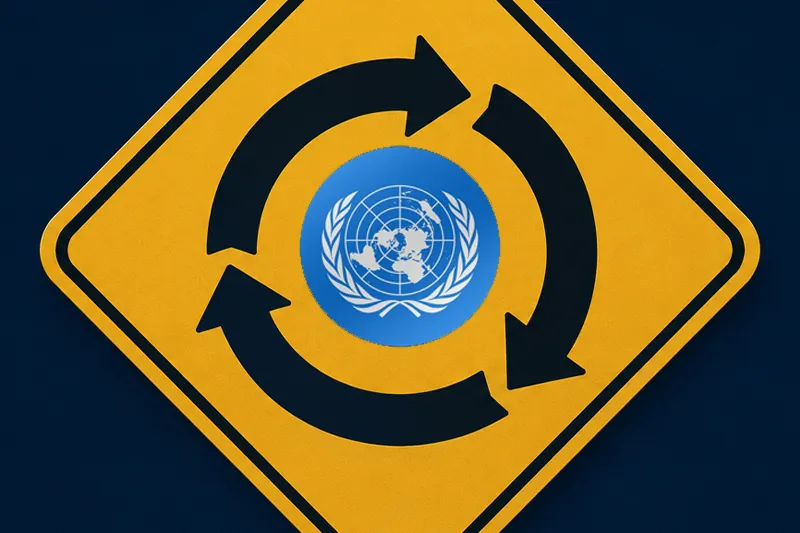
Every year, a familiar cycle unfolds in Geneva.
The United Nations Human Rights Council debates the human rights situation in Eritrea, renews the mandate of its Special Rapporteur, issues another resolution, and calls for greater accountability. Eritrea rejects the findings, denounces the mandate as politically motivated, and cooperation remains frozen.
The following year, the process repeats.
This cycle has continued since 2012.
After fourteen consecutive mandate renewals, it is worth asking an uncomfortable but necessary question: if the objective is to improve conditions inside Eritrea, what evidence suggests that repeating the same approach will produce a different outcome?
This is not an argument against human rights scrutiny. It is an argument for evaluating whether the current mechanism is achieving its intended purpose.
When a Mechanism Becomes a Stalemate
Measured by outcomes, the record is difficult to ignore. Fourteen years of country-specific reporting have not produced sustained cooperation between Eritrea and the Human Rights Council. They have not created a meaningful diplomatic opening, established a framework for constructive engagement, or generated measurable progress in the relationship between the two sides. Instead, both have settled into predictable positions that satisfy neither accountability nor dialogue.
At some point, persistence alone cannot be mistaken for effectiveness.
The challenge is not simply one of implementation. It is increasingly one of institutional design.
The current framework creates few incentives for cooperation. Eritrea views the mandate as selective and politically driven, while many member states continue to regard it as an essential accountability mechanism. As these positions have hardened, annual mandate renewals have become increasingly procedural rather than transformative. A mechanism intended to encourage change, now risks reinforcing the very stalemate it was created to overcome.
Geopolitics has further complicated the picture. International attention toward Eritrea has often risen and fallen alongside broader regional developments in the Horn of Africa. Shifting alliances, armed conflicts, peace agreements, and changing diplomatic priorities have all influenced the intensity and character of international engagement. Whether intentionally or not, this has contributed to perceptions that the Eritrea file is shaped not only by human rights concerns but also by wider regional politics.
Breaking this cycle, requires more than another resolution.
A Different Path Forward
One practical alternative is to place greater emphasis on the Universal Periodic Review, the UN’s mechanism under which every member state undergoes periodic human rights review according to the same process. A more universal framework would not eliminate scrutiny, but it could reduce perceptions of exceptionalism while creating greater space for technical cooperation and sustained dialogue.
Equally important, is broadening the conversation itself.
International discussions have focused overwhelmingly on civil and political rights. Eritrean officials, by contrast, have consistently argued that social and economic development deserves equal recognition within the human rights framework. These perspectives are often presented as mutually exclusive, yet international human rights law recognizes both.
Regardless of where one stands in this debate, Eritrea’s development record deserves to be part of an honest assessment. Progress in expanding primary healthcare, improving maternal and child health, increasing educational access, and extending basic services has been documented by several international development agencies. Acknowledging these achievements does not diminish concerns about civil liberties. Rather, it provides a more complete picture of the country’s trajectory and creates opportunities for engagement built on areas of demonstrated progress.
Constructive diplomacy does not require abandoning principles. It requires creating conditions under which principles can produce results.
Recognizing progress where it exists, can help establish the trust needed to address more difficult issues over time. Confidence-building, technical cooperation, and phased engagement are not substitutes for accountability; they are often the conditions that make accountability more achievable.
Fourteen years is enough time to evaluate whether a policy is working.
The question is no longer whether Eritrea should remain subject to international scrutiny. The more important question, is whether the current approach remains the most effective vehicle for achieving its stated objectives.
If the answer is no, then the burden shifts from those calling for change to those arguing that another fourteen years of the same strategy will somehow produce a different outcome.
Effective diplomacy is measured not by the consistency with which policies are repeated, but by the progress they produce. It may be time for the United Nations to move beyond managing the stalemate and begin designing a framework capable of breaking it.
After fourteen years of stalemate, the real challenge is no longer maintaining the conversation. It is transforming a cycle of perpetual confrontation into one of constructive dialogue.


