Ethiopian News, Current Affairs and Opinion Forum
Zmeselo
Senior Member+
Posts: 37343
Joined: 30 Jul 2010, 20:43

Eritrea-Sweden

Post by Zmeselo » 17 Dec 2025, 15:45


Local News
Minister Osman Saleh meets Swedish Minister of Foreign Affairs

https://shabait.com/2025/12/17/minister ... n-affairs/


Asmara, 18 December 2025 – Mr. Osman Saleh, Minister of Foreign Affairs, met and held talks with Ms. Maria Malmer Stenergard, Swedish Minister of Foreign Affairs, at his office this afternoon.

The two Foreign Ministers discussed bilateral relations between Eritrea and Sweden, regional developments, as well as peace and security in Africa and the Red Sea region.

Likewise, Ms. Leul Gebreab, Minister of Labor and Social Welfare, in a meeting she held with Ms. Maria Malmer Stenergard, provided a briefing on the programs and achievements Eritrea is undertaking to ensure social justice.

Ms. Maria Malmer Stenergard arrived in Asmara at mid-day today for a two-day working visit.

Upon arrival at Asmara International Airport, Ms. Maria Malmer Stenergard was welcomed by Mr. Estifanos Habtemariam, Director General of the Desks Department at the Ministry of Foreign Affairs.


Zmeselo
Senior Member+
Posts: 37343
Joined: 30 Jul 2010, 20:43

Re: Eritrea-Sweden

Post by Zmeselo » 17 Dec 2025, 15:53


General
Statement by Ambassador Negassi Kassa At 120th Session of the Organization of African, Caribbean & Pacific States, (OACPS), Council of Ministers; Brussels, 13th December 2025

https://shabait.com/2025/12/17/statemen ... mber-2025/


Your Excellency Honourable Chairman,

Allow me at the outset to convey to this august body the warm greetings from your colleague H.E. Mr. Osman Saleh, Minister of Foreign Affairs of the State of Eritrea who could not participate in this session due to prior engagements.

It is my great honour to make a brief Statement, on behalf of my Minister, to the 120th Session of the Council of Ministers.

All protocol observed.

Your Excellency Chairman,


My brief intervention will focus on three issues namely peace and Security, unilateral Sanction and multilateralism.

On peace and security

For the Horn of Africa, peace, security and respect for sovereignty and territorial integrity are of paramount importance for stability, development and regional cooperation and integration.

One key pillar of the partnership within OACPS, and with its primary partner the EU, is the maintenance of peace and security within the partnership as well as at the global level.

The stability of the current international system depends on each state’s commitment to respect the cardinal principles that underpin it. As stated in the UN Charter, the independence, sovereignty and territorial integrity of states cannot be negotiated or compromised; and States must refrain in their international relations from the threat or use of force. Unequivocal adherence to these principles, enshrined in the UN Charter, are conditions sine qua non for peaceful inter-state relations.

On Unilateral Sanctions

Eritrea is concerned that the imposition of unilateral sanctions on several OACPS countries, severely hampers their efforts to access international development and climate finance, achieve industrialization and mobilize private sector capital. This hinders the realization of the 2030 Agenda for Sustainable Development and success of OACPS respective regional development strategies and programs. Eritrea and other victim countries have been calling for the termination of these unjust sanctions.

On Multilateralism

Your Excellencies Mr. Chairperson,


The ever-growing interdependency between peoples and nations of the world necessitate the strengthening and reforming of the multilateral system to capacitate it to address shared threats and make use of collective opportunities. The commitment of the OACPS on multilateralism is evolving.

However, there is an urgent need to expedite the reform of the multilateral system at the global level to make it more representative, fair and just. This reform should address the continued marginalization of the countries in the South including the OACPS, in all aspects of global governance. The success of the reform will largely depend on extending the shared understanding on the indispensability of the system, to the necessity of creating a multilateral order that gives equal voice and influence on the hitherto marginalized parts of the world, including the OACPS, as part of the South.

Honourable Chairman

I wish to conclude by reaffirming Eritrea’s continued commitment to contribute its share to the promotion of peace and security in the Horn of Africa and the Red Sea Regions; and the OACPS at large. Eritrea also remains committed to contribute to the collective effort of making OACP strong and visible in the international arena; and ensure its partnership with the EU and other strategic partners be a win-win engagement, that adds value to all Parties, through co-ownership.

I thank you!

Zmeselo
Senior Member+
Posts: 37343
Joined: 30 Jul 2010, 20:43

Re: Eritrea-Sweden

Post by Zmeselo » 17 Dec 2025, 16:03


____________


Teachers participate in a practical session, demonstrating the MIG/MAG welding machine. The training covers equipment setup, safety protocols, technique guidance, and supervised hands-on welding, empowering educators to effectively teach modern welding skills in Eritrea 's vocational programs.

These initiatives strengthen technical education and build a skilled workforce for Eritrea's industrial growth.


The training took place at Asmara Technical School, equipped with advanced "Timeway" machinery such as Drill Presses, CNC Mills, Horizontal Milling Machines, Vertical Turning Milling Centers, and CNC Lathes. This setup provided trainees with hands-on experience, enabling them to work directly with modern technology.

Courtesy of Mr. Amanuel Desale.

Zmeselo
Senior Member+
Posts: 37343
Joined: 30 Jul 2010, 20:43

Re: Eritrea-Sweden

Post by Zmeselo » 17 Dec 2025, 16:13

Marking a Global Milestone, Celebrating a National Partnership


Today, UNDP Eritrea commemorated 60 years of UNDP—not with a celebration, but by visiting the heart of our partnership in Eritrea.

While UNDP’s global mission spans six decades, our dedicated collaboration with Eritrea began in 1992.


At the Ministry of Information, we explored an advanced digitalization and archiving system, showcasing innovation in action.

In Weki Zaghir, Serejka Sub-Zone, we saw firsthand the impact of collaborative efforts in driving sustainable development and strengthening community resilience.


The common thread? Eritrea’s ownership and leadership. Our role remains steadfast: supporting national priorities as a trusted partner.


Thank you to all our partners. Through collaboration and shared commitment, we are achieving milestones together and shaping a stronger path ahead.
@UNDPEritrea

Zmeselo
Senior Member+
Posts: 37343
Joined: 30 Jul 2010, 20:43

Re: Eritrea-Sweden

Post by Zmeselo » 17 Dec 2025, 16:17


Eritrea participated in a meeting organized by the Peacebuilding Commission on the peaceful settlement of border disputes in Central Asia, where the Kyrgyz Republic, the Republic of Tajikistan, and the Republic of Uzbekistan shared their experiences and historic achievements in resolving longstanding border issues through peaceful means.

Their success highlights the effectiveness of bilateral and trilateral mechanisms, sustained political dialogue, and confidence-building measures in addressing complex challenges. As trust continues to deepen among the three neighboring countries, Member States encouraged further regional cooperation and the strengthening of long-term regional stability.

These historic achievements are not only important victories for their peoples; they also stand as a powerful example of how regional challenges can be resolved through diplomacy, mutual respect, and a firm commitment to the principles of the UN Charter, which remain the strongest foundations for peace.


Member states expressed their appreciation to the distinguished representatives of Kyrgyzstan, Tajikistan, and Uzbekistan for sharing their valuable lessons and best practices with the Peace building Commission.
@AmbStesfamariam

Zmeselo
Senior Member+
Posts: 37343
Joined: 30 Jul 2010, 20:43

Re: Eritrea-Sweden

Post by Zmeselo » 17 Dec 2025, 16:43


On Dec 13, Ambassador Estifanos delivered a lecture at Meguro City College on the
Question of Peace and Stability in the Horn of Africa.


We sincerely thank the attentive audience and organizers for this opportunity to share Eritrea's perspective.
🇪🇷 🇯🇵 @EritreaEmbJP


______________


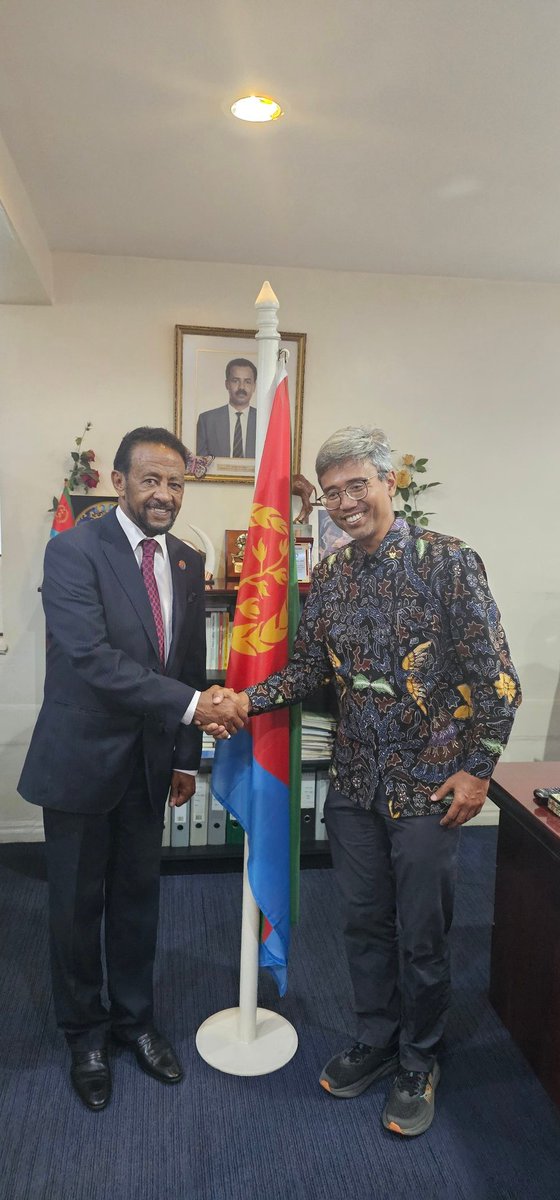
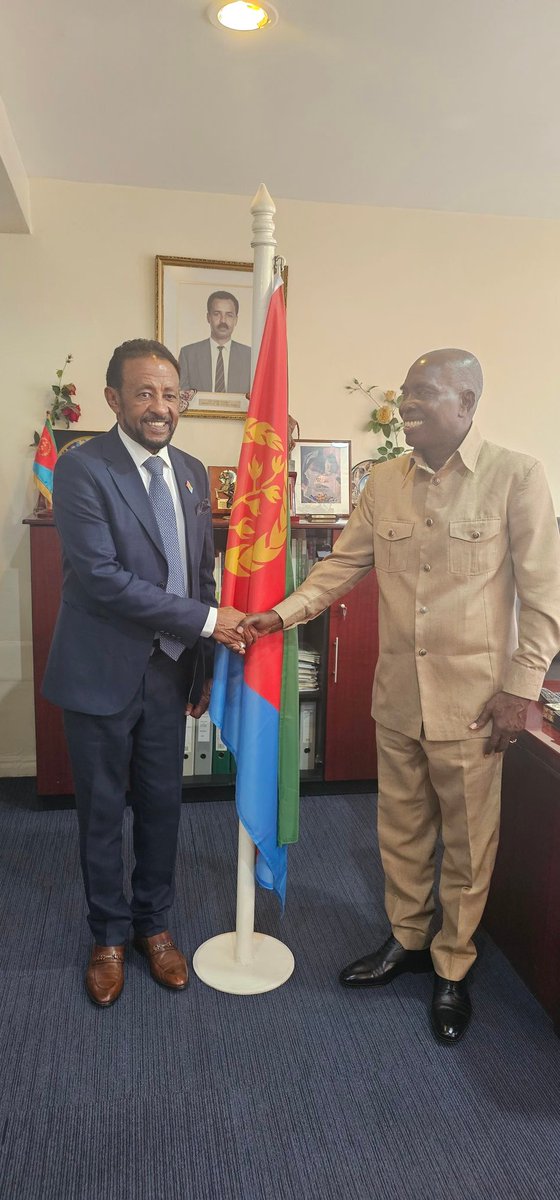
Honored to receive their Excellencies, Ambassador of Indonesia, T.B.H Witjaksono Adji, and the High Commissioner of the Republic of Ghana, H.E Paul Evans Aidoo for their courtesy calls, at the Embassy of Eritrea respectively.

Our fruitful discussions covered:

• Strengthening our bilateral relationships.
• The regional and global situation.
• The beauty and hospitality of Kenya as well as Eritrea and their countries, Indonesia and Ghana

I thank both Ambassadors for the very constructive and engaging dialogue.

Wishing them joyful holidays and a prosperous Happy New Year 2026!
@BeyeneRussom

Zmeselo
Senior Member+
Posts: 37343
Joined: 30 Jul 2010, 20:43

Re: Eritrea-Sweden

Post by Zmeselo » 17 Dec 2025, 17:06

The False Narrative of Eritrean Economic Dependence

Africanviews

6 hours ago

[Translated from ERMedia FB post]


https://africanviews.net/the-false-narr ... ependence/

Some political voices in Ethiopia continue to promote the false notion that,
Eritrea is a country that seeks to develop within the Ethiopian economy.
During the EPRDF era, this baseless narrative led to nothing but a disastrous and costly war. Today, the Prosperity Party continues to echo the same argument.

Despite the fact that it is the Addis Ababa regime attempting to seize Eritrea’s resources and Red Sea coastline, the Prosperity Party, like with all the issues it invents to manipulate public opinion, is trying to portray Eritrea as a country seeking to benefit from the Ethiopian economy.

To provide context, we revisit an article published in Hidri Magazine in January 1998, which reflects the Eritrean government’s views on economic relations between Eritrea and Ethiopia. Here, we present the article and welcome your views.


__________


The Economic Situation in Eritrea and Ethiopia: Open or Closed?

(Hidri Magazine, January 1998)

Over the past six years, relations between Eritrea and Ethiopia have been exemplary by any measure. After decades of bloody conflict spanning thirty years, the two countries achieved peace, signed a comprehensive cooperation agreement, and worked diligently to implement it. This arrangement allowed their peoples to move, live, and work freely across borders without the need for passports or visas.

This partnership helped both nations heal from the wounds of war more quickly, address shared challenges together, and revive their economies. Its benefits were evident to their peoples, their friends, and even their adversaries. While citizens took pride in the relationship and sought to strengthen it, and allies praised and supported it, enemies attempted to conceal disagreements and sow divisions, recognizing that this partnership stood as the main obstacle to their destructive plans.

The foundation of cooperation between Ethiopia and Eritrea is transparent. The two peoples are bound by shared history, culture, and collective struggle and sacrifice. Their common aspiration is to live in prosperity and human dignity, free from poverty and the legacies of war and oppression. Just as they united to defeat the Dergue, they understand that they can achieve their goals today if they join their efforts.

The governments of Ethiopia and Eritrea, born of this shared struggle and victory, do not differ in their vision or outlook on strategic matters. However, each country faces its own unique circumstances and therefore pursues policies it considers appropriate. For example, their approaches to nation-building are distinct, and their macro-economic policies are likewise tailored to their individual needs.

Ethiopian Economic Policy

Ethiopia’s development strategy is focused on rural development, where the majority of the population resides. It emphasizes agricultural development and industry based on agricultural products. To generate and properly utilize the foreign exchange required for implementing development programs and servicing Ethiopia’s debt, all foreign exchange transactions are permitted only through regulated banks. In trade, the government applies taxes and duties designed to protect domestic products, ensuring that they are not overwhelmed by imported goods. Regarding investment, certain sectors are reserved for the government and citizens, while other sectors are open to domestic and foreign investors.

Economic Policy of Eritrea

Eritrea’s development objective can be summarized as economic growth with social justice. Its development model involves the government taking an initiative, caretaker, and facilitator role within the realities of a market economy. Eritrea implements fiscal, monetary, and investment policies that promote productivity, competitiveness, and exports. The economy is open, allowing withdrawals and deposits in any currency. All sectors of investment are accessible to both local and foreign investors who make meaningful contributions. Even retail and wholesale trade, import trade, and commission agencies—which are traditionally reserved for nationals—are open to citizens of countries that grant reciprocal investment rights to Eritreans.

Economic Relations Between Eritrea and Ethiopia

Despite differences in macro-economic policy between Eritrea and Ethiopia, these differences have been diminishing over time and do not prevent close economic relations. Because their economies are interconnected and complementary, Ethiopia’s development benefits Eritrea, and Eritrea’s development benefits Ethiopia. Conversely, the backwardness of one weakens the other rather than strengthening it.

Even countries such as Eritrea and Ethiopia, which are historically, culturally, politically, and economically linked, are pursuing different initiatives in this era of globalization and intense competition. In our region, efforts are being made to dismantle trade barriers and promote economic integration through COMESA (the Common Market for Eastern and Southern Africa). The expanding fifteen-nation European Union provides another example. Similarly, the United States is tied to Canada and Mexico through the NAFTA (North American Free Trade Area) agreement. All three entered this arrangement because they believe convergence will benefit them, despite rigid macro-policies and differences in growth, population, and economic strength. At a time when even major countries are lowering tariff and non-tariff barriers and forming trade alliances to remain competitive, erecting new barriers and imposing additional restrictions is unlikely to be useful.

Returning to Eritrea and Ethiopia, their economic ties are deeper than those of many other neighboring states, and the movement of people between the two countries is so extensive that implementing a rigid or binding economic separation would be extremely difficult, even if it were desired. Given the existing challenges and the lack of adequate financial institutions and facilities, measures taken to enforce such arrangements would likely result in increased consumption costs and economic losses. There is little doubt that various informal mechanisms would emerge to mitigate these constraints, leading to widespread exchange of the Naqfa and the Birr outside official channels.

The majority of the people in Eritrea and Ethiopia seek good relations and friendship. They understand that closer economic ties, expanded trade, and fewer barriers and restrictions are in their best interests. On the other hand, there are a few individuals in both countries, particularly in Ethiopia, who distort the bilateral relationship as if it benefits one country more than the other. Some of these have accused Eritrea, living at the expense of Ethiopians. They portray Ethiopia as great and powerful, possessing wealth and fortune and producing foreign exchange–earning products, while depicting Eritrea as poor, unable to feed itself, reliant on nothing but stones, and incapable of surviving independently.

Yet, Eritrea and Ethiopia are currently at the same stage of development. Indeed, Ethiopia is a large country with abundant natural resources and potential. While population size contributes to market growth, other factors such as lifestyle, purchasing power, and the size and structure of the domestic market are equally important. The government is striving to expand exports of higher-value processed and industrial goods, recognizing that relying on foreign exchange generated from raw materials and semi-processed goods is insufficient for sustainable development. Ethiopia’s wealth and development, however, benefit not only Eritrea but all its neighbours.

As for Eritrea, it is a small country with a limited domestic market. Although it possesses natural resources capable of supporting development, it does not take pride solely in these resources. Its focus is on developing human resources and increasing the productivity of its enterprises, which are currently underperforming, and on operating successfully in broader markets.

Eritrea possessed the foundation and potential for such development, 30 to 40 years ago. Until the 1960s, it was the country with the strongest industrial base in the region. Its range of products was competitive and in demand both within neighboring countries and beyond. This progress, however, was weakened during the reign of Haile Selassie and further crushed during his seventeen years of the Dergue rule. The legacy of that period has not entirely disappeared, and it continued to affect the EPLF during the revolutionary years. Yet, because efforts have been made to nurture this potential, reviving it—though difficult and requiring hard work—is not impossible, and can be achieved in a manner consistent with the realities of our time. The government and people of Eritrea are actively working toward this goal.

Just as Ethiopia’s development benefits Eritrea, the success of Eritrea’s efforts also benefits Ethiopia rather than being a loss. Already, peace between the two countries, balanced economic development, and the freedom of movement for their citizens are creating broader employment opportunities. Moreover, the growing number of citizens from one country living and working in the other serves as a clear indication of the strengthening bond between Eritrea and Ethiopia.

New Challenges, New Opportunities

The current changes in economic relations between Eritrea and Ethiopia will affect both countries. Trade and services are now to be conducted in foreign exchange, primarily through the banking system. A directive has also been issued to regulate cross-border trade in terms of type, pricing, and form. In the context of countries that lack efficient institutional facilities, the cost of this approach—in terms of money, time, and consumption—is significant. Perhaps more concerning is its impact on the social interaction between the two peoples.

This new economic and trade approach is not without its benefits, even though it is not the preferred framework for Eritrea–Ethiopia relations. It will help Eritrea identify and address weaknesses that may have been obscured by operating with Ethiopia under a shared currency. It will also test whether Eritrea has the capacity to manage its fiscal and monetary policies independently, steer the course of its economy, and determine whether its institutions are adequate for that task. At the same time, it will give Ethiopia the opportunity to move forward along its chosen path without concern for the economic implications of its special arrangements with Eritrea.

In short, although this shift will cause temporary setbacks, it will undoubtedly contribute to building relations between the two countries on a more realistic and stronger foundation. In this sense, it is a blessing rather than a curse.

Deqi-Arawit
Senior Member
Posts: 16024
Joined: 29 Mar 2009, 11:10
Location: Bujumbura Brundi

Re: Eritrea-Sweden

Post by Deqi-Arawit » 19 Dec 2025, 02:48

Talk about a domestic cat which takes itself as a Siberian Tiger....


The reason behind the Swedish foreign minister visit to Eritrea is simple which is to convince the sodomite dictator to accept Eritreans which have comitted crimes in Sweden.

The swedes don't care about national or regional issues, their Priority is the well being of their citizens.

Zmeselo
Senior Member+
Posts: 37343
Joined: 30 Jul 2010, 20:43

Re: Eritrea-Sweden

Post by Zmeselo » 19 Dec 2025, 02:59

Of course the pedóphile refugee knows better, than the Swedish gov't itself.


Press release from the Ministry of Foreign Affairs

Minister for Foreign Affairs Maria Malmer Stenergard visits Eritrea

https://www.regeringen.se/pressmeddelan ... r-eritrea/

December 18, 2025

Minister for Foreign Affairs Maria Malmer Stenergard will visit Asmara, Eritrea, on 17-18 December 2025. The purpose of the visit is to engage in dialogue on regional and bilateral issues with representatives of the Eritrean government.
During my visit, we will discuss regional issues, such as the war in Eritrea's neighboring country Sudan and issues that are significant for the relations between our countries,
says Foreign Minister Maria Malmer Stenergard.

This is the first visit to Eritrea from a Swedish government representative, since Sweden recognized Eritrea as a state in 1993.


Deqi-Arawit wrote:
19 Dec 2025, 02:48
Talk about a domestic cat which takes itself as a Siberian Tiger....


The reason behind the Swedish foreign minister visit to Eritrea is simple which is to convince the sodomite dictator to accept Eritreans which have comitted crimes in Sweden.

The swedes don't care about national or regional issues, their Priority is the well being of their citizens.

Post Reply