Lifelines of Progress and Development
Bana Negusse @shabait
Sep 9, 2025

A well-known Chinese proverb observes that:
if you want to be wealthy, build a road.
Beyond its simplicity lies a powerful truth: roads are the lifelines of development. History and a large body of empirical research alike show that transportation networks are not just conveniences but prerequisites for economic growth, social inclusion, and national integration. Roads reduce isolation, connect markets, improve access to health and education, and lay the groundwork for opportunity. Yet despite these clear benefits, hundreds of millions of people worldwide – particularly in developing regions – still lack adequate road infrastructure, and Africa remains the region where this gap is most striking.
Across much of the continent, road density remains far below global averages. Africa has roughly 204 kilometres of roads per 1,000 square kilometres of land, compared to a world average of 944. Even more telling, only about one quarter of Africa’s roads are paved, versus more than half globally. According to the Center for Global Development, Africa is the only region in the world where road density has actually declined over the last two decades. Of the roads that are paved, nearly a third are in South Africa alone, leaving most of the continent with limited coverage. This shortfall has had profound economic consequences: with about 80 percent of goods in Africa transported by road, inadequate infrastructure drives up costs, restricts trade, and stifles competitiveness. For millions of Africans, especially in rural areas, the nearest road is hours, sometimes even days, away, greatly limiting access to markets, services, and opportunities.
Even where roads do exist, a plethora of challenges abound. Colonial patterns of development concentrated networks around ports and urban centres, leaving vast rural areas underserved and few cross-border connections between neighbouring countries.
Maintenance has often been neglected, leading to pothole-ridden highways, crumbling bridges, and dirt roads rendered impassable in the rainy season. The result is higher transportation costs, constrained trade, restricted investment, and barriers to social mobility and development. Weak infrastructure also undermines regional integration: while Africa has made progress toward economic blocs and free-trade areas, poor transport corridors remain a major obstacle to realizing these ambitions. (In fact, Africa is widely considered the least integrated continent.)
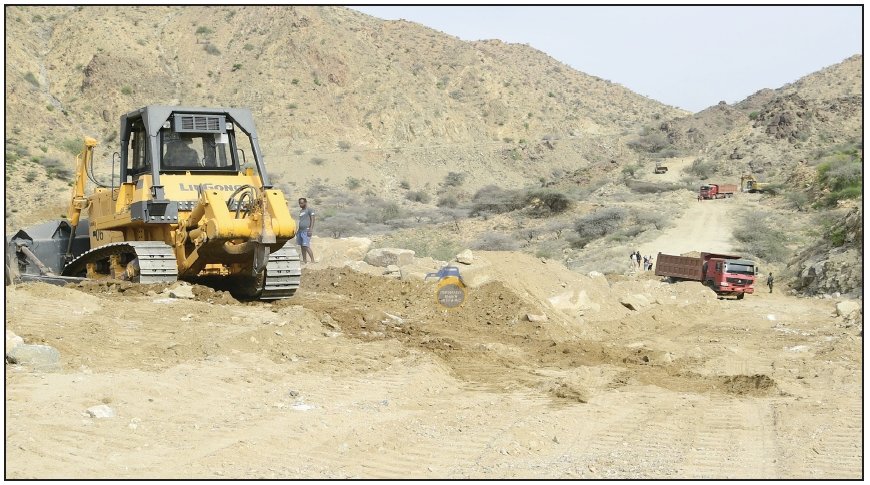
Within this broader context, Eritrea’s experience offers a compelling case study. During Italian colonization, which extended from the late 1800s until the 1940s, the country developed an extensive road and rail system. By the mid- 20th century, foreign administrators described Eritrea as a territory with “
superb roads” linking its cities, ports, and neighbouring countries. Yet, the decades that followed brought destruction. Years of war, bombing campaigns, looting by the British, and neglect left Eritrea’s once enviable road system in ruins. When independence was finally achieved in 1991, the country inherited a shattered network: minimal in coverage, dilapidated in condition, and insufficient to support national recovery.
Rebuilding from such devastation required determination and investment. Despite limited resources, prolonged sanctions, and recurring conflict, Eritrea launched an ambitious program to expand and modernize its roads. Between 1991 and 2015, the country’s road network grew from roughly
4,930 kilometres to over
14,500 kilometres – an almost threefold increase. Importantly, many of these roads were not only new but of significantly improved quality, with dirt tracks upgraded to paved roads and dilapidated routes reconstructed. Investment has continued in recent years, with rural access roads, highways, and bridges forming part of a broader strategy to link the country’s diverse regions and stimulate development. Notably, government officials, including President
Isaias, have also pointed to infrastructure, and roads in particular, as being a key area of national focus in the years ahead.
The impact has been far-reaching. Today, more than
85 percent of Eritrean villages are connected by road, reducing isolation and enhancing access to essential services. Children can travel more safely and comfortably to schools, even during rainy seasons that once rendered paths muddy and treacherous. Dust-filled dirt roads have given way to smoother, healthier environments, while bridges and culverts now allow villagers to cross rivers and streams that once cut them off entirely. For many rural households, the difference is transformative: crops can reach markets before they spoil, patients can reach clinics in emergencies, and opportunities that were once distant now feel within reach.
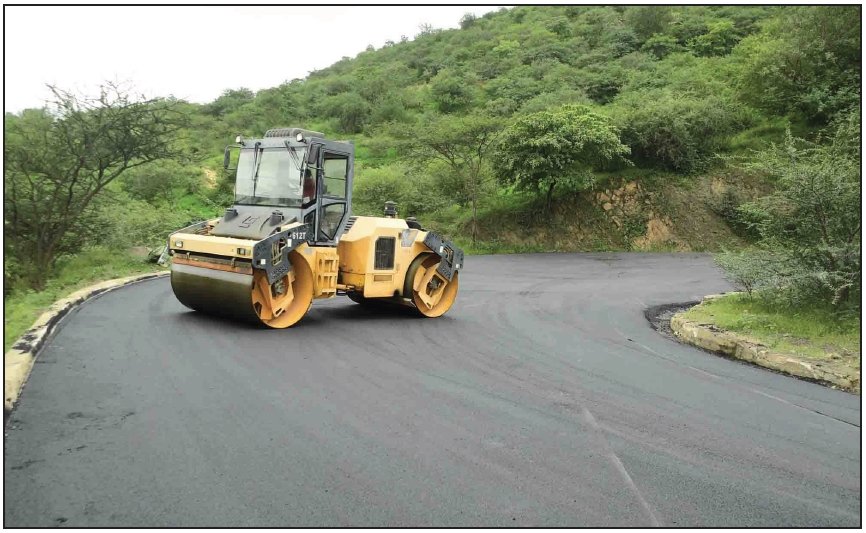
Economically, better roads have lowered transportation costs, facilitated trade, and strengthened local markets. And not to be overlooked, socially, they have expanded access to healthcare and education while fostering greater interaction and integration among Eritrea’s diverse communities. In line with contact theory, this increased connectivity has also contributed to deeper social cohesion, mutual understanding, and national unity.
Just as blood vessels carry life-sustaining nutrients throughout the human body, roads serve as the arteries of national development. Without them, societies remain fractured and stagnant; with them, they gain the ability to connect, circulate, and grow. Eritrea’s experience demonstrates that even under conditions of resource scarcity and geopolitical hardship, determined investment in road infrastructure can yield profound and lasting benefits. The country’s achievements underscore a broader lesson: roads are more than physical pathways of asphalt and gravel – they are enablers of progress, equity, and resilience.



 Kibrom Tsehaye