
AFRICA/ETHIOPIA - Negotiations between Addis Ababa and Somalia over sea access stalled
Thursday, 31 July 2025
Wikipedia
By Cosimo Graziani
https://www.fides.org/en/news/76662-AFR ... ss_stalled
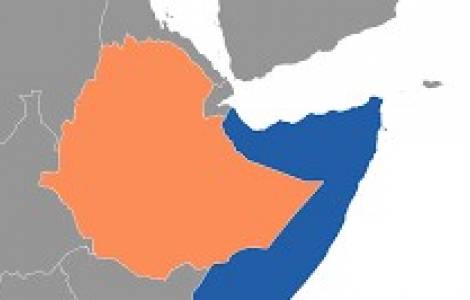
Addis Ababa (Agenzia Fides) - According to diplomatic sources familiar with the matter, diplomatic negotiations between Ethiopia and Somalia to resolve the issue of Addis Ababa's access to the sea and the related permit granted by Mogadishu are stalled. The last round of negotiations between the two countries took place in February, but the news leaked in the first weeks of July.
The announcement has repercussions for African geopolitics, specifically in the Horn of Africa region, and worldwide, as it affects, for example, the transport of goods across the Red Sea.
At the heart of the issue is Ethiopia's request for sea access. In January of last year, the Ethiopian government signed an agreement with the breakaway region of Somaliland to gain access to the sea through a twenty-kilometer stretch along the latter's coast. Somalia's reaction, from which Somaliland formally separated, was swift, and Turkey intervened to resolve the dispute, mediating between the two sides. Its mediation led to an agreement last December between the two countries.
Thereafter, Somalia and Ethiopia began technical negotiations to explore the possibility of sea access for Addis Ababa, but no meeting between the two countries' delegations had been scheduled since last April. In addition to sea access, the possibility of recognizing Somaliland's independence was also on the negotiating table, according to the same diplomatic source cited by the Somali news agency Shabelle.
Ethiopia has never officially committed to this diplomatic move, which, moreover, remains a resource it can use at any time.
While the December 2024 agreement was considered a success for Turkish diplomacy in Africa, the news of the current impasse weakens Ankara's position on the continent. Turkish President Recep Tayyip Erdogan has invested considerably in recent years, both economically and politically, in his country's presence throughout the African continent, especially in the Horn of Africa, whose role in international logistics is crucial.
Turkey is present in Africa thanks to a dense network of religious institutions that have facilitated its cultural and social penetration; it has opened embassies throughout the continent; it has signed various military agreements, most notably one last year with Somalia, Libya, Kenya, Rwanda, Nigeria, and Ghana; and Turkish Airlines, the Turkish flag carrier, currently operates flights to more than fifty African destinations. Africa has also acquired strategic importance for Turkey due to its maritime presence, and from this perspective, its presence in the Horn of Africa is even more so. If an agreement brokered by Ankara in the region fails, Turkey's own position will also be affected.
The central issue in relations between Ethiopia and Somalia is the sovereignty of the latter. If Ethiopia were to give in on its recognition of Somaliland, the state would risk being completely dismembered. Armed clashes have recently erupted in the Puntland region, which has been at war with the central government since last year over constitutional amendments approved at the proposal of Somali President Hassan Mohamud. The clashes have occurred between local and pro-government forces. Like Somaliland, which declared its independence from Mogadishu thirty years ago, Puntland has been demanding greater autonomy from the central government since 1998.
In this situation, Egypt could gain political leverage in the region, after years of tense relations with Ethiopia, particularly regarding the construction of the Grand Ethiopian Renaissance Dam on the Nile. Turkish mediation between Ethiopia and Somalia had removed it from the dispute, but the stalled negotiations have brought Cairo back into the game of current and future regional balances. At the beginning of the second week of July, Egyptian President Abdel Fattah al-Sisi met with his Somali counterpart and promised increased vigilance in the Red Sea. This was a gesture for Addis Ababa, but also for Ankara, as part of the improvement in relations between Egypt and Turkey in other contexts, such as the Eastern Mediterranean and Libya.

