A civil society organisation working towards achieving the togetherness of our people in the Sudan and beyond that in the diaspora, نعمل من أجل تحقيق حلم وهدف الأقليم, ألا وهو لم الشمل الدارفوري في السودان وفي الشتات
The UAE’s Role in Sudan’s Genocide: The Case for Justice Against Its Liaison Officers and Regional Proxies
March 7, 2025
Admin
https://darfurunionuk.wordpress.com/202 ... /10036-02/
UAE’s Direct Role in Sudan’s Genocide: The UAE has played a central role in funding, arming, and supplying the RSF militia, exploiting its sovereignty to facilitate war crimes, including mass killings, the use of rape as a weapon, and ethnic cleansing in Dar Masalit and war crimes across Sudan.
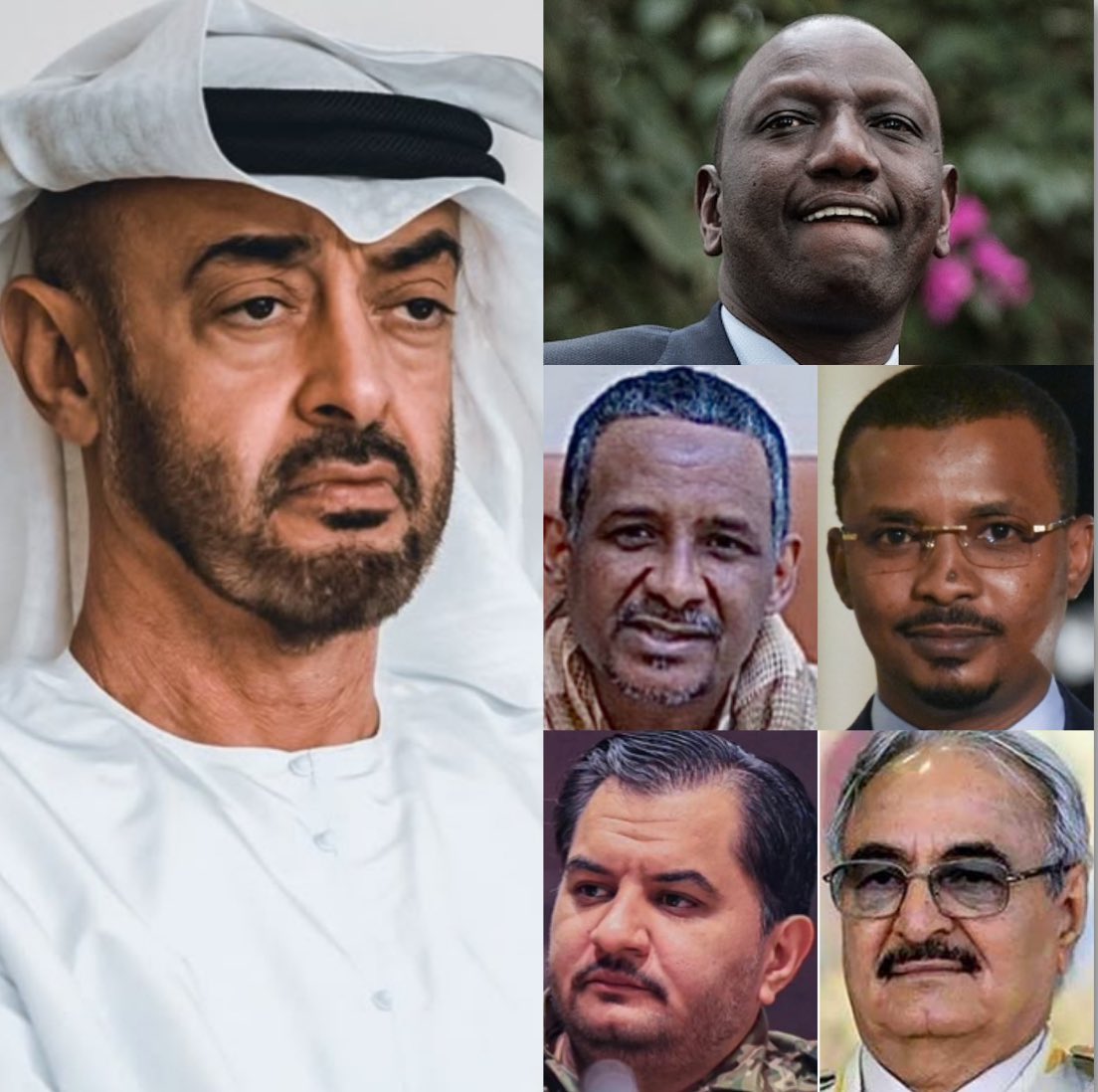
Regional Proxies Enabling Atrocities: Chad’s Mohamed Déby, Kenya’s William Ruto, and Libya’s Khalifa Haftar have each played a key role in facilitating arms transfers, mercenary flows, and financial backing for the RSF militia, making them equally culpable in Sudan’s genocide.
Legal Accountability is Crucial: While Sudan has filed a case against the UAE at the ICJ, justice must extend to all enablers, including government officials, liaison officers, and military leaders, who have profited from and sustained the genocidal war.
UAE’s Role in Funding Mercenaries for the RSF Militia: International reports reveal that the UAE is recruiting foreign mercenaries and transferring them via Libya and Chad to fight in Sudan, proving its direct involvement in the war and genocide, reinforcing the need for international accountability.
Global Action Needed to Stop War Crimes: The international community must recognise the UAE’s state-backed warlordism and the complicity of its allies, ensuring that those responsible for fueling genocide face legal and diplomatic consequences.
UAE’s Ongoing Crimes Against Civilians in Sudan: The UAE-backed RSF militia continues burning villages south of al-Fashir, attacking communities in al-Gazeira, and killing civilians in Umbada, Omdurman. UAE’s failed project in Sudan will never succeed. The militia is collapsing, and lashing out at civilians is a cowardly act.
Introduction
The ongoing genocide in Sudan, particularly what took place in Al-Geneina and the Dar Masalit region, has been one of the most brutal and systematic campaigns of ethnic cleansing in recent history. While the world has focused on the actions of the RSF militia, there has been less scrutiny on the key enablers of this campaign. Chief among them is the United Arab Emirates (UAE), whose government, through its liaison officers and proxies, has played a decisive role in financing, arming, and sustaining the genocidal war against the Sudanese people.
This article explores the UAE’s involvement, highlighting how its sovereignty has been misused as a conduit for war crimes. It also examines the complicity of regional actors such as Chad’s Mohamed Déby (Kaka), Kenya’s William Ruto, and Libya’s Khalifa Haftar, all of whom have facilitated the UAE’s logistical and military support to the RSF militia. The case against these figures is as strong as the one against the RSF militia itself, and justice must reach them.
The UAE’s Role: A Hub for Genocide Logistics
The UAE’s involvement in Sudan’s war extends far beyond diplomatic or economic ties. It has functioned as a central hub for military logistics, facilitating the flow of weapons, mercenaries, and funding to the RSF militia.
Evidence has surfaced that UAE-backed air cargo shipments have delivered weapons, drones, and ammunition directly to RSF militia forces, who have used them to commit atrocities against civilians.
The recent genocidal campaign in Al-Junina provides a case in point. The RSF militia and their allied militias engaged in mass killings, the use of rape as a weapon of war, forced displacement, and the destruction of entire communities. These crimes were not spontaneous acts of violence; they were systematically executed using UAE-supplied resources.
Despite being a sovereign state, the UAE has abused its position to function as a warlord state, using its wealth and influence to back criminal militias. Its liaison officers, who coordinate military supplies, diplomatic cover, and financial transactions, are key players in this structure. For justice to be served, these individuals must be held accountable, alongside their political and military superiors.
Chad: Mohamed Déby (Kaka) and the Eastern Weapons Corridor
Chad’s leader, Mohamed Déby (Kaka), has played a pivotal role in the supply chain of war materials to Sudan. While presenting himself as a regional stabiliser, Déby has, in reality, enabled the RSF militia’s war efforts by allowing Chad’s eastern regions to become a transit point for weapons and mercenaries.
Key Aspects of Chad’s Involvement:
• Misuse of Financial Aid: Déby has reportedly received significant financial backing from the UAE, much of which has been embezzled or used to manipulate Chad’s internal politics.
• Weapons Flow via Eastern Chad: Arms shipments from the UAE have been routed through Chad’s border into Darfur, directly arming RSF militia units.
• The Um Jaras Air Base: This strategic site has served as a logistical hub for UAE cargo planes delivering military support to the RSF militia.
Given these facts, Déby is not merely an accessory to the genocide, he is a direct enabler. His role warrants international legal scrutiny, and Chad must be held accountable for its role in facilitating crimes against humanity.
Kenya: William Ruto’s Complicity in War Crimes
Kenyan President William Ruto has positioned himself as a mediator in Sudan’s crisis, but his administration has actively supported the RSF militia. Ruto’s government has reportedly allowed Kenya to become a pit stop for the transfer of arms, mercenaries, and financial resources to the RSF militia.
Key Aspects of Kenya’s Involvement:
• Use of Mombasa Port: Arms shipments destined for Sudan have been processed through Mombasa, avoiding international scrutiny.
• Cargo Flights from Kenya: Military supplies, including drones, have been sent to RSF militia forces via cargo planes operating from Kenya.
• Political Support for RSF Leadership: RSF militia political figures have found safe haven in Kenya, where they continue their efforts to legitimise their crimes.
Libya: Khalifa Haftar’s Benghazi Connection
Libyan warlord Khalifa Haftar and his son, Saddam Haftar, have turned eastern Libya into another major hub for the RSF militia’s supply chain. Operating under UAE patronage, the Haftar family has facilitated the movement of weapons, mercenaries, and military equipment from Libya to Sudan.
Key Aspects of Libya’s Involvement:
• Benghazi as a Staging Ground: Benghazi has become a safe zone for RSF militia leaders and a launch point for arms shipments.
• Maaten al-Saraa Air Base: This facility has been used to receive and distribute UAE-supplied weapons to RSF militia forces.
• Mercenary Networks: Fighters from Colombia and other regions have been funneled into Sudan through Libya, adding to the RSF militia’s firepower.
The Case for Justice: Targeting the Enablers of Genocide
Sudan’s government has taken a significant step by filing a case against the UAE at the International Court of Justice (ICJ). This move is crucial, but it must be expanded to include the full network of enablers:
1. UAE Liaison Officers and Officials – They have coordinated arms supplies and provided diplomatic cover for RSF militia operations.
2. Mohamed Déby (Chad) – He has allowed his country to serve as a weapons corridor and has financially benefited from the genocide.
3. William Ruto (Kenya) – He has facilitated the arms flow and provided political support to the RSF militia.
4. Khalifa Haftar (Libya) – He has turned eastern Libya into a key logistics hub for RSF militia operations.
The international community must recognise that justice for Sudan’s genocide cannot stop with the direct perpetrators. The RSF militia could not have conducted such a large-scale campaign without the logistical, financial, and military support of these actors.
UAE’s Role in Funding Mercenaries for RSF Militia
One of the most damning revelations in recent days is the exposure of UAE-backed mercenary recruitment networks that are funneling fighters into Sudan. According to reports, including an investigation by a Colombian newspaper, mercenaries are being paid $3,000 to work as “security personnel” in the UAE, only to be redirected to Sudan via Libya and Chad to fight for the RSF militia. This confirms what many have long suspected, that the UAE is not only supplying weapons but also actively recruiting foreign fighters to sustain its proxy war in Sudan.
This influx of Colombian and other foreign mercenaries has directly contributed to the RSF militia’s ability to continue its genocidal campaign. In Al-Fashir, for example, newly arrived mercenaries have been used to carry out heavy shelling against civilian populations. The UAE’s role in orchestrating this mercenary pipeline further implicates it in the crimes committed on Sudanese soil. It is yet another reason why legal action against the UAE at the International Court of Justice (ICJ) must not only continue but also expand to include these mercenary operations as a direct violation of international law.
As these crimes continue, the UAE-backed RSF militia keeps killing civilians in Darfur, burning villages south of Al-Fashir, attacking communities in Al-Jazeera, and murdering innocents in Umbada, Omdurman. UAE’s failed project in Sudan will never succeed. The militia is losing on all fronts, and lashing out at civilians is a cowardly act.
Final Thoughts
For too long, figures like Mohamed bin Zayed have operated with impunity, using their nation’s wealth to fund war crimes without facing consequences. The same applies to the UAE’s regional proxies, whose actions have directly contributed to the suffering of the Sudanese people.
The case at the ICJ should not only target the UAE but also seek legal consequences for Chad, Kenya, and Libya. If international justice is to mean anything, it must extend to those who enable and sustain crimes against humanity, not just those who pull the trigger.
Darfur Union in the UK
 Website: darfurunionuk.wordpress.com
 Email: [email protected]
 @DarfurUnionUK
 Facebook: @DarfurUnionUK
 Instagram: @Darfurunionuk