Re: Do They Know It's Genocide? The Band Aid Tale

Community | Africa
In pursuit of a modern capital, Ethiopian leader razes history
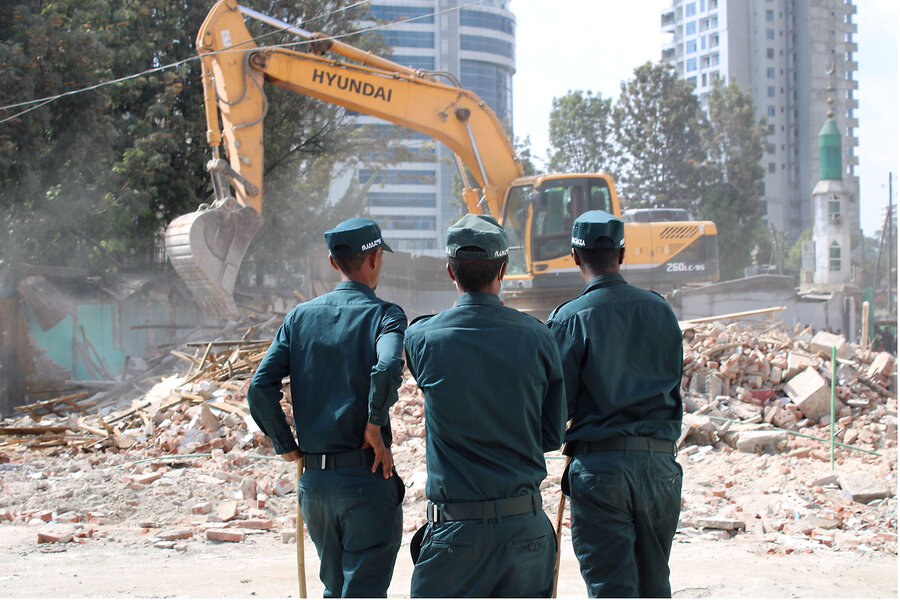
Security guards patrol a demolition site in Kazanchis, a neighbourhood in Addis Ababa, Ethiopia where many old buildings have recently been torn down as part of a campaign to modernize the city, Nov. 17, 2024. Ashenafi Tsegay
By Samuel Getachew Contributor
https://www.csmonitor.com/World/Africa/ ... sformation
Jan. 06, 2025, Addis Ababa, Ethiopia
One evening in late October last year, hundreds of concertgoers streamed into the Fendika Cultural Center, dressed to the nines for an evening out at one of the most iconic music venues in Ethiopia’s capital.
For decades, traditional music clubs called azmari bets lined the road beside Fendika. They were a glittering centerpiece of Addis Ababa nightlife. The smoke-filled pubs often hosted poet-musicians called azmaris, a kind of Ethiopian troubadour, and more recently, crackling Ethio-jazz groups as well.
Now Fendika was the last club standing. And beside the building, bulldozers were waiting.
__________________________________________________________________________________________________________________
Why We Wrote This
A story focused on
Community
Ethiopian officials led by Prime Minister Abiy Ahmed want a modern capital. But as they demolish some of Addis Ababa’s most historic neighborhoods, residents are asking, at what cost?
__________________________________________________________________________________________________________________
Across Addis, a massive urban transformation is underway. In recent years, the government has flattened entire neighborhoods – including some of the city’s most historic – to make way for new skyscrapers, mega shopping centers, wider roads, and parks.
explained Prime Minister Abiy Ahmed last year, comparing Addis Ababa’s development to that of Dubai, United Arab Emirates.Infrastructure and aesthetics attract wealth,
But for the thousands of people across Addis whose houses and businesses have been destroyed, the campaign to build a 21st-century metropolis here often feels more like a vanity project than like an effort to make life better for its inhabitants.They have magnetic power.
says Henok Abraham Tekeste, a taxi driver who was recently evicted from his home not far from Fendika.The endless beautification of the capital ... has made us strangers in our own land,
An urban face-lift
For more than a decade, the roar of construction equipment has been a backdrop to life in Ethiopia’s capital. One of the first major projects was a Chinese-built light rail, which opened in 2015, followed by a new wing of the city’s airport and several parks also financed and constructed by the Chinese.
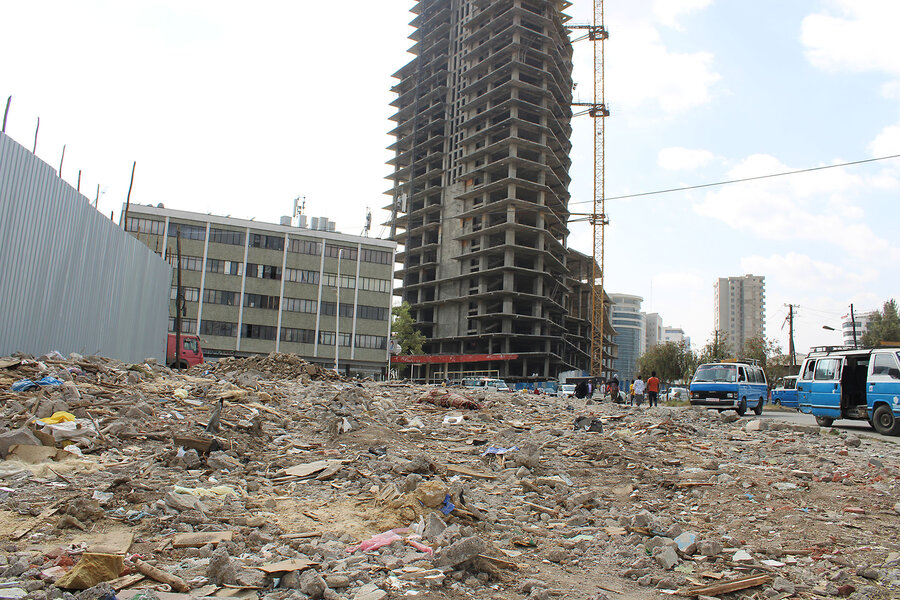
In Kazanchis, a historically Italian neighborhood in Addis Ababa, many older buildings are being demolished to make way for skyscrapers. Ashenafi Tsegay
When Mr. Abiy took over in 2018, he embraced the image of environmentalist, pledging that Ethiopia would plant 50 billion new trees https://press.et/herald/?p=101134 by 2026 and create parks – accessible only to paying customers https://www.whatsoutaddis.com/friendshi ... at%20night – around the capital. In 2024, Ethiopia became the first country in the world to fully ban the import https://www.lemonde.fr/en/le-monde-afri ... 6_124.html of combustion-engine cars to support the transition to electric vehicles, although only half the population has access to electricity.
Meanwhile, over the past year, he has accelerated the pace of Addis’ “Dubai-ification.” This past March, Mr. Abiy announced that for the first time, foreigners would be allowed to buy land in Ethiopia, a move expected to attract investors primarily from the Gulf.
Over the following month, the government razed nearly the entire neighborhood of Piassa – a historic Italian and Armenian enclave that was home to Ethiopia’s first cinema (dubbed by some locals “the house of the devil”), the country’s first modern pharmacy, and the earliest Italian coffee shops, which have become a mainstay in the city.
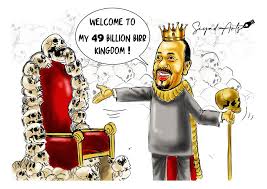
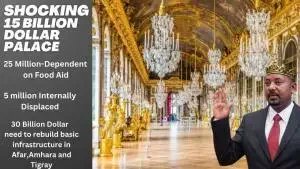
Meanwhile, on a hillside perched above Fendika, a massive palace complex for the prime minister was rising from the earth. Mr. Abiy himself bragged that construction would cost as much as $10 billion,
for a property that would include his official residence, a luxury hotel and guesthouses for foreign dignitaries, and three human-made lakes.
At the same time, a transit initiative called the Addis Ababa Corridor Project was bulldozing neighborhoods in order to reduce congestion by creating wider streets and dedicated bus lanes.
Mr. Abiy said to explain the demolitions.A randomly built mud house does not constitute a historical heritage,
Mr. Abiy’s rapid-fire development projects, conducted without public consultation, calls into question
argues Ethiopian architect Nahom Teklu in a message to the Monitor on the social platform X.whose vision is shaping the city’s future,
Fendika, the cultural center, has faced pressure for years https://www.atlasobscura.com/places/fendika-azmari-bet to move off its increasingly valuable land. But the crisis came to a head last year, when the Addis government announced it planned to demolish the complex to build a luxury hotel.
By that point, Fendika had been around in one form or another since the early 1990s, and had developed an international reputation for showcasing the diversity of traditional Ethiopian music. Its current owner, dancer Melaku Belay, got his start at Fendika in the late ’90s, when he was a teenager living on the streets. The club’s owner let him sleep under the bar, and he danced for tips during performances by azmari musicians.
In 2023, Mr. Belay and a group of Western diplomats who were fans of the center lobbied the government to stop its demolition. They won a reprieve, but it proved brief.
The end of Kazanchis
This past September, the government began delivering eviction notices across Kazanchis, the historically-Italian-neighborhood-turned-business-district where Fendika is located. Few places better illustrated the city’s current crossroads: Hip cafés serving lattes to diplomats and businesspeople stood beside outdoor stalls where vendors still roasted and sold traditional Ethiopian coffee to passersby.
Addis Ababa’s mayor, Adanech Abiebie, said the demolition of the old sections of Kazanchis, would
Azeb Tadesse, a grandmother who had lived in Kazanchis for three decades, was given three days to vacate the property she says she has owned for many years. The warning was delivered with a coded message scrawled in red paint across her door.enhance the beauty and cleanliness of the capital, making it a comfortable and attractive place for its residents.
Ms. Tadesse says she was warned that if she protested the eviction, she risked being accused of being against development. So she reluctantly moved into her sister’s housing unit in the suburbs. Now, she says, she feels like a
Another former resident, Ayda Gugsa, now stays in a rundown two-bedroom rental unit on the outskirts of the city. She says she mourns the ease of life in Kazanchis.destitute refugee in my old age.
she says.Where we are staying at the moment has no electricity, no functioning educational institutions for the children, and I am far from where I work,
Meanwhile, on Oct. 23, two days after Fendika’s final concert, excavators’ metal claws punched through the center’s roof.
But a few days later, Mr. Belay emerged on Fendika’s social media pages with an announcement. The government had given the center permission to rebuild – as long as they constructed a 20-story tower to match the other high-rises that would soon replace the neighborhood’s flattened homes and businesses.
This is
wrote Mr. Belay on a GoFundMe page https://www.gofundme.com/f/help-rebuild ... gram_story to support the reconstruction,certainly not our first choice,
In the meantime, he explained that Fendika would give concerts at a nearby venue that had survived Kazanchis’ demolition, the Addis Ababa Hyatt.but it is the government’s mandate if we are to keep Fendika’s location.
Mark Sappenfield, Editor
editor@csmonitor.com
-
DefendTheTruth
- Senior Member
- Posts: 13156
- Joined: 08 Mar 2014, 16:32
Re: Do They Know It's Genocide? The Band Aid Tale
Back then we accepted whatever was thrown towards us, admitted it couldn't be any different, when it stems from them. The owner of the ultimate truth, we were convinced.
Today, in the era of decentralized information sources, we can also cross-check and make a closer look at it before we have taken it for granted. We think now there could be more ultimate motives than ultimate truths.
The scar is too deep to oversee the ultimate motive of reporting and their pity towards us.No long articles can help any more! No more!
Today, in the era of decentralized information sources, we can also cross-check and make a closer look at it before we have taken it for granted. We think now there could be more ultimate motives than ultimate truths.
The scar is too deep to oversee the ultimate motive of reporting and their pity towards us.No long articles can help any more! No more!
Re: Do They Know It's Genocide? The Band Aid Tale
Eritrea: Countering Misinformation and Misdirected Critiques
Opinion
Last updated Jan 8, 2025

It is ironic that someone like Michael Rubin, whose warmongering commentary has repeatedly championed disastrous interventions in Iraq, Libya, and Syria, now turns his gaze toward Eritrea. Rubin’s career is a testament to failed predictions and reckless advocacy for interventions that have plunged nations into chaos. His penchant for oversimplification and exaggeration has earned him a reputation as a propagandist rather than a credible analyst. For someone whose worldview has been repeatedly discredited by the real-world consequences of his recommendations, Rubin’s obsession with Eritrea reeks of desperation for relevance. Eritrea, a nation that has consistently fought for its sovereignty, advanced national development, and contributed to regional stability, will not be swayed by the misguided musings of a failed warmonger.
Eritrea’s modern history is a testament to resilience and determination. Emerging from a 30-year war for independence, the country faced immense challenges, including hostile neighbors, international sanctions, and minimal infrastructure. Unlike nations that inherited developed systems or benefited from foreign aid, Eritrea built its governance and economy from scratch. Despite these adversities, Eritrea has achieved significant progress in healthcare, education, and infrastructure. Reductions in infant mortality, improved literacy rates, and a robust focus on disease prevention highlight Eritrea’s commitment to human development. These achievements underscore the nation’s resourcefulness and determination to prioritize its people’s welfare amid external constraints.
Eritrea’s contributions to regional peace and security are equally noteworthy. The country has been a pivotal player in counterterrorism efforts, including through ongoing collaboration with, and training of, Somali military forces to bolster the region’s ability to combat extremism. Moreover, Eritrea was among the first nations to confront Al-Qaeda in the 1990s, initiating efforts to drive Osama bin Laden and his network out of Africa. This proactive stance against terrorism predated the global focus on combating extremist threats, underscoring Eritrea’s foresight and long-standing commitment to regional and global security.
Eritrea’s long-standing perspectives – which is in the public domain – on enhancing effective and meaningful frameworks of cooperation among the littoral States of the Red Sea and Gulf of Aden region is another case in point. This initiative exemplifies Eritrea’s dedication to fostering international trade and protecting global economic interests, reaffirming its position as a proactive and reliable regional partner.
Despite these achievements, Eritrea continues to be unfairly criticized in international discussions. Detractors frequently misrepresent its policy of self-reliance as isolationism, overlooking its strong ties with a plethora of global and regional countries. These partnerships reflect Eritrea’s active engagement in global diplomacy and regional cooperation. In reality, it is some western countries that intermittently attempt to isolate Eritrea by perpetuating outdated narratives and imposing counterproductive policies. Eritrea’s emphasis on sovereignty and independence is not a rejection of cooperation but a commitment to sustainable development and mutual respect.
Eritrea’s national service program, often criticized by these same quarters, is widely misunderstood too. Similar to programs in other nations, it was established to safeguard national security and uphold sovereignty, particularly during critical periods such as the border war with Ethiopia. Mischaracterizing it as forced labor disregards its purpose and historical context. National service in Eritrea is a collective responsibility, designed to defend the nation and contribute to its development, reflecting a commitment to unity and resilience rather than coercion.
Simplistic comparisons and pejorative labels do little justice to Eritrea’s unique geopolitical context. Such analogies obscure the nation’s active participation in international trade, its contributions to regional peace, and its efforts to forge sustainable partnerships. Calls for “regime change”, as Rubin advocates, reflect a failure to understand the disastrous consequences of similar interventions in countries like Libya and Iraq. Eritrea’s policies, while not without challenges, are rooted in legitimate concerns about sovereignty and self-determination. External interference undermines these principles and violates international norms of non-interference.
Eritrea’s achievements and contributions deserve recognition rather than dismissal. The country’s proactive and cooperative role in the promotion of the security of the Red Sea, its commitment to combating terrorism, and its leadership in fostering regional integration highlight its strategic importance and dedication to global stability. What Eritrea seeks is constructive engagement based on mutual respect and understanding, not biased narratives or unjustified criticism.
Michael Rubin’s critiques of Eritrea, including his latest piece, “Eritrea Is the North Korea of Africa: America Must Act,” exemplify a pattern of misrepresentation and biased narratives that fail to advance the interests of Eritrea or the Horn of Africa. Such rhetoric not only distorts Eritrea’s reality but also perpetuates harmful stereotypes that undermine meaningful engagement and progress. Eritrea’s steadfast commitment to sovereignty, regional stability, and sustainable development demonstrates its resilience and enduring significance. Through strong partnerships with global and regional powers and a focus on pragmatic, forward-thinking initiatives, Eritrea continues to chart a path defined by self-reliance, unity, and a vision for shared prosperity, neutralizing baseless critiques with its unwavering dedication to progress.
Embassy of The State of Eritrea
Washington, DC
08 Jan 2025
Opinion
Last updated Jan 8, 2025
It is ironic that someone like Michael Rubin, whose warmongering commentary has repeatedly championed disastrous interventions in Iraq, Libya, and Syria, now turns his gaze toward Eritrea. Rubin’s career is a testament to failed predictions and reckless advocacy for interventions that have plunged nations into chaos. His penchant for oversimplification and exaggeration has earned him a reputation as a propagandist rather than a credible analyst. For someone whose worldview has been repeatedly discredited by the real-world consequences of his recommendations, Rubin’s obsession with Eritrea reeks of desperation for relevance. Eritrea, a nation that has consistently fought for its sovereignty, advanced national development, and contributed to regional stability, will not be swayed by the misguided musings of a failed warmonger.
Eritrea’s modern history is a testament to resilience and determination. Emerging from a 30-year war for independence, the country faced immense challenges, including hostile neighbors, international sanctions, and minimal infrastructure. Unlike nations that inherited developed systems or benefited from foreign aid, Eritrea built its governance and economy from scratch. Despite these adversities, Eritrea has achieved significant progress in healthcare, education, and infrastructure. Reductions in infant mortality, improved literacy rates, and a robust focus on disease prevention highlight Eritrea’s commitment to human development. These achievements underscore the nation’s resourcefulness and determination to prioritize its people’s welfare amid external constraints.
Eritrea’s contributions to regional peace and security are equally noteworthy. The country has been a pivotal player in counterterrorism efforts, including through ongoing collaboration with, and training of, Somali military forces to bolster the region’s ability to combat extremism. Moreover, Eritrea was among the first nations to confront Al-Qaeda in the 1990s, initiating efforts to drive Osama bin Laden and his network out of Africa. This proactive stance against terrorism predated the global focus on combating extremist threats, underscoring Eritrea’s foresight and long-standing commitment to regional and global security.
Eritrea’s long-standing perspectives – which is in the public domain – on enhancing effective and meaningful frameworks of cooperation among the littoral States of the Red Sea and Gulf of Aden region is another case in point. This initiative exemplifies Eritrea’s dedication to fostering international trade and protecting global economic interests, reaffirming its position as a proactive and reliable regional partner.
Despite these achievements, Eritrea continues to be unfairly criticized in international discussions. Detractors frequently misrepresent its policy of self-reliance as isolationism, overlooking its strong ties with a plethora of global and regional countries. These partnerships reflect Eritrea’s active engagement in global diplomacy and regional cooperation. In reality, it is some western countries that intermittently attempt to isolate Eritrea by perpetuating outdated narratives and imposing counterproductive policies. Eritrea’s emphasis on sovereignty and independence is not a rejection of cooperation but a commitment to sustainable development and mutual respect.
Eritrea’s national service program, often criticized by these same quarters, is widely misunderstood too. Similar to programs in other nations, it was established to safeguard national security and uphold sovereignty, particularly during critical periods such as the border war with Ethiopia. Mischaracterizing it as forced labor disregards its purpose and historical context. National service in Eritrea is a collective responsibility, designed to defend the nation and contribute to its development, reflecting a commitment to unity and resilience rather than coercion.
Simplistic comparisons and pejorative labels do little justice to Eritrea’s unique geopolitical context. Such analogies obscure the nation’s active participation in international trade, its contributions to regional peace, and its efforts to forge sustainable partnerships. Calls for “regime change”, as Rubin advocates, reflect a failure to understand the disastrous consequences of similar interventions in countries like Libya and Iraq. Eritrea’s policies, while not without challenges, are rooted in legitimate concerns about sovereignty and self-determination. External interference undermines these principles and violates international norms of non-interference.
Eritrea’s achievements and contributions deserve recognition rather than dismissal. The country’s proactive and cooperative role in the promotion of the security of the Red Sea, its commitment to combating terrorism, and its leadership in fostering regional integration highlight its strategic importance and dedication to global stability. What Eritrea seeks is constructive engagement based on mutual respect and understanding, not biased narratives or unjustified criticism.
Michael Rubin’s critiques of Eritrea, including his latest piece, “Eritrea Is the North Korea of Africa: America Must Act,” exemplify a pattern of misrepresentation and biased narratives that fail to advance the interests of Eritrea or the Horn of Africa. Such rhetoric not only distorts Eritrea’s reality but also perpetuates harmful stereotypes that undermine meaningful engagement and progress. Eritrea’s steadfast commitment to sovereignty, regional stability, and sustainable development demonstrates its resilience and enduring significance. Through strong partnerships with global and regional powers and a focus on pragmatic, forward-thinking initiatives, Eritrea continues to chart a path defined by self-reliance, unity, and a vision for shared prosperity, neutralizing baseless critiques with its unwavering dedication to progress.
Embassy of The State of Eritrea
Washington, DC
08 Jan 2025
Re: Do They Know It's Genocide? The Band Aid Tale
The TPLF were so desperate for international attention that they had to create a man-made famine in Tigray that killed over one million of their own people to achieve that. Sick people! 
Last edited by Fiyameta on 08 Jan 2025, 13:17, edited 1 time in total.
Re: Do They Know It's Genocide? The Band Aid Tale
Who reads this TRASH 

Re: Do They Know It's Genocide? The Band Aid Tale
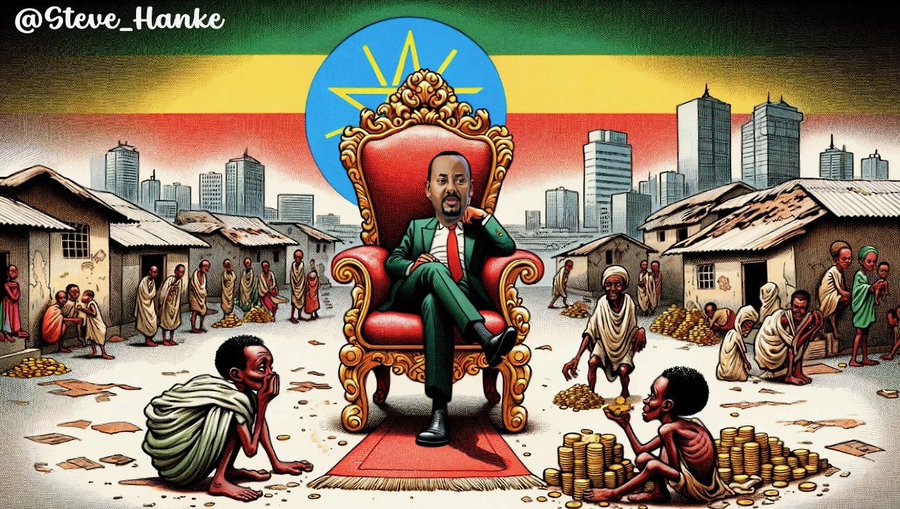
Princess Abyi, friend of the poor.

Re: Do They Know It's Genocide? The Band Aid Tale
This doesn't make any sense at all. Last year, after broke a$$ Ethiopia failed to make a $33 million payment on its outstanding foreign debt, the IMF approved additional $10.7 billion loan to the heavily-indebted country, supposedly to support an economic reform (wink wink), yet the immature government is spending the borrowed money on petty projects with no significance to the country's economy, but exacerbates the ballooning debt crisis.Zmeselo wrote: ↑08 Jan 2025, 10:03
Community | Africa
In pursuit of a modern capital, Ethiopian leader razes history
Security guards patrol a demolition site in Kazanchis, a neighbourhood in Addis Ababa, Ethiopia where many old buildings have recently been torn down as part of a campaign to modernize the city, Nov. 17, 2024. Ashenafi Tsegay
This is the real Ethiopia, where its leaders build things they don't need with money they don't have, to impress people who don't give a hoot about them.
