Why it is important to recognise the genocide in Tigray
Expanded version of the introductory witness statement by Professor Mukesh Kapila to the Subcommittee on international Human Rights of the Standing Committee on Foreign Affairs and International Development of the House of Commons, Parliament of Canada. By video link on 28 October 2022. The full proceedings can be watched by navigating from HERE https://www.ourcommons.ca/Committees/en ... sId=292496
Mr Chairman,
Thank you for inviting me to speak to your Committee. The last time I had the honour to address the honourable parliamentarians of Canada was in relation to the Darfur genocide some twenty years ago. And here we are again – when “never again” is happening again, this time in the Tigray region of Ethiopia.
I take the liberty of addressing this tragic matter from the perspective of my personal experience with comparable situations. I was the first British government official to enter Rwanda in 1994 during the 100 days of killings to witness, at first hand, what a genocide looks like. I recall comparing notes subsequently with that great son of Canada, your former Senator Lt General Romeo Dallaire, who headed the United Nations forces in Rwanda. Not long afterwards, I had a ringside seat to the atrocities in Bosnia Hercegovina, culminating in the Srebrenica genocide. Then, as special adviser to the UN High Commissioner for Human Rights, I was in Cambodia to examine the long and toxic aftermath to the 1975 genocide. Subsequently, in 2003-4, I headed the United Nations in Sudan, trying to stop the Darfur genocide that unfolded on my watch.
Sadly, we never prevented any of these genocides although we had ample warning of them and could track their nasty progression in minute detail in real time. So, we could not claim ignorance. The same is happening now in Tigray where others have testified on the depths of brutality and depravity being plumbed.
My professional assessment is clear: progressive acts of genocide are being perpetrated by the governments and agents of the States of Ethiopia and Eritrea against Tigrayans. I conclude this for the following reasons :
First, is the orchestration of violence on Tigrayans through the use of dehumanising hate speech through Ethiopia’s official communication channels as well as state-encouraged social media.
Second, is the very specific pattern of violence experienced by Tigrayans. This includes direct attacks on civilians and mass rapes. It also includes heightened starvation, malnutrition, epidemic risk, and disease, brought about by deliberate Ethiopian blockade of humanitarian relief, food and medicine. This is reinforced by the systematic destruction of urban and rural livelihoods including through cutting off electricity, internet, and banking. As these efforts are not targetted on combatants but directed generally by Ethiopian federal authorities on civilian populations, they are violations of international humanitarian law, war crimes, and crimes against humanity. Taken together and as a whole, these are tantamount to acts of genocide. (The International Criminal Court came to this conclusion for same reasons when it considered the situation in Darfur that led to the indictment of former Sudanese President Omar Al-Bashir for “acts of genocide”).
Third, is the systematisation of these egregious crimes through the Ethiopian and Eritrean governments’ command and control structures and utilising their official capacities. These are not random acts of violence that can occur in the fog of war but suggests genocidal intent by Authority. The experience of genocidal acts around the world suggests that almost always, these are “state acts” because only States have sufficient organisational and directive capacities to execute them. That is what has been happening in Tigray.
Mr Chairman,
The Genocide Convention was defined in the aftermath of the Holocaust in the 1940s. Our world has changing immeasurably in the subsequent 70+ years, and we must interpret the Convention in today’s context and realities. And so, putting together the pattern of the multi-faceted violence in Tigray in this, the second decade of the Millennium, it is my conviction that the situation in Tigray is nothing less than a modern genocide.
Of course, there are many deniers. Please note that denial is a hallmark of genocide, as we know from history. Also, there are apologists and distractors who argue that the conflict has complex causes and that atrocities have been committed on both sides.
That may be true but, as we saw in Second World War Europe, soldiers on all sides did terrible things but the genocide was committed only by one side – the Nazis – against one group of people – the Jews. Similarly, all groups suffered from violence in Rwanda, but the genocide there was only against the Tutsi. And so too here: all of Ethiopia is suffering including Amhara and Oromo, but genocide is only against Tigrayans.
Mr Chairman,
Of course, peaceful solutions to our disputes and differences, wherever they occur, are to be preferred but, under the United Nations Charter and also customary international law, war per se is not illegal. Indeed, many examples from world history have shown that wars can be just and necessary to confront and reverse aggression and evil. But all wars must always be proportionately conducted. In the case of the Ethiopia/Tigray civil war, there are contested narratives on causes and triggers, provocations and responses. I, for one, take no position on rival claims. But what I do take an unequivocal stand on is that war crimes and crimes against humanity tantamount to genocide, are never ever justified, whatever the cause.
To test the assertion that genocide is unfolding in Tigray, we could ask the UN Security Council to rule or refer the matter to the International Criminal Court. But that is not going to happen any time soon due to paralysing UN geopolitics, and restricted referral rules at ICC. African regional mechanisms for accountability are similarly handicapped.
But that should not paralyse the planet. Genocide is a crime of universal jurisdiction, and all states have a duty to use their domestic legal systems to investigate it. Canada’s courts could also do that. In considering that, the Canadian judicial system should also be open to receive applications for compensatory damages, from victims resident in Canada who have suffered from the direct and indirect consequences of the genocidal conflict.
It would be good to get a legal determination from Canadian courts but you, Honourable Parliamentarians, are the supreme lawmakers in democratic states such as yours. You have already declared the repression of the Uyghur in China as genocide. I would urge you to finish your study very soon and consider doing the same in relation to Tigray. Time is pressing for those at risk of perishing.
Meanwhile, the Canadian foreign policy position towards Ethiopia/Tigray, as expressed by your ministers, is right and reasonable. Unfortunately, genocide is an unreasonable phenomenon conceived and executed by unreasonable people who are, by definition, not amenable to reason or to appeals to their humanity or morals. Because if they were, they would not be committing such heinous crimes in the first place. That is why, all previous genocidaires and egregious criminals against humanity have always required to be stopped through force – not pleas and exhortations alone.
But in the current era, the application of external force to stop the genocidal forces of Ethiopia and Eritrea is not practical for both geopolitical and practical reasons. And, therefore, that solution will have to come from resistance within. But what the community of free nations including Canada can do is to help degrade the military and financial capabilities of Ethiopia and Eritrea to continue waging this predatory war. That means, at a minimum, arms embargoes, economic and trading restrictions, and travel bans on implicated individuals.
In conclusion, Mr Chairman,
The stark reality is that declarations of genocide do not stop them. But they can blunt their progression and completion. Such a declaration is also important to respect the memory of many hundreds of thousands in Tigray for whom it is already too late; and to give courage to survivors by signalling that their suffering is not un-recognised nor in vain. By sending that message, the spirit of surviving humanity is strengthened, and we enable them to resist the evil to which they are being subjected.
Most importantly, the explicit recognition of a genocide has profound implications for future peace and reconciliation which cannot happen without accountability and justice also being served. The earlier that uncomfortable truths get to be appreciated, greater are the chances for successfully moving on.
There is nothing special about Tigray, Ethiopia, and Eritrea that entitles them exemption from this rule of universal experience – or from accountability, whenever that comes.
https://mukeshkapilablog.org/2022/10/29 ... in-tigray/
-
ethioscience
- Member
- Posts: 4102
- Joined: 01 Nov 2019, 17:37
Re: Why it is important to recognise the genocide in Tigray (Expert Witness Statement to International Human Rights Cmte
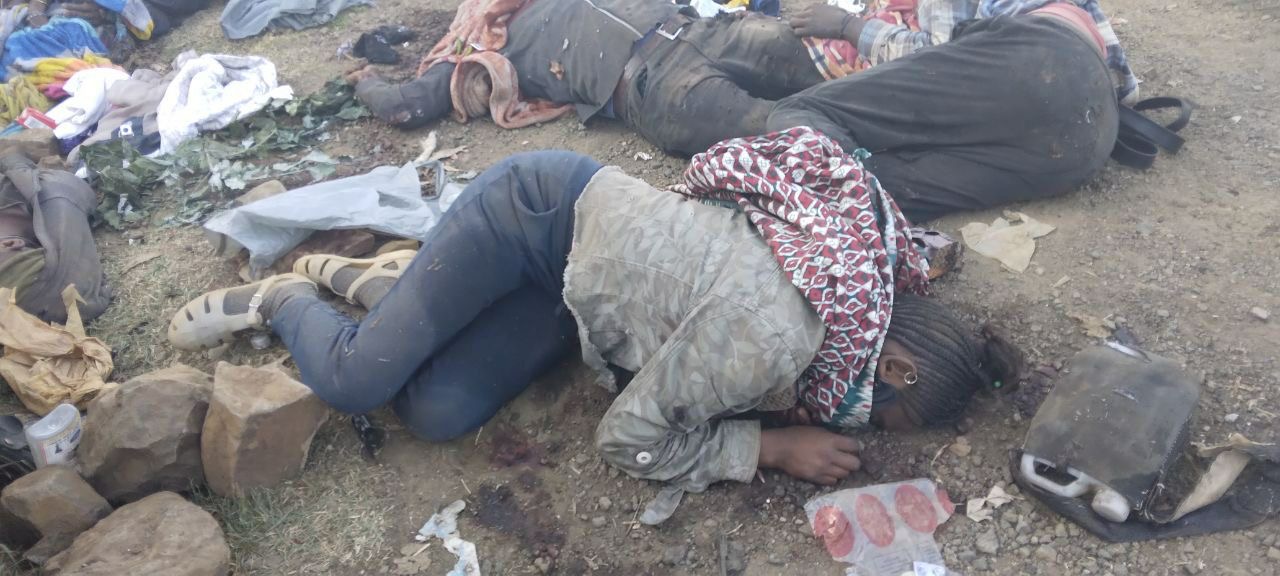
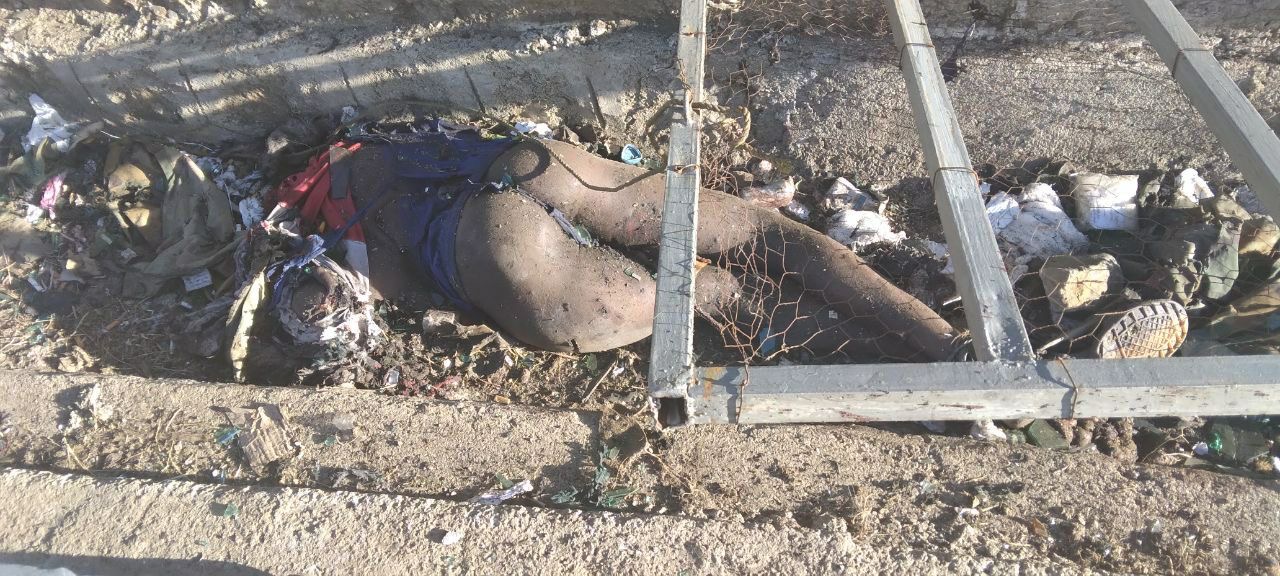
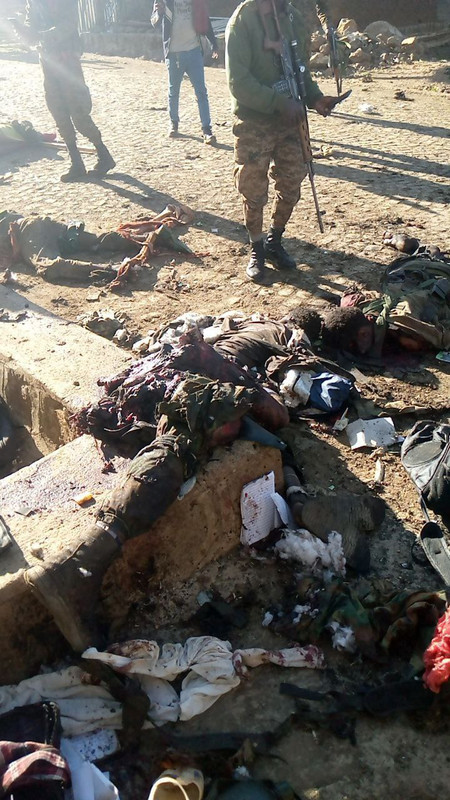
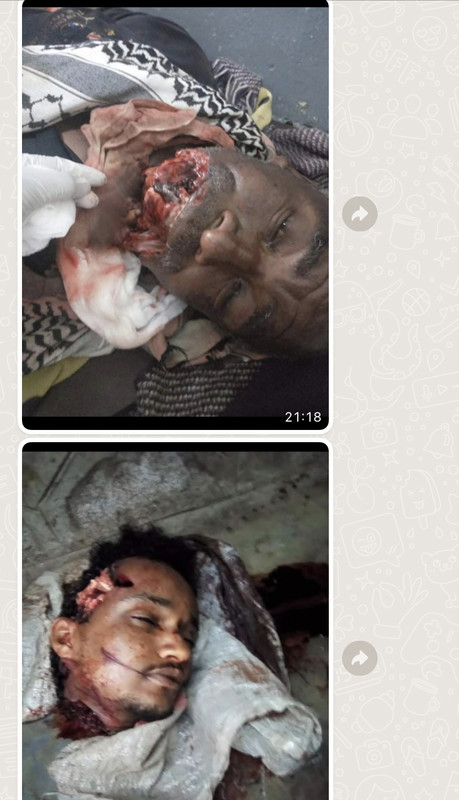
there is no genocide, that suits you moron Agames!!
[/quote]
[/quote]
ethioscience wrote: ↑13 Aug 2022, 01:15ethioscience wrote: ↑28 Jun 2022, 19:06




[/quote]
[/quote]