Ethiopian News, Current Affairs and Opinion Forum
Zmeselo
Senior Member+
Posts: 37012
Joined: 30 Jul 2010, 20:43

Logo is just the beginning

Post by Zmeselo » 09 Sep 2020, 05:46


Logo is just the beginning

By: Billion Temesghen

https://shabait.com/2020/09/09/logo-is- ... beginning/

NATION BUILDING

Sep 9, 2020


As global warming keeps threatening the inhabitants of our planet, Eritreans have been working hard on their piece of earth to fight desertification, erosion and the scarcity of water. In Eritrea,
every drop of water must be saved and stored at all costs;
they even made that their slogan associated with projects related to water and food security, the provision of social services and industrialization.

When some five years ago people began watching government trucks and vans leaving Asmara at dawn and heading south, they wandered where all those vehicles were flocking to and for what purpose.

What was there? What we heard was that a dam, known as Logo Dam, was being built in the vicinity of Adi Halo, a small village atop a hill. But what was unknown, was that a big project was underway whose purpose is to serve as a pilot for what the Government envisions Eritrea mostly to be like. The project is not just about a dam. It is much more.


Eritrea has a long coastline and so many resources in its massive Red Sea waters, but it does not have abundant fresh water. The erratic rainfall in the country, has left most of Eritrea’s land arid – a disadvantage to a people whose livelihood mostly depends on farming and raising animals. Thus, to address the problem, since the dawn of Independence, the Eritrean Government has been working to insure a sustainable provision of clean potable water.

Asmara is one of the cities that had seen hurdles in meeting clean water demand, with its increasing population. In an effort to deal with the problem, the Eritrean Mapping and Information Center (EMIC), working under the umbrella of the President’s Office, did a case study in early 2012 to address the issue of water scarcity in the capital.

Asmara was originally built for fewer inhabitants, and the water supply infrastructure in Mai Nefhi, Tecor, Beleza, Valle Gnecchi and Adi Shacka dams, which cater to the city, no longer have the capacity to meet the demands of a growing capital. Even during a good rainfall season, what can be harvested from these dams is much less than 12 million metric cubes of water, which is the current amount in demand.

Hence, EMIC’s first mission has been alleviating the weight from these dams by constructing a new one that is capable of supplying them with water. The Logo Dam’s construction was initiated on such premises.

Mr. Tedros Beyene, GIS Expert at EMIC for the Southern Region Department, says that the Eritrean Government has been working hard to make the provision of water sustainable in all parts of the country. He added that the novelty of the construction of the dams lay in the growth-related projects embodied in the new approach of “reserving water”, that Eritrea is promoting in its development plan.

Based on the policy, the department provided an efficient work plan for the construction of the two dams, Logo and Misilam. Mr. Tedros says that the two projects required massive investment from the government, the expertise of hundreds of professionals and massive labor.

The first step towards the realization of the plan, was an analysis of existing water basins in the area. The department concluded, that the Southern Region is hosed down by five water basins. Out of which, about 75% of the water bodies flow into Mereb River, while the rest stream down through the eastern escarpments flowing to Haddas River. The region is also washed by other thirteen sub-basins. These ones, flow directly to the Red Sea.


Seasonal rainwater from the northern part of Mountain Soira joins the river of Eindeli, topped by brooks from the mountains of Tekera and Ayakulu. These basins flow carrying rich soil, a vital addition to the side projects included in the main project of water conservation. When exploited to the maximum, areas watered by these brooks become perfect terrain for spate irrigation.

As noted above, the plan goes beyond just conserving water. The aim is to ensure well-rounded social development, by utilizing both land and water resources. Its foundation began, towards the end of 2013.
But, why the Southern region and not the other regions? Mr. Tedros says that the Southern region has been selected to be a model because of its population density, infrastructure, abundance of land suitable for large scale agro-industry, and its accessibility to other cities and parts of the country.

This is how, the catchments of Adi Halo and Gherghera areas became the sites for Logo Dam and Misilam Dam. Looking back, Mr. Tedros said that before the final draft of the site where Logo Dam is now located, the preliminary study conducted had been improved several times. While determining the dam sites, EMIC also considered several factors, such as water conservation capacity and cost, among others.

Originally, the construction of Logo Dam was projected to be in Adi Kefelet, measuring twenty five meters high and 400 meters long. The capacity was expected to be an estimated 8 million cubic meters of water.

Then the office reconsidered going a little lower towards Zaul, where a 660-meter-long dam could be built with a capacity to hold 14 million cubic meters of water. At the end, EMIC and other stakeholders agreed to build Logo Dam at its current location, suggesting the link of two dams, the saddle dam (functioning as the assisting dam) and the main dam, making Logo Dam what it is now. At 42 meters high, Logo Dam’s volume is 32 million cubic meters of water. With the good rains this summer, the dam at the moment has 14 million cubic meters of water.

Generally, Logo Dam is now functioning as the center of a multifaceted development project.

#UnderstandingEritrea is a series of articles that highlights the development path, anchored on the preservation and utilization of soil and water resources that Eritrea is following.

Logo Dam, is just the beginning!
Last edited by Zmeselo on 09 Sep 2020, 10:53, edited 1 time in total.

Zmeselo
Senior Member+
Posts: 37012
Joined: 30 Jul 2010, 20:43

Re: Logo is just the beginning

Post by Zmeselo » 09 Sep 2020, 06:00


ኣብ ን/ዞባ ድባሩባ እትርከብ ዛውል፡ ከምተን መንግስቲ ብዘዋደደለን ተጠቀምቲ ዲጋሎጎ ዝኾና ዓድታት፡ ህዝቢ ዛውል እውን ተጠቀምቲ ብምኳኖም ኣብ ምህርትን ዕዳጋን በጺሖም፡፡
(Taezazabraha: @taezazabraha)

______________


______________


Drawing a busy street in Asmara - by Milyon Arefaine
There is something about the sun, when facekissing the Eritrean Land. It is, so graceful! Anyone can get hit by a strong feeling of nostalgia.
(HermonYemaneሄርሞን: @HermonE_J)

sesame
Member+
Posts: 7995
Joined: 28 Feb 2013, 17:55

Re: Logo is just the beginning

Post by sesame » 09 Sep 2020, 06:32

What is remarkable is that Eritrea has mastered the art of collecting and utilizing its water resources. It took a lot of hard work, of course, but the experience accumulated in the past 20 something years has set a firm foundation for the future. Water is life and Eritrea will soon be not only food-sufficient, but will be able to export fruits and vegetables to the rich market of the middle east. The guiding principle of self-reliance is the only way a developing country can develop! It is precisely, because of this that Eritrea has become the target of modern day colonialists.

Zmeselo
Senior Member+
Posts: 37012
Joined: 30 Jul 2010, 20:43

Re: Logo is just the beginning

Post by Zmeselo » 09 Sep 2020, 07:24


Why a proposed Horn of Africa bloc could destabilise the larger region

September 8, 2020

Ingo Henneberg, Sören Stapel, University of Freiburg

https://theconversation.com/why-a-propo ... r%20region


Eduardo Soteras/AFP via Getty Images
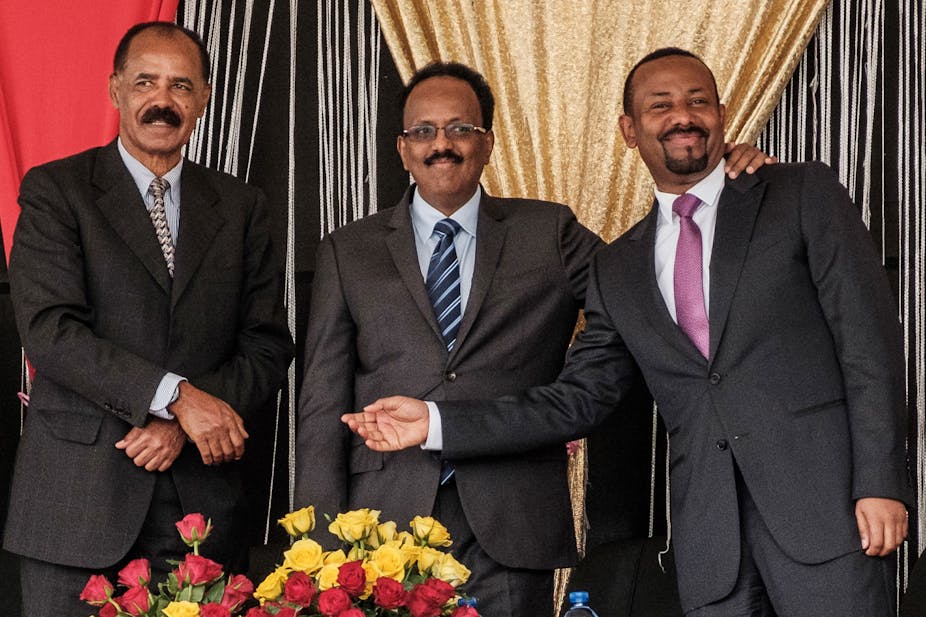
Eritrea’s President Isaias Afwerki (left), Ethiopia’s Prime Minister Abiy Ahmed (right) and Somalia’s President Mohamed Abdullahi Mohamed.


Relations in the Horn of Africa https://www.worldatlas.com/articles/whe ... frica.html are complex and complicated. They are characterised by deeply ingrained rivalries between Eritrea, Ethiopia, and Somalia in a conflict-ridden region. For decades, it has been known for civil war, conflict, and poor economic development. https://www.jstor.org/stable/j.ctt183p650

Somalia is a textbook example for state collapse https://www.jstor.org/stable/4137508 and the most fragile state https://theconversation.com/three-reaso ... alia-74238 in the world. During the 1990s, the state had disintegrated to a degree that the basic conditions and responsibilities of its government no longer functioned properly.

Eritrea and Ethiopia were at war for years. Ethiopia and Somalia also share a history of violent confrontation. One example of that ongoing conflict is the struggle to control the Ogaden region. https://link.springer.com/chapter/10.10 ... -90206-7_4

But when Ethiopian Prime Minister Abiy Ahmed made his historic visit to Eritrea in 2018, https://www.nytimes.com/2018/07/14/worl ... -abiy.html the state of conflict between the two countries came to an end. Abiy Ahmed was later awarded the Nobel Peace Prize https://www.nobelprize.org/prizes/peace ... s-release/ for his efforts.

This peace deal started a dynamic which was followed by the revolution in Sudan https://apnews.com/290aba2d7ba94493bc23111ca1b937c7 and a recent peace deal in South Sudan. https://www.bbc.com/news/world-africa-51562367

And then on January 27, 2020 the leaders of Eritrea, Ethiopia, and Somalia – President Isaias Afwerki, Prime Minister Abiy Ahmed and President Mohamed Abdullahi Farmajo, held their third trilateral meeting. https://www.horndiplomat.com/2020/01/27 ... ommunique/ They proposed to form a new regional bloc, which has been referred to as the “Horn of Africa Cooperation”. https://www.garoweonline.com/en/news/so ... ooperation

This new bloc would be an addition to their memberships in the African Union, https://au.int/ the Common Market for Eastern and Southern Africa, https://www.comesa.int/ Eastern Africa Standby Force https://www.easfcom.org/ as well as the Intergovernmental Authority on Development. https://igad.int/


The Horn of Africa.

The new bloc bears the risk of alienating the other countries in the East African region. It might also undermine the security efforts of other regional organisations. These include the Intergovernmental Authority on Development, the African Union, and the Eastern Africa Standby Force.

Thus, the promises and pitfalls of this new bloc could shape the regional architecture and cause new political challenges in the region.

In our recently published paper https://journals.sagepub.com/doi/10.117 ... 9720936689 on the proposed bloc, we assess the factors that led to the proposal for a new regional bloc in the Horn of Africa. We discuss the potential outcomes given the complex security challenges, political tensions among the neighbours, and institutional environment in the region. We argue that security challenges in the Horn of Africa and domestic concerns are core motivations for creating the cooperation.

Why a new regional bloc?

Regional cooperation https://www.igi-global.com/dictionary/e ... ence/55672 addresses a number of key issues including cross-border trade, and sustainable environment. It is also key to tackling peace and security threats.

A regional body dedicated to peace and security issues could help to address conflicts between the three states in the proposed of Horn of Africa Cooperation. It could also help them manage domestic security threats.

From an economic perspective, it is not clear how the three states could strengthen their economic ties. This is because a significant amount of trade in the region is small scale, local, informal, and sometimes illegal. In terms of trade, there is limited complementarity between the three states.

As the most populous country in the bloc, landlocked Ethiopia has an interest to strengthen transportation links and access to the sea. https://www.theeastafrican.co.ke/news/a ... index.html This would be a pathway to the world market.

When it comes to Somalia, the country has neither a reliable economic base to export goods nor the financial resources to import them. In the case of Eritrea and Ethiopia, the recently concluded conflict between the two countries means that economic ties have to be re-established.

Nevertheless, closer cooperation in the Horn of Africa bears the potential to strengthen economic and trade relations between all three states.

The creation of a new regional bloc is also an opportunity for its leaders to show activity and success on the regional stage. Putting the Horn of Africa Cooperation proposal on the table could deflect from domestic challenges in the three countries, such as Ethiopia’s current political crisis. https://theconversation.com/ethiopias-p ... lem-144893 With national elections in Ethiopia and Somalia approaching, https://www.eisa.org/calendar2020.php Ahmed and Farmajo need to gain support for re-election.

In Eritrea, Afwerki has reportedly pushed for the creation of the Horn of Africa regional bloc https://www.theeastafrican.co.ke/news/a ... index.html presumably as an opportunity to boost Eritrea’s influence regionally. It is also a chance to sideline the Intergovernmental Authority on Development, which he has boycotted for several years https://www.theeastafrican.co.ke/news/a ... index.html due to its stance on basic principles of good governance and the influence of Kenya.

Potential consequences for the region

Once established, the Horn of Africa Cooperation would become a direct competitor of the Intergovernmental Authority on Development, which is comprised of Djibouti, Eritrea, Ethiopia, Kenya, Somalia, Sudan, South Sudan and Uganda. Its efforts to manage conflicts in Somalia, Sudan and South Sudan have been fairly successful in recent years.

However, it lacks an economic integration perspective. It also suffers from ineffective governance structures and insufficient resources. https://ecdpm.org/wp-content/uploads/EC ... Report.pdf The Horn of Africa Cooperation proposal could be an attempt to push for reform within the organisation.

But the new regional bloc will have a hard time building a reputation vis-a-vis the authority. The Horn of Africa Cooperation could also affect the East Africa Standby Force’s and more importantly the African Union’s security efforts in the region through the African Peace and Security Architecture. https://theconversation.com/the-aus-pea ... aps-144554

The cooperation also stands to alienate regional partners who face the potential loss of strategic influence in the region. In fact, initial reactions from Kenya and Djibouti were frosty. Djibouti is a direct neighbour of all three states – and a potential candidate https://www.africanews.com/2020/01/28/e ... ra-summit/ to join the new bloc.

Yet, Djibouti is home to the Intergovernmental Authority on Development. It also hosts the US Combined Joint Task Force – Horn of Africa. https://www.hoa.africom.mil/ Moreover, the Addis Ababa–Djibouti Railway https://www.theguardian.com/world/2016/ ... o-djibouti is currently Ethiopia’s only access to the sea and Ethiopian business generates significant revenue for Djibouti’s ports. Therefore, transport links through Eritrea or Somalia could undermine Djibouti’s position as an economic and logistical hub.

For regional powerhouse Kenya, closer cooperation between the three neighbours could result in diminished influence in the region. As the dominating actor in the Intergovernmental Authority on Development, Kenya’s influence in the Horn would be affected by a competing Horn of Africa Cooperation.

Additionally, Kenya’s transport-link project http://www.lapsset.go.ke/ with Ethiopia and South Sudan could be threatened by the new cooperation. Therefore, it’s no surprise that the Horn of Africa Cooperation has been branded “anti-IGAD”. https://www.standardmedia.co.ke/article ... ttleground

Mixed reactions

There have been mixed responses to the Horn cooperation idea. After the trilateral announcement, former Somalia State Minister Adam Aw Hirsi https://twitter.com/JustAwHirsi created a Twitter poll:


The majority of the 1,022 people who responded were in favour of the new regional bloc. Generally, people from Ethiopia, Eritrea and Somalia welcome the initiative whereas those from Djibouti https://www.africaintelligence.com/east ... 393905-art and Kenya https://nation.africa/kenya/blogs-opini ... nce-177192 are more questioning.

In summary, the proposed Horn of Africa Cooperation promises to address transnational and cooperation problems between the three countries. Yet, it might create additional distrust, bring about conflicts in the region, affect relations to close neighbours, and complicate cooperation with other regional institutions.

This could negatively impact peacekeeping activities in the Greater Horn of Africa, most imminently in Somalia and South Sudan. But for now, it remains to be seen if the new initiative will pull states together or apart.

sesame
Member+
Posts: 7995
Joined: 28 Feb 2013, 17:55

Re: Logo is just the beginning

Post by sesame » 09 Sep 2020, 08:17

Zmeselo,

You deserve some kind of a medal for all the brilliant work you are doing. I hope you collect all of these wonderful pieces and compile them into a reference collection about what Eritrea is all about.

Enjoy this picture of Eritrean elegance!

Please wait, video is loading...

Zmeselo
Senior Member+
Posts: 37012
Joined: 30 Jul 2010, 20:43

Re: Logo is just the beginning

Post by Zmeselo » 09 Sep 2020, 09:07

sesame wrote:
09 Sep 2020, 08:17
Zmeselo,

You deserve some kind of a medal for all the brilliant work you are doing. I hope you collect all of these wonderful pieces and compile them into a reference collection about what Eritrea is all about.

Enjoy this picture of Eritrean elegance!

Please wait, video is loading...
Thank you for the compliment brother Sesame, but it's purely my pleasure. Despite the fact that it makes my brothers happy, it drives the weyane maggots totally nuts. So, it's actually, double the pleasure! :lol:

Thanx, for the wonderful pics!


Now, I give you another


Young Lion!

Henok Muluberhan is in 11th place total, in @giroditaliau23.

It's Huge!


@giroditaliau23
11th place in GC for 🇪🇷
@henokmulubrhan! In a hard battle from first stage to the finish on Aprica, he did his best. Some top 20 results, mostly with individual skills! And history was made: he became the best African rider ever on this race! 👏 Bravo! 👊
(Zero_X: @ZXCycling)

Zmeselo
Senior Member+
Posts: 37012
Joined: 30 Jul 2010, 20:43

Re: Logo is just the beginning

Post by Zmeselo » 09 Sep 2020, 09:28


The National Unity and Identity of Eritrea

By: Simon Weldemichael

https://shabait.com/2020/09/09/the-nati ... f-eritrea/

GENERAL

On Sep 9, 2020


The people of Eritrea were robbed of a culture and identity of their own, under successive periods of colonization. The colonizers worked hard to create division, erode the culture and erase the sense of collective pride. For decades Eritreans lived, struggled and sacrificed lives and limbs together. Nation, as defined by Ernest Renan, is:
a soul or spiritual principle comprised of a rich legacy of memories, present-day consent, and the desire to live together to perform great deeds in the future.
The common heritage, including the protracted resistance and sacrifice of generations, gave a new sense of common fate to Eritreans. More importantly, the thirty years of armed struggle helped Eritreans to enhance unity, pride, culture, and identity.

Eritrea is a country of nine ethnic groups, living in harmony. In Eritrea, “Unity in Diversity” is a basic principle of nation-building and national development efforts. Despite their differences and through their historical experiences, Eritrea’s diverse groups voluntarily agreed to unite as one nation. Unity, a scarce resource for many developing nations, is available in abundance in Eritrea.

Anthony D. Smith, explains national identity by setting forth five essential features:
a historic territory or homeland; common myths and historical memories; a common, mass public culture; common legal rights and duties for all members; and a common economy with territorial mobility for members.
The Eritrean national identity fulfills, these essential features of national identity. Eritreans have developed a sense of common history, culture and fraternity that helped the country to strengthen territorial integrity and maintain social stability. The strength of national unity and identity has augmented the capacity of the government, to maintain security and ensure the general welfare of the people.

The unity of the Eritrean people was nurtured especially during the struggle for independence through the efforts of the EPLF, which formulated a clear program and developed good understanding of the various sectors of the society. The inclusive and participatory nature of the struggle, served as a basis for the unity of the Eritrean people. As in the struggle, the government in Eritrea endeavors to promote the national unity of the Eritrean people on the basis of equal participation on national issues.
National unity, is a requirement for the realization of security and prosperity of every country. In this case, the government in Eritrea has shouldered its responsibility of promoting national unity of the Eritrean people. It has succeeded in helping to bring the diverse groups, each with their unique culture, language, and tradition, together. The national development objectives of the country, as outlined in the Macro Policy (1994), aim to create a peaceful and stable nation.

The peaceful and harmonious coexistence of Eritreans, has attracted admiration from all directions. In his article, ‘A Tale of Two Colonies’, Robert D. Kaplan described Eritrea as
newly independent, sleepily calm, and remarkably stable state… The country has achieved a degree of non-coercive social discipline and efficiency enviable in the developing world and particularly in Africa.
In Eritrea, every policy is designed to help achieve national unity and preserve the identity of the country. The prevalence of peace and security in the country, is the outcome of the solidarity and unity.

Eritrea is a country where its diverse people can live in harmony, peace and stability. Bronwyn Bruton, in her article ‘Eritrea: Coming In from the Cold’, argued that
Eritreans are passionately nationalistic.

Despite the virulent tribal and ethnic conflicts plaguing the rest of the region, the Eritrean government appears to have been exceptionally successful in its own nation building project. Eritreans seem largely unified, across tribal and religious categories.
(2016: 10)

The government of Eritrea always strives to ensure popular and equal participation of all citizens with a view to achieving unity, peace and prosperity. The practices of the government tell us, that it has been the guarantor and promoter of national unity and national identity of Eritrea. The strong sense of national identity, pride and allegiance to the country and strong national unity of Eritrea creates a favorable climate for the country’s socio-economic development and safeguards the independence of the country.

The National Charter of Eritrea (1994) states that
unity, equality and participation of all segments of the Eritrean society should be the bases of all our programs.
Despite various challenges and difficulties, the government in Eritrea has succeeded in establishing a system that guarantees national unity, balanced development and peace and security.

Eritreans have identified, with and internalized the symbols of the nation. If we accept the definition of national identity as ‘a type of collective identity that gives allegiance to the nation,’ the allegiance and respect of the Eritrean people to the symbols of the nation such as the state emblem, national flag, and national anthem is a living proof. Besides that, Eritreans zealously celebrate national holidays like Independence Day, Martyr’s Day and September 1st.

The government is committed to become the guarantor and promoter of national unity, security and identity. Any practice that contradicts the national unity and identity of the country has been systematically dismantled and substituted by progressive, inclusive and modern ones. As a result, the national unity of Eritrea has been consolidated and the socio-cultural diversity nurtured. Nation-building, national unity and socio-economic development are the core values of the government and they receive priority.

Eritrea has achieved national unity and national identity. However, this cannot be taken for granted. It needs continuous attention and efforts, to strengthen and improve its substance. In order to give sustenance to Eritrea’s national unity and identity, we must continue to combat divisive tendencies that may emerge in various forms.

____________


Eritrea - Debre Sina Monastry is one of the oldest monastries in Africa and the World. It was the site of the first Holy Communion prepared in the Eritrean Orthodox Church, by the 4th century [Bishop: Aba Salama].
(Tsegai Medin: @ERIHominin)

Zmeselo
Senior Member+
Posts: 37012
Joined: 30 Jul 2010, 20:43

Re: Logo is just the beginning

Post by Zmeselo » 09 Sep 2020, 10:47

In its speculative news coverage of the visit of Sudan's President of Sovereign Council to Eritrea this week, Al-Sharq Al-Awsat (Arabic Edition) veers wide off the mark to wrongly assert that the talks were eclipsed by security matters; i.e. tense situation in Kassala/Eastern Sudan.

As in the past, Al-Sharq Al-Awast's flawed news analysis stems from its proclivity to dwell on innuendos & its apparent failure to appreciate the new dynamics in the region: the fact that Eritrea-Sudan bilateral ties have been reset with a renewed sense of purpose & shared vision.

The agendas & themes of the frequent Summits and visits at senior levels, including the recent one, are accordingly driven by, and centered on, the nurturing & consolidation of comprehensive & robust ties of bilateral cooperation & mechanisms of effective follow-up/implementation.
في تغطيتها الإخبارية المرتكزة على التكهنات لزيارة رئيس مجلس السيادة السوداني إلى إرتريا هذا الأسبوع ، انحرفت "الشرق الأوسط" عن هدف من الزيارة زاعمةً أن المحادثات قد طغت عليها الأمور الأمنية، أي الوضع المتوتر في كسلا بشرق السودان.
وكعادتها، ينبع تحليل صحيفة "الشرق الأوسط" الإخباري المعيب من ميلها إلى الإسهاب في التلميحات وفشلها الواضح في تقدير الديناميكيات الجديدة في المنطقة وهي أن العلاقات الثنائية بين إرتريا والسودان قد عادت إلى مجراها الطبيعي مجددًا بغرض تحقيق الأهداف والرؤى المشتركة للبلدين والشعبين.
وبناءً على ذلك ، فإن أجندات وموضوعات القمم والزيارات المتكررة على المستويات العليا ، بما في ذلك القمة الأخيرة ، تتمحور حول رعاية وتوطيد العلاقات الشاملة والقوية للتعاون الثنائي وآليات المتابعة والتنفيذ الفعال.

Yemane G. Meskel: @hawelti


Last edited by Zmeselo on 09 Sep 2020, 18:14, edited 2 times in total.

Temt
Member+
Posts: 5438
Joined: 04 Jun 2013, 22:23

Re: Logo is just the beginning

Post by Temt » 09 Sep 2020, 10:50

Wow! oh just wow! As brother sesame stated above, thank you, brother Zmeselo, for your hard work. Such posting that is done by you and our other Eritrean brothers/sisters is the only reason I come to this otherwise Agame infested website. LOL

Zmeselo
Senior Member+
Posts: 37012
Joined: 30 Jul 2010, 20:43

Re: Logo is just the beginning

Post by Zmeselo » 09 Sep 2020, 13:25


Ernest Bevin


Count Carlo Sforza

The Bevin-Sforza Plan

In 1949, the following countries voted for the partition & dismemberment of Eritrea at the UNGA; Argentina, Australia, Belgium, Bolivia, Brazil, Canada, Chile, Colombia, Costa Rica, Cuba Denmark, Dominican Republic, Egypt, El Salvador, Ethiopia, France, Haiti, Honduras, Iceland, Iran, Lebanon, Liberia, Luxembourg, Mexico, Netherlands, New Zealand, Nicaragua, Norway, Panama, Peru, Philippines, Siam, Turkey, United Kingdom and the United States.

The following countries voted against the dismemberment of Eritrea; Burma, Belarus, Soviet, Czechoslovakia, Iraq, Pakistan, Poland, Saudi Arabia Ukraine, South Africa & Yugoslavia.

Abstained: China, Ecuador, Guatemala, India, Israel Sweden, Syria Uruguay Venezuela & Yemen.

This was how the countries finally voted, on the federation of Eritrea with Ethiopia. Some of the countries that abstained on partition, voted "NO" for federation. Haiti, voted for the partition of Eritrea & federation but Haiti's vote saved Eritrea's partition indirectly.


Cuba was inconsistent! Cuba voted "YES" for partition of Eritrea, & voted "NO" for the federation. In the 1960s & 70s, Cuba supported Eritrea's struggle for self-determination. In late 1970s, Cuba sent 17K troops to support Ethiopia's in fight against Eritrea & Somalia.

Ethiopia claimed Eritrea based on historical & geographical reasons, but voted "YES" for the partition of Eritrea to get access to the sea & voted "YES" for the Federation with Ethiopia. Liberia, Ethiopia & Egypt from Africa voted for partition. Only South Africa voted: NO!

Egypt argued that it had a valid claim over Eritrea but voted "YES" for the partition of Eritrea hoping that it would control the western part of Eritrea (to be annexed to the Sudan) & then control the Nile, but also voted for Federation.

In 1950, as members of the UN Commission of Inquiry, Pakistan & Guatemala proposed full independence while Burma & South Africa proposed Federation with Ethiopia. Sadly, Norway which voted "YES' for Eritrea's partition proposed the same; although it was rejected by UNGA in 1949.

History of Eritrea ታሪኽ ኤርትራ.تاريخ إريتريا: @Erihistory
Last edited by Zmeselo on 09 Sep 2020, 14:15, edited 3 times in total.

Zmeselo
Senior Member+
Posts: 37012
Joined: 30 Jul 2010, 20:43

Re: Logo is just the beginning

Post by Zmeselo » 09 Sep 2020, 13:55

Temt wrote:
09 Sep 2020, 10:50
Wow! oh just wow! As brother sesame stated above, thank you, brother Zmeselo, for your hard work. Such posting that is done by you and our other Eritrean brothers/sisters is the only reason I come to this otherwise Agame infested website. LOL
Thank you for your continuous encouragement, brother Temt! 🙇

I came across this interesting blog, recognizing/praising Mrs. Azieb Tsegay's achievements.

________
________________________


Five women leading the livestock revolution in Africa

6 September 2020

By Meera Shah

https://www.mamopanel.org/news/blog/202 ... on-africa/

There are approximately 249 million women livestock keepers https://www.sciencedirect.com/science/a ... via%3Dihub in Africa for whom livestock represents a major source of income and an opportunity for wealth accumulation. While the majority of them are backyard livestock producers, a few have elevated their production to successful commercial companies. Women livestock producers across Africa play a critical role in reducing hunger and creating job opportunities for Africa’s youth. However, they often face steep barriers in advancing their initiatives. Access to land, finance, markets, training and information remain a greater challenge to women than their male counterparts. On the other hand, ownership of livestock is widely recognized as an important aspect of women’s economic empowerment. Women can receive livestock through inheritance, before or during marriage, or from farmer associations. Alternatively, they may opt to purchase animals directly. In particular, small ruminants and poultry require smaller capital investments thus providing an easy entry point for their participation in livestock markets.

This blog celebrates the women that have overcome immense personal, social, cultural and economic hurdles to build and grow successful enterprises in poultry, camel milk, dairy and pigs.

Ms Anta Babacar Ngom, SEDIMA Group, Senegal


Anta Babacar Ngom is the Executive Director of SEDIMA Group, Senegal’s leading poultry production group. Established in 1976 by her father, the Sedima Group is a vertically integrated poultry business, consisting of a feed mills, hatcheries, breeding farms and an abattoir. Anta Babacar Ngom took over the business from her father in 2009 and became Executive Director in 2016. She has since steered the company’s diversification and expansion into Democratic Republic of Congo, Equatorial Guinea and Mali. In January 2017, the company invested US$ 29 million in a highly automated processing plant, where all the activities from live-bird handling to electrical stunning, scalding, defeathering, evisceration, water chilling, and grading are carried out. Some 780 people are employed directly at the plant, which has the capacity to process up to 6,000 birds per hour, https://zootecnicainternational.com/fie ... n-senegal/ all of which are halal, to serve Senegal’s largely Muslim market. The output from the processing plant also feeds directly into two KFC restaurants in Dakar, https://www.theafricareport.com/18356/v ... ale%20team with which Sedima has a national franchise agreement.


Nancy Abeid Arahamane, Tiviski, Mauritania


In Mauritania, female engineer and entrepreneur Nancy Abeid Arahamane established Africa’s first camel milk dairy http://growinginclusivemarkets.org/medi ... i_2008.pdf in 1989. Based in Nouakchott, Tiviski now produces over 20 different products out of camel, cow, and goat milk. The milk is collected at three collection centers from nomadic pastoralists, some dispersed as far as 800 km from Nouakchott. Tiviski’s products are sold at supermarkets and numerous small shops in the capital city. The company is also looking to export camel cheese to European markets, but regulatory hurdles have limited access. By 2016, the company had already acquired half of the Mauritanian pasteurized milk market. It received a US$9.5 million investment from the International Finance Corporation (IFC) and the Global Agriculture and Food Security Program (GAFSP) https://www.gafspfund.org/projects/inve ... ife-sahara in 2016 to expedite its modernization and diversification and expand its milk production. This investment has unlocked the company’s capacity to process milk from over 2,000 livestock herders from across the Mauritania Sahara, 15 percent of whom are women. The company has created over 200 direct jobs at the dairies, all of which are allocated to Mauritanians, and further indirect jobs for milk collectors in Mauritania’s Trarza and Brakna regions.


Nonny Penelope Wright, Lopey Inc and Sereledi dairy brand, Botswana


Nonny Penelope Wright founded Lopey Inc and the Sereledi dairy brands in 2013 in Ngamiland, north western Botswana. In the short timeframe that her enterprise has been running, the resourceful agripreneur http://www.lionessesofafrica.com/blog/2 ... ope-wright has gradually extended her venture across the value chain and subsidiary value chains into milk processing https://botswanaunplugged.com/13213/non ... r-the-job/ and feed production to create a sustainable and successful social enterprise. Lopey Inc operates as a dairy, pasteurizing raw milk to fresh milk, and producing four flavours of drinking yoghurt and a locally popular fermented milk, madila, all under the Sereledi brand. The products are produced to the highest standards, aiming to meet international benchmarks. The milk is produced by a herd of Jersey, Holstein and Ayrshire cows at Ms Wright’s Sereledi Farm. To ensure that the dairy cow herd continues growing, the cows are artificially inseminated using female sexed [deleted]. As a result, the size of her herd had grown six-fold in just five years, from only 10 cows in 2014 to over 60 in 2019. In addition, to maintain high levels of milk yield, Ms Wright purchased an irrigated farm https://botswanaunplugged.com/13213/non ... r-the-job/ to produce high quality feed continuously. Ms Wright also supplements the feed of her cows – especially during the dry seasons – with silage from her maize fields and store-bought supplies. She benefits from government-subsidized veterinary services. https://africanshapers.com/botswana-non ... epreneure/ To foster other young Botswana women http://emergingmarkets.dyson.cornell.ed ... -sereledi/ to get involved in agribusinesses, Ms Wright launched the Sereledi Young Women in Farming Competition https://mg.co.za/article/2016-09-20-agr ... pe-wright/ in 2016, personally donating the winning prize of BWP 10,000.


Anna Phosa, Dreamland Piggery and Abattoir, South Africa


Anna Phosa is the founder of Dreamland piggery – a multi-million-rand family operated farm in South Africa. With an initial personal investment of US$ 100 to buy 4 pigs in 2004, Ms Phosa has successfully grown this operation to include feed production and a purchase contract from South Africa’s second largest supermarket chains, Pick n’ Pay. A small piece of land provided to her by the Department of Agriculture https://www.businesslive.co.za/bd/compa ... ig-farmer/ provided a strong boost to transition from a backyard producer to a commercial producer of pigs. Her first contract with the retailer required only the supply of 10 pigs per week. This doubled and then quintupled in just two years by 2010, valued at R25 million deal (approximately US$ 1.9 million). https://foundersafrica.com/meet-anna-ph ... ig-farmer/ It was this contract that enabled her to unlock funding from ABSA Bank and USAID in 2011 to buy a 350-hectare farm property where she produces maize to feed the pigs. By 2016, Ms Phosa was contracted to supply 300-350 pigs a week, https://mg.co.za/article/2018-08-24-00- ... ig-farmer/ from her own farm and from other local farmers. She also secured a separate contract in 2018 to supply 50 pigs per week to MassMart, https://yali.state.gov/empower-women-to ... he-future/ the second-largest distributor of consumer goods on the continent. Dreamland piggery employs 40 permanent staff and 10 seasonal workers, most of whom are youth from nearby farms and informal settlements.


Azieb Tsegay, Dairy, Eritrea


Mrs Azieb Tsegay is the founder and owner, of one of the biggest private dairy farms in Eritrea. Although her venture into livestock keeping began with poultry farming in 2001, a bird flu epidemic in 2007 forced her to divert into dairy farming. The Ministry of Agriculture guided Mrs Tsegay towards establishing her enterprise in Halhale, north west of Asmara. Growing her herd from an initial investment of only two cows, Mrs Tsegay now owns over 100 cows, producing 700 liters of milk per day https://www.agriland.ie/farming-news/ex ... -dairying/ and collecting 3000-4000 litres from surrounding farms. The farm employs 30 labourers. She has overcome several challenges https://www.tesfanews.net/azieb-poultry ... r-prosper/ including environmental degradation, droughts, and a lack of skilled workforce following lengthy political upheaval. Capitalizing on Eritrea’s Italian influence/heritage, her dairy company produces yogurt, [deleted] (traditional herbed flavours, and conventional varieties) and nineteen different types of soft and hard cheeses, including mozzarella, ricotta, fontina and grana. Marketing of products is led by her son who specialised in dairy farming in The Netherlands. Their yogurts and cheeses are available at three outlets in Asmara, as well as the hospitality industry across the country. Mrs Tsegay’s company is also the lead supplier of dairy products to the mining industry – one of the largest employers in Eritrea. To ensure continuous production of milk and dairy products, Mrs Tsegay has invested http://www.shabait.com/articles/nation- ... repreneur- in a warehouse to store feed, processing equipment, phytosanitary measures and storage facilities. As a result, she can maintain a regular supply to her markets and while absorbing between 1500 and 4000 litres of milk per day from milk cooperatives nearby.


This blog draws from the MaMo Panel’s latest report on livestock: Meat, Milk & More: Policy innovations to shepherd inclusive and sustainable livestock systems in Africa https://www.mamopanel.org/resources/rep ... d-inclusi/

Zmeselo
Senior Member+
Posts: 37012
Joined: 30 Jul 2010, 20:43

Re: Logo is just the beginning

Post by Zmeselo » 10 Sep 2020, 07:57


Mosana Debesay, winner of African women's cycling championships in 2019. Mosana, with a Million dollar smile.


ኣብ ዞባ ደ/ቐ/ባሕሪ ንምስፋሕን ምጽጋንን ጽርግያታት፡ ምህናጽ መጠነ ንኡስ ዲጋታት፡ ምስራሕ ራህያታት፡ መእለይ ወሓይዝን ካልእ ልምዓታዊ መደባትን ተዋፊረን ዝርከባ ዘመናዊ ማሽነሪታት።
Credit: Ahmedani Mohamed

Zmeselo
Senior Member+
Posts: 37012
Joined: 30 Jul 2010, 20:43

Re: Logo is just the beginning

Post by Zmeselo » 10 Sep 2020, 08:10


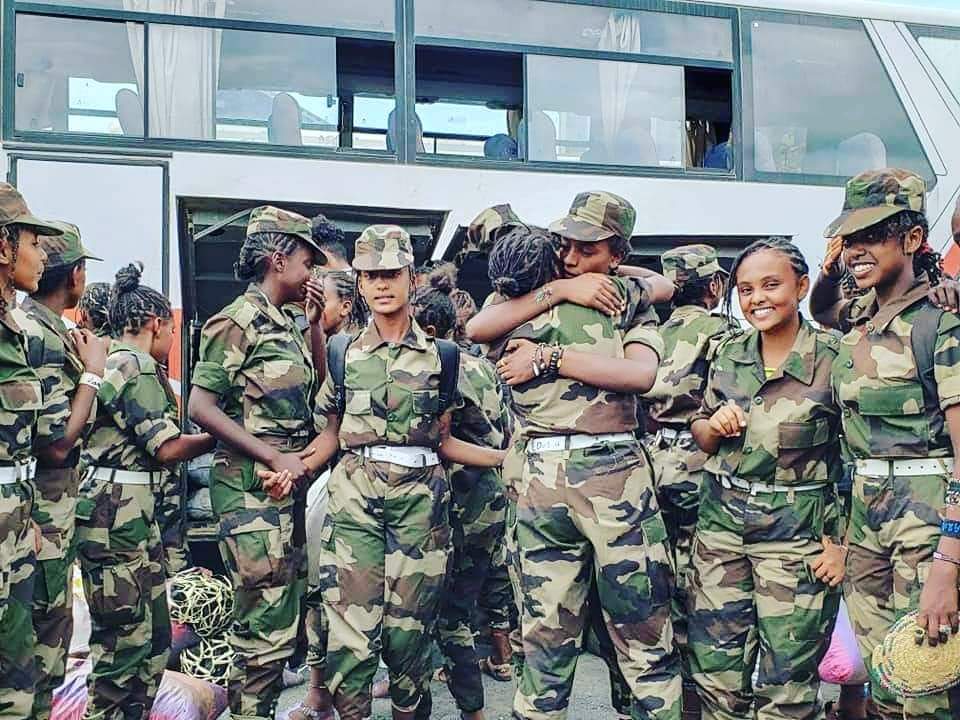
Successful delighted returnees from Sawa completed their High School education & 90 days military training in health. One proud Dad (in my neighborhood) meets his daughter Yosan, looking forward 2 join MaiNefhi College 4 further studies in the Life Sciences ✔
(Seble Ephrem: @SebleEphrem)

Post Reply