
Can Ethiopia afford a 8.25 Billion Dollar Nuke?
Ethiopia must ensure her independence advancements and stability via Nuclear Weapons, against such enemies like Wedimedhin, and Egypt
Re: Can Ethiopia afford a 8.25 Billion Dollar Nuke?
WASHINGTON – The life-extension program for the B61-12 atomic bomb will cost just over $8.25 billion, according to a new estimate from the National Nuclear Security Administration (NNSA).
The new cost estimate was completed over the summer as the agency prepared to enter the production-engineering phase of the program. The baseline cost of the program is $7.605 billion, with an additional $648 million in "funds leveraged from other NNSA programs for technology and manufacturing readiness," according to an agency statement – money that has common applications across multiple weapon systems.
That cost does not include the estimated $1.3 billion that the Department of Defense plans to spend on developing and procuring tailkits for the weapons. With that included, the total cost for the program sits at roughly $9.5 billion.
The NNSA is a semi-autonomous department within the Department of Energy. While the Defense Department manages the delivery systems of the nuclear force — ships, planes and missiles — NNSA has oversight over the development, maintenance and disposal of nuclear warheads.
The agency is perusing a modernization plan known as the "3+2 Strategy," under which the NNSA is consolidating the American arsenal of warheads into five variants. The five ballistic-missile warheads now in service are being consolidated into three new interoperable warheads known as the IW-1, IW-2, and IW-3, while the five bomb and cruise-missile warhead types are being consolidated into two replacement warhead designs, the W80-4 and the B61-12.
The B61-12 replaces the B61-3, -4, -7 and -10 variants, in a move that proponents say will both update aging parts of the weapons and drive down costs for upkeep.
The new cost estimate was completed over the summer as the agency prepared to enter the production-engineering phase of the program. The baseline cost of the program is $7.605 billion, with an additional $648 million in "funds leveraged from other NNSA programs for technology and manufacturing readiness," according to an agency statement – money that has common applications across multiple weapon systems.
That cost does not include the estimated $1.3 billion that the Department of Defense plans to spend on developing and procuring tailkits for the weapons. With that included, the total cost for the program sits at roughly $9.5 billion.
The NNSA is a semi-autonomous department within the Department of Energy. While the Defense Department manages the delivery systems of the nuclear force — ships, planes and missiles — NNSA has oversight over the development, maintenance and disposal of nuclear warheads.
The agency is perusing a modernization plan known as the "3+2 Strategy," under which the NNSA is consolidating the American arsenal of warheads into five variants. The five ballistic-missile warheads now in service are being consolidated into three new interoperable warheads known as the IW-1, IW-2, and IW-3, while the five bomb and cruise-missile warhead types are being consolidated into two replacement warhead designs, the W80-4 and the B61-12.
The B61-12 replaces the B61-3, -4, -7 and -10 variants, in a move that proponents say will both update aging parts of the weapons and drive down costs for upkeep.
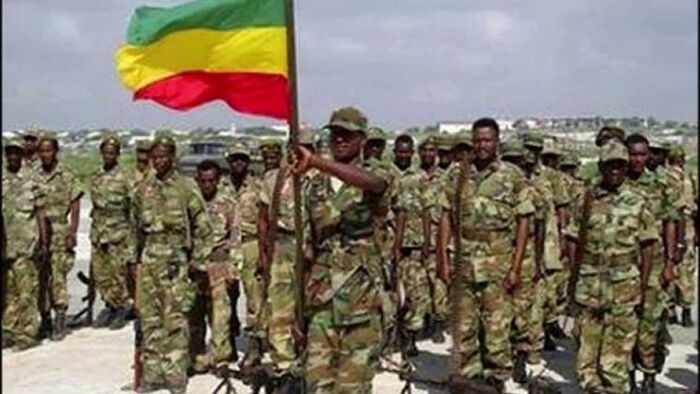


Re: Can Ethiopia afford a 8.25 Billion Dollar Nuke?
Ethiopian Doc Ports we can Invade
1) Djibouti
2) Assab
3) Berbera, Somaliland
4) Mombasa, Kenya
5) Suakian, Sudan
1) Djibouti
2) Assab
3) Berbera, Somaliland
4) Mombasa, Kenya
5) Suakian, Sudan