
-
Noble Amhara
- Senior Member
- Posts: 13754
- Joined: 02 Feb 2020, 13:00
- Location: Abysinnia
-
sebdoyeley
- Member+
- Posts: 5507
- Joined: 14 Feb 2020, 04:27
Re: Hamasien Ethiopians
nobody care your Ahiya text
-
Eripoblikan
- Member
- Posts: 3547
- Joined: 15 Sep 2019, 13:49
-
Deqi-Arawit
- Senior Member
- Posts: 16274
- Joined: 29 Mar 2009, 11:10
- Location: Bujumbura Brundi
Re: Hamasien Ethiopians
Ante wu$&#sha ahiya
This is the son of Ras Weldemichael Solomon of Hazega
-
( ͡° ͜ʖ ͡°)
- Member
- Posts: 2312
- Joined: 11 Jan 2020, 21:22
Re: Hamasien Ethiopians


Look at you. Now look at me !!!

Re: Hamasien Ethiopians
Italian Colonization
Written by Winta Weldeyesus
http://www.shabait.com/about-eritrea/hi ... lonization
About Eritrea - History & Culture
The coming of Italians to Eritrea
In 1869 Italy bought land in Asseb under the pretext of land needed for a trading company from the governors of the region, Sultan Ibrahim and Sultan Hassen, and after 13 years Italy declared Asseb as its official colony.
Starting from the early settlement of Italians in Asseb, the people of Denkalia knew that Italy had the ulterior motive to colonize the whole country and were opposing the presence of Italians in the region as a result of which many Italian explorers were killed. In the period between 1881 and 1885, two groups of Italian explorers were killed in Southern Denkalia.
Despite the opposition from the inhabitants, Italy continued to expand its hold and occupied Beilul in January 1885. All the territories occupied by Italians used to be under Egyptian rule but there was not much opposition from the Egyptian side. As a result, Italy continued occupying many territories and by February 1885, they had occupied Massawa. By the end of the same year, the Italians declared all the territories under their rule as their official colonies.
While Italians were expanding their colony in the Eastern lowlands of the country, Raas Alula was looting the highlands and thus many Eritrean traditional rulers began cooperating with the Italians. Some of the early leaders that accepted the Italians were, Baranbaras Kafl of Denbelas and Kentibai Hamed of Rora Habab. Exasperated with continuous invasions and lootings from Raisi Alula, these leaders took side with the Italians in a bid to receive arms and other kinds of assistance.

Italian Soldiers Cemetary in Dogali

The Battle of Dogali
Angered by the cooperation Between the Italians and the Eritrean rulers, Raas Alula confronted the Italians at Sehatit in January 25, 1887 and was defeated. But on the next day of the battle Alula annihilated an entire Italian regiment in Dogali. The following year Raas Alula left to join Emperor Yohannes to fight the Mahdist invasion, and thus there were no battle fought between the Italians and the Ethiopian rulers after the battle of Dogali. When Emperor Yohannes was killed by the Mahadists in March 1889, Menelik was crowned as the King of Shoa.
While rulers were changing in Ethiopia, the Italians in Eritrea were expanding their occupation and in July 26, 1888 they occupied Keren, with the help of Baranbaras Kafl. Flanked by 2000 of his troops sporting 600 guns provided by the Italians, the Baranbaras defeated Basha Gebermariam, Alula's consul in Keren. But after he conquered Keren, he began working against the Italians and undertook the administration of Keren on his own. He went on to invade other areas in the region, a move which made the Italians angry and as a result they declared war against him. On 2nd June, 1889 when majority of kafl’s troops were out of Keren for another invasion, the Italians occupied Keren and Kafl was captured and taken as a prisoner to Asseb, and he died there.
Two months after the defeat and imprisonment of Kafl, the Italians conquered Asmara and after 10 days they occupied both former Seraye and Akuleguzai provinces. After they conquered the highlands, the Italians began administrating both the lowlands and highlands and gave their new colony the name “Eritrea” on January 1, 1980. In the month of October, the Hidareb ethnic group accepted the Italians as their governors and so did the rest of the society. In 1892, Italians fought against the Mahdists at Serobeyti and in 1893 at Akordat. After those two battles, the present day Eritrea got its boundaries. While Eritrea was being established as a colony, Ethiopia was also forming a nation under the Shoan King: Menelik.
The Italians did not face any kind of opposition from the Eritrean people and rulers and the main reasons that made it easy for the Italians to occupy the colony were:
1. The Eritrean people facing many invasions and atrocities from Egyptians, the Mahadists and the rulers of Tigray thought that Italians might be able to restore peace and stability in the area.
2. The drought that resulted in the region, made the people migrate to neighboring countries and there was no authority and unity of the people to oppose the Italians.
3. The Italians were imprisoning and killing, those few who tried to oppose their invasion.
The Eritrean Opposition against the Italian colonization
The Eritrean people acquiesced to the Italian colonization, inorder to escape from the atrocities at the hands of Ethiopian rulers. However, the Italians who were perceived as sympathizers by the people were not concerned about the people’s problems. Their aim was merely, to provide their own people with land and resources available in the region. After recognizing the real motive behind the initial Italian support Eritreans began to demonstrate their opposition, which resulted in the killing of 12 traditional leaders and 800 of their followers in the first year of the Italian colonization (1889-1890).
Baranbaras kafl, and Degyat Mesfun, the son of Raas Weldemicheal were imprisoned, which soon after they both died. Degyat Tesemma Immam was taken to Italy as a prisoner where he lost his sanity, and Degyat Hadgenbes Gelwet of Adi Tekelezan was killed in a prison in Masswa. Kentiba Hailu of Tseazzega was killed in Asmara and his son Tedla was killed in Genda'e and other legendary leaders like the son of Baranbaras Kafl and Baranbaras Yelma were killed brutally.
Many others were imprisoned and killed in Asseb and Nakura, including Ali Mohammed Osman Buri, Degyat Mahraye, Mohammed Nuri etc. The people that accepted the Italians to escape from the crimes of Ethiopian rulers and Mahdists, began facing worse oppression from the Italians colonizers.
As a result of the Italians' brutality, various popular mutinies erupted in different parts of the country. Although there exists no detailed record of these oppositions, the following are a brief part of the history of the Eritrean revolt against Italian colonizers:
1. Beni Amer

One of the legendary fighters of the Beni Amer was Zemat Wed Ekud, who used to reign over the upper part of Barka before the coming of the Italians to the region. Due to his continuous confrontation with the rulers of Tigray, he was famous and respected among his people. Although many in the region had accepted the Italians to escape from the crimes of the Tigray rulers, Zemat Wed Ekud didn’t.
After several attempts, the Italians begun to understand that they can’t capture Zemat Wedi Ekud & as a result they sent one of his relatives. When he went out of his place unarmed and unprepared to receive his relative, they captured him and sent him to the prison in Nakura where he died. There were others heroes in Barka who scarified their lives for their land and people, like Bulgeyan Dember Iygan who were from Nara ethnic group. The opposition against the Italians was active in many parts of the country and the Italians were imprisoning anyone, suspected to be member of the opposition movement. Nakura being an isolated island in the Red Sea with extremely hot climate, it was difficult for anyone survive there for more than six months.
The Escape from Nakura Prison
In the year 1899, there were around 119 prisoners in Nakura with 27 guards and two Italian commanders. In the month of November, 12 prisoners with six guards were sent to bring water from the nearby well. Four of the prisoners separated from the rest of the group, when they reached one isolated place & they killed one of the guards and took the weapon of the other one. Later they took the other guards' weapons and broke into the prison and freed 107 Eritrean prisoners and took the prisoners, the captured six guards and one Italian commander to Bure.
One of the Eritrean men who orchestrated the escape fron Nakura was Ali Mohammed Osman Buri, an Afar by ethnicity who used to live along the coastal area before his imprisonment. After the break from the prison, Osman Buri was known as “Sebar Nakura”, literally the 'breaker of Nakura'. Others Eritrean notables who escaped included: Degyat Mahray and Blata Gebregezabher Gilay of Tseazzga
Degyat Abera Hailu
Another legendary opposition movement leader, was Degyat Abera Hailu. Born in 1840 in Tseazegga, from his father Kentiba Hailu. In 1891, realizing that the Italians were after them, Degyat Abera and his followers left their hometown and staged a guerrilla movement. Later, the Italians became aware that he had abandoned his hometown and sent 100 soldiers headed by Captain Batini to capture Degayt Abera. In March 1892, Degyat Abera Hailu confronted the troops of captain Batini and defeated them at the battle of Walta Medhanit; where the captain was killed. The Italians retaliated, by killing and looting the residents of the Degayt’s hometown. As the crimes continued, Degayt and his followers moved to Tigray to continue their opposition.
In 1896, Degayt Abera asked help from King Menelik of central Ethiopia and joined him in the battle of Adwa; where Italy was defeated by Menelik. Following this defeat, Italy signed an infamous treaty with King Menelik; in which the Shoan King agreed to deport Eritrean oppositions residing in Tigray. As a result, Degayt Abera was banned from engaging in any rebellious actions and was later was taken to Shoa, where he later died.
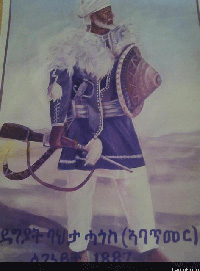

Degayt Bahta Hagos
Another legendary hero, is Degayt Bahta Hagos of Segeneyti. The opposition movement lead by Degayt Bahta, was the largest and well-organized movement at the time in the Eritrean colony. He was born in 1839 and lived in Segeneyti until 1875. Fitewrari Embaye of Tigray, began forcing the people of Segenayti to pay unfair amount of taxes. After a while, the people of Segenayti were unable to accept or tolerate the amount of taxes imposed by the Tigrayan Fitewrari and began to demonstrate their unhappiness with the way things were going. During one such protest, Degyat Bahta killed the Fitewrari. After the death of Fitewrari Embaye, Degyat Bahta left his hometown to avoid retaliation from the rulers of Tigray and moved to Sahel. The governors of Sahel accepted him and gave him the title of “ Kentiba”; where he assumed the command of troops and he fought many battles against Raas Alula.
After the occupation of Massawa by the Italians, Degyat Bahta took refuge with the Italians and began receiving weapons from them. After the Italians took hold of the Akelguzay district, they made Bahta the administrator of the region and gave him the title 'Degyat'. For five years, Degyat Bahta served as administrator of the region and won the trust of the Italians but he was never happy with they were doing.
In the year 1893, almost all the farming land in kebesa was taken by the colonizers and was given to Italian farmers brought to Eritrea as a solution for the shortage of arable land in Italy. The Italians sought to take the fertile & the majority of the arable land in the Kebesa and give it to Italian settlers. Natives who had migrated to other areas as a result of drought returned home to find the land of their forefathers, at the hand of foreign white men. As a result, in December 1894 Bahta Hagos officially declared opposition against the Italians and imprisoned the Italian commander- Lt. Giovani Sangoneti- with his brother and son by his side. Following this, Bahta sought to unite the entire Eritrean kebesa against the Italians. After this, he confronted an Italian front at Halai on 18 December 1894 and was about to defeat them but the Italians were rescued by heavily armed reinforcements of 3,000 troops. Soon after, the legendary Eritrean warrior Degyat Bahta Hagos was martyred and his troops were forced to retreat. After Bahta’s death, his brother and followers moved to Tigray. However, Degyat Bahta's death was not in vain; for the Italians realized that they cannot easily take land from the natives.
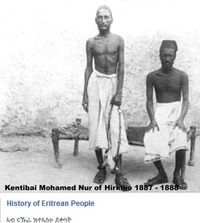
Abubeker Ahmed and Mohammed Nuri
The people of Saho, were also known for their opposition to any colonizer and bravery. They had defeated Raas Araia and Raas Alula, due to the repeated attempts by the Tigrayan rulers to colonize the people of Saho. But when the attempts of these rulers intensified the people of Saho were compelled to accept Italian rule, thinking that it would be the lesser of two evils. But they too, soon began to stage opposition against the Italians. Abubeker Ahmed and Mohammed Nuri, were some of the well-known opposition leaders from among the people of Saho.
In 1901 Abubeker, together with 20 of his followers confronted 200 Italians troops and killed two and injured four of the soldiers. But Abubeker's wife was captured during this confrontation, while he escaped to Adelarabe region and began inciting people to stand against the colonizers. The Italians tried to persuade and threaten the people of Saho to fight against Abubeker, which only made the people’s support of Abubeker grow stronger. Abubeker continued to oppose the Italians and they made various attempts to capture him, which all failed. Even Italy’s newspapers, began writing articles about his opposition and he died in one of his fights with the Italians.
Another Saho hero was: Mohammed Nuri. He was one of those, who broke out from the Nakura prison. After his escape, he was living in Tigray and was attacking Italian commanders from Tigray; jointly with Gebremedhin, the son of Degyat Bahta Hagos.
While many Eritrean heroes were organizing against Italians from Tigray, Italy made an agreement with King Menelik to deport all Eritrean opposition leaders from Tigray. Consequently, Degayt Gebreselasie of Tigray imprisoned Mohammed Nuri from which he ecaped with five of his followers and settled in Gundet. Following this nothing is known about the life of his Eritrean hero, though he is always remembered as one of the brave men that opposed the Italian colonization.
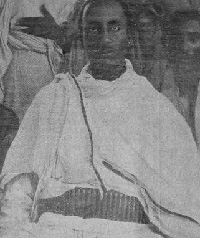
Degyat Mahray
We previously seen that there was a man named Degayt Mahray, who escaped from Nakura together with Ali Mohammed Osman Bura.
Just as Degyat Abera and Mohammed Nuri, Degyat Mahray also left to Tigray and start staging attacks against the Italians from Tigray. In 1906, Degyat Mahray was captured by Degyat Gebreselassie of Tigray and was taken to Shoa; where he died there.
The Eritrean people opposed the Italian colonizers from the very beginning but they had no unity among them and had no leadership to guide them, under a unified front. Despite their attempts, Eritreans remained under the oppressive reign of the Italians and Ethiopians. There were many opposition movement leaders that were imprisoned by the kings of Ethiopia and Emperor Menelik banned all movements, inorder to protect his own interest in the region.
As mentioned earlier, the Italians were able to form their colony so easily because the people accepted them as liberators from kings of Tigray; who were suppressing them. Their agreement with Emperor Menelik also facilitated matters for the Italians.
Italy stayed in Eritrea for around 60 years, before they were ousted by the British during the WWII. The Italian colonial era is a significant stage in the Eritrean history, and will be briefly illustrated in the next article.
Source :- "Tarik Hzbi Eritrea"
Translated by Winta Weldeyesus
Written by Winta Weldeyesus
http://www.shabait.com/about-eritrea/hi ... lonization
About Eritrea - History & Culture
The coming of Italians to Eritrea
In 1869 Italy bought land in Asseb under the pretext of land needed for a trading company from the governors of the region, Sultan Ibrahim and Sultan Hassen, and after 13 years Italy declared Asseb as its official colony.
Starting from the early settlement of Italians in Asseb, the people of Denkalia knew that Italy had the ulterior motive to colonize the whole country and were opposing the presence of Italians in the region as a result of which many Italian explorers were killed. In the period between 1881 and 1885, two groups of Italian explorers were killed in Southern Denkalia.
Despite the opposition from the inhabitants, Italy continued to expand its hold and occupied Beilul in January 1885. All the territories occupied by Italians used to be under Egyptian rule but there was not much opposition from the Egyptian side. As a result, Italy continued occupying many territories and by February 1885, they had occupied Massawa. By the end of the same year, the Italians declared all the territories under their rule as their official colonies.
While Italians were expanding their colony in the Eastern lowlands of the country, Raas Alula was looting the highlands and thus many Eritrean traditional rulers began cooperating with the Italians. Some of the early leaders that accepted the Italians were, Baranbaras Kafl of Denbelas and Kentibai Hamed of Rora Habab. Exasperated with continuous invasions and lootings from Raisi Alula, these leaders took side with the Italians in a bid to receive arms and other kinds of assistance.
Italian Soldiers Cemetary in Dogali
The Battle of Dogali
Angered by the cooperation Between the Italians and the Eritrean rulers, Raas Alula confronted the Italians at Sehatit in January 25, 1887 and was defeated. But on the next day of the battle Alula annihilated an entire Italian regiment in Dogali. The following year Raas Alula left to join Emperor Yohannes to fight the Mahdist invasion, and thus there were no battle fought between the Italians and the Ethiopian rulers after the battle of Dogali. When Emperor Yohannes was killed by the Mahadists in March 1889, Menelik was crowned as the King of Shoa.
While rulers were changing in Ethiopia, the Italians in Eritrea were expanding their occupation and in July 26, 1888 they occupied Keren, with the help of Baranbaras Kafl. Flanked by 2000 of his troops sporting 600 guns provided by the Italians, the Baranbaras defeated Basha Gebermariam, Alula's consul in Keren. But after he conquered Keren, he began working against the Italians and undertook the administration of Keren on his own. He went on to invade other areas in the region, a move which made the Italians angry and as a result they declared war against him. On 2nd June, 1889 when majority of kafl’s troops were out of Keren for another invasion, the Italians occupied Keren and Kafl was captured and taken as a prisoner to Asseb, and he died there.
Two months after the defeat and imprisonment of Kafl, the Italians conquered Asmara and after 10 days they occupied both former Seraye and Akuleguzai provinces. After they conquered the highlands, the Italians began administrating both the lowlands and highlands and gave their new colony the name “Eritrea” on January 1, 1980. In the month of October, the Hidareb ethnic group accepted the Italians as their governors and so did the rest of the society. In 1892, Italians fought against the Mahdists at Serobeyti and in 1893 at Akordat. After those two battles, the present day Eritrea got its boundaries. While Eritrea was being established as a colony, Ethiopia was also forming a nation under the Shoan King: Menelik.
The Italians did not face any kind of opposition from the Eritrean people and rulers and the main reasons that made it easy for the Italians to occupy the colony were:
1. The Eritrean people facing many invasions and atrocities from Egyptians, the Mahadists and the rulers of Tigray thought that Italians might be able to restore peace and stability in the area.
2. The drought that resulted in the region, made the people migrate to neighboring countries and there was no authority and unity of the people to oppose the Italians.
3. The Italians were imprisoning and killing, those few who tried to oppose their invasion.
The Eritrean Opposition against the Italian colonization
The Eritrean people acquiesced to the Italian colonization, inorder to escape from the atrocities at the hands of Ethiopian rulers. However, the Italians who were perceived as sympathizers by the people were not concerned about the people’s problems. Their aim was merely, to provide their own people with land and resources available in the region. After recognizing the real motive behind the initial Italian support Eritreans began to demonstrate their opposition, which resulted in the killing of 12 traditional leaders and 800 of their followers in the first year of the Italian colonization (1889-1890).
Baranbaras kafl, and Degyat Mesfun, the son of Raas Weldemicheal were imprisoned, which soon after they both died. Degyat Tesemma Immam was taken to Italy as a prisoner where he lost his sanity, and Degyat Hadgenbes Gelwet of Adi Tekelezan was killed in a prison in Masswa. Kentiba Hailu of Tseazzega was killed in Asmara and his son Tedla was killed in Genda'e and other legendary leaders like the son of Baranbaras Kafl and Baranbaras Yelma were killed brutally.
Many others were imprisoned and killed in Asseb and Nakura, including Ali Mohammed Osman Buri, Degyat Mahraye, Mohammed Nuri etc. The people that accepted the Italians to escape from the crimes of Ethiopian rulers and Mahdists, began facing worse oppression from the Italians colonizers.
As a result of the Italians' brutality, various popular mutinies erupted in different parts of the country. Although there exists no detailed record of these oppositions, the following are a brief part of the history of the Eritrean revolt against Italian colonizers:
1. Beni Amer
One of the legendary fighters of the Beni Amer was Zemat Wed Ekud, who used to reign over the upper part of Barka before the coming of the Italians to the region. Due to his continuous confrontation with the rulers of Tigray, he was famous and respected among his people. Although many in the region had accepted the Italians to escape from the crimes of the Tigray rulers, Zemat Wed Ekud didn’t.
After several attempts, the Italians begun to understand that they can’t capture Zemat Wedi Ekud & as a result they sent one of his relatives. When he went out of his place unarmed and unprepared to receive his relative, they captured him and sent him to the prison in Nakura where he died. There were others heroes in Barka who scarified their lives for their land and people, like Bulgeyan Dember Iygan who were from Nara ethnic group. The opposition against the Italians was active in many parts of the country and the Italians were imprisoning anyone, suspected to be member of the opposition movement. Nakura being an isolated island in the Red Sea with extremely hot climate, it was difficult for anyone survive there for more than six months.
The Escape from Nakura Prison
In the year 1899, there were around 119 prisoners in Nakura with 27 guards and two Italian commanders. In the month of November, 12 prisoners with six guards were sent to bring water from the nearby well. Four of the prisoners separated from the rest of the group, when they reached one isolated place & they killed one of the guards and took the weapon of the other one. Later they took the other guards' weapons and broke into the prison and freed 107 Eritrean prisoners and took the prisoners, the captured six guards and one Italian commander to Bure.
One of the Eritrean men who orchestrated the escape fron Nakura was Ali Mohammed Osman Buri, an Afar by ethnicity who used to live along the coastal area before his imprisonment. After the break from the prison, Osman Buri was known as “Sebar Nakura”, literally the 'breaker of Nakura'. Others Eritrean notables who escaped included: Degyat Mahray and Blata Gebregezabher Gilay of Tseazzga
Degyat Abera Hailu
Another legendary opposition movement leader, was Degyat Abera Hailu. Born in 1840 in Tseazegga, from his father Kentiba Hailu. In 1891, realizing that the Italians were after them, Degyat Abera and his followers left their hometown and staged a guerrilla movement. Later, the Italians became aware that he had abandoned his hometown and sent 100 soldiers headed by Captain Batini to capture Degayt Abera. In March 1892, Degyat Abera Hailu confronted the troops of captain Batini and defeated them at the battle of Walta Medhanit; where the captain was killed. The Italians retaliated, by killing and looting the residents of the Degayt’s hometown. As the crimes continued, Degayt and his followers moved to Tigray to continue their opposition.
In 1896, Degayt Abera asked help from King Menelik of central Ethiopia and joined him in the battle of Adwa; where Italy was defeated by Menelik. Following this defeat, Italy signed an infamous treaty with King Menelik; in which the Shoan King agreed to deport Eritrean oppositions residing in Tigray. As a result, Degayt Abera was banned from engaging in any rebellious actions and was later was taken to Shoa, where he later died.
Degayt Bahta Hagos
Another legendary hero, is Degayt Bahta Hagos of Segeneyti. The opposition movement lead by Degayt Bahta, was the largest and well-organized movement at the time in the Eritrean colony. He was born in 1839 and lived in Segeneyti until 1875. Fitewrari Embaye of Tigray, began forcing the people of Segenayti to pay unfair amount of taxes. After a while, the people of Segenayti were unable to accept or tolerate the amount of taxes imposed by the Tigrayan Fitewrari and began to demonstrate their unhappiness with the way things were going. During one such protest, Degyat Bahta killed the Fitewrari. After the death of Fitewrari Embaye, Degyat Bahta left his hometown to avoid retaliation from the rulers of Tigray and moved to Sahel. The governors of Sahel accepted him and gave him the title of “ Kentiba”; where he assumed the command of troops and he fought many battles against Raas Alula.
After the occupation of Massawa by the Italians, Degyat Bahta took refuge with the Italians and began receiving weapons from them. After the Italians took hold of the Akelguzay district, they made Bahta the administrator of the region and gave him the title 'Degyat'. For five years, Degyat Bahta served as administrator of the region and won the trust of the Italians but he was never happy with they were doing.
In the year 1893, almost all the farming land in kebesa was taken by the colonizers and was given to Italian farmers brought to Eritrea as a solution for the shortage of arable land in Italy. The Italians sought to take the fertile & the majority of the arable land in the Kebesa and give it to Italian settlers. Natives who had migrated to other areas as a result of drought returned home to find the land of their forefathers, at the hand of foreign white men. As a result, in December 1894 Bahta Hagos officially declared opposition against the Italians and imprisoned the Italian commander- Lt. Giovani Sangoneti- with his brother and son by his side. Following this, Bahta sought to unite the entire Eritrean kebesa against the Italians. After this, he confronted an Italian front at Halai on 18 December 1894 and was about to defeat them but the Italians were rescued by heavily armed reinforcements of 3,000 troops. Soon after, the legendary Eritrean warrior Degyat Bahta Hagos was martyred and his troops were forced to retreat. After Bahta’s death, his brother and followers moved to Tigray. However, Degyat Bahta's death was not in vain; for the Italians realized that they cannot easily take land from the natives.
Abubeker Ahmed and Mohammed Nuri
The people of Saho, were also known for their opposition to any colonizer and bravery. They had defeated Raas Araia and Raas Alula, due to the repeated attempts by the Tigrayan rulers to colonize the people of Saho. But when the attempts of these rulers intensified the people of Saho were compelled to accept Italian rule, thinking that it would be the lesser of two evils. But they too, soon began to stage opposition against the Italians. Abubeker Ahmed and Mohammed Nuri, were some of the well-known opposition leaders from among the people of Saho.
In 1901 Abubeker, together with 20 of his followers confronted 200 Italians troops and killed two and injured four of the soldiers. But Abubeker's wife was captured during this confrontation, while he escaped to Adelarabe region and began inciting people to stand against the colonizers. The Italians tried to persuade and threaten the people of Saho to fight against Abubeker, which only made the people’s support of Abubeker grow stronger. Abubeker continued to oppose the Italians and they made various attempts to capture him, which all failed. Even Italy’s newspapers, began writing articles about his opposition and he died in one of his fights with the Italians.
Another Saho hero was: Mohammed Nuri. He was one of those, who broke out from the Nakura prison. After his escape, he was living in Tigray and was attacking Italian commanders from Tigray; jointly with Gebremedhin, the son of Degyat Bahta Hagos.
While many Eritrean heroes were organizing against Italians from Tigray, Italy made an agreement with King Menelik to deport all Eritrean opposition leaders from Tigray. Consequently, Degayt Gebreselasie of Tigray imprisoned Mohammed Nuri from which he ecaped with five of his followers and settled in Gundet. Following this nothing is known about the life of his Eritrean hero, though he is always remembered as one of the brave men that opposed the Italian colonization.
Degyat Mahray
We previously seen that there was a man named Degayt Mahray, who escaped from Nakura together with Ali Mohammed Osman Bura.
Just as Degyat Abera and Mohammed Nuri, Degyat Mahray also left to Tigray and start staging attacks against the Italians from Tigray. In 1906, Degyat Mahray was captured by Degyat Gebreselassie of Tigray and was taken to Shoa; where he died there.
The Eritrean people opposed the Italian colonizers from the very beginning but they had no unity among them and had no leadership to guide them, under a unified front. Despite their attempts, Eritreans remained under the oppressive reign of the Italians and Ethiopians. There were many opposition movement leaders that were imprisoned by the kings of Ethiopia and Emperor Menelik banned all movements, inorder to protect his own interest in the region.
As mentioned earlier, the Italians were able to form their colony so easily because the people accepted them as liberators from kings of Tigray; who were suppressing them. Their agreement with Emperor Menelik also facilitated matters for the Italians.
Italy stayed in Eritrea for around 60 years, before they were ousted by the British during the WWII. The Italian colonial era is a significant stage in the Eritrean history, and will be briefly illustrated in the next article.
Source :- "Tarik Hzbi Eritrea"
Translated by Winta Weldeyesus
Re: Hamasien Ethiopians
Every domination comes to fascismZmeselo wrote: ↑04 Apr 2020, 04:47Italian Colonization
Written by Winta Weldeyesus
http://www.shabait.com/about-eritrea/hi ... lonization
About Eritrea - History & Culture
The coming of Italians to Eritrea
In 1869 Italy bought land in Asseb under the pretext of land needed for a trading company from the governors of the region, Sultan Ibrahim and Sultan Hassen, and after 13 years Italy declared Asseb as its official colony.
Starting from the early settlement of Italians in Asseb, the people of Denkalia knew that Italy had the ulterior motive to colonize the whole country and were opposing the presence of Italians in the region as a result of which many Italian explorers were killed. In the period between 1881 and 1885, two groups of Italian explorers were killed in Southern Denkalia.
Despite the opposition from the inhabitants, Italy continued to expand its hold and occupied Beilul in January 1885. All the territories occupied by Italians used to be under Egyptian rule but there was not much opposition from the Egyptian side. As a result, Italy continued occupying many territories and by February 1885, they had occupied Massawa. By the end of the same year, the Italians declared all the territories under their rule as their official colonies.
While Italians were expanding their colony in the Eastern lowlands of the country, Raas Alula was looting the highlands and thus many Eritrean traditional rulers began cooperating with the Italians. Some of the early leaders that accepted the Italians were, Baranbaras Kafl of Denbelas and Kentibai Hamed of Rora Habab. Exasperated with continuous invasions and lootings from Raisi Alula, these leaders took side with the Italians in a bid to receive arms and other kinds of assistance.
Italian Soldiers Cemetary in Dogali
The Battle of Dogali
Angered by the cooperation Between the Italians and the Eritrean rulers, Raas Alula confronted the Italians at Sehatit in January 25, 1887 and was defeated. But on the next day of the battle Alula annihilated an entire Italian regiment in Dogali. The following year Raas Alula left to join Emperor Yohannes to fight the Mahdist invasion, and thus there were no battle fought between the Italians and the Ethiopian rulers after the battle of Dogali. When Emperor Yohannes was killed by the Mahadists in March 1889, Menelik was crowned as the King of Shoa.
While rulers were changing in Ethiopia, the Italians in Eritrea were expanding their occupation and in July 26, 1888 they occupied Keren, with the help of Baranbaras Kafl. Flanked by 2000 of his troops sporting 600 guns provided by the Italians, the Baranbaras defeated Basha Gebermariam, Alula's consul in Keren. But after he conquered Keren, he began working against the Italians and undertook the administration of Keren on his own. He went on to invade other areas in the region, a move which made the Italians angry and as a result they declared war against him. On 2nd June, 1889 when majority of kafl’s troops were out of Keren for another invasion, the Italians occupied Keren and Kafl was captured and taken as a prisoner to Asseb, and he died there.
Two months after the defeat and imprisonment of Kafl, the Italians conquered Asmara and after 10 days they occupied both former Seraye and Akuleguzai provinces. After they conquered the highlands, the Italians began administrating both the lowlands and highlands and gave their new colony the name “Eritrea” on January 1, 1980. In the month of October, the Hidareb ethnic group accepted the Italians as their governors and so did the rest of the society. In 1892, Italians fought against the Mahdists at Serobeyti and in 1893 at Akordat. After those two battles, the present day Eritrea got its boundaries. While Eritrea was being established as a colony, Ethiopia was also forming a nation under the Shoan King: Menelik.
The Italians did not face any kind of opposition from the Eritrean people and rulers and the main reasons that made it easy for the Italians to occupy the colony were:
1. The Eritrean people facing many invasions and atrocities from Egyptians, the Mahadists and the rulers of Tigray thought that Italians might be able to restore peace and stability in the area.
2. The drought that resulted in the region, made the people migrate to neighboring countries and there was no authority and unity of the people to oppose the Italians.
3. The Italians were imprisoning and killing, those few who tried to oppose their invasion.
The Eritrean Opposition against the Italian colonization
The Eritrean people acquiesced to the Italian colonization, inorder to escape from the atrocities at the hands of Ethiopian rulers. However, the Italians who were perceived as sympathizers by the people were not concerned about the people’s problems. Their aim was merely, to provide their own people with land and resources available in the region. After recognizing the real motive behind the initial Italian support Eritreans began to demonstrate their opposition, which resulted in the killing of 12 traditional leaders and 800 of their followers in the first year of the Italian colonization (1889-1890).
Baranbaras kafl, and Degyat Mesfun, the son of Raas Weldemicheal were imprisoned, which soon after they both died. Degyat Tesemma Immam was taken to Italy as a prisoner where he lost his sanity, and Degyat Hadgenbes Gelwet of Adi Tekelezan was killed in a prison in Masswa. Kentiba Hailu of Tseazzega was killed in Asmara and his son Tedla was killed in Genda'e and other legendary leaders like the son of Baranbaras Kafl and Baranbaras Yelma were killed brutally.
Many others were imprisoned and killed in Asseb and Nakura, including Ali Mohammed Osman Buri, Degyat Mahraye, Mohammed Nuri etc. The people that accepted the Italians to escape from the crimes of Ethiopian rulers and Mahdists, began facing worse oppression from the Italians colonizers.
As a result of the Italians' brutality, various popular mutinies erupted in different parts of the country. Although there exists no detailed record of these oppositions, the following are a brief part of the history of the Eritrean revolt against Italian colonizers:
1. Beni Amer
One of the legendary fighters of the Beni Amer was Zemat Wed Ekud, who used to reign over the upper part of Barka before the coming of the Italians to the region. Due to his continuous confrontation with the rulers of Tigray, he was famous and respected among his people. Although many in the region had accepted the Italians to escape from the crimes of the Tigray rulers, Zemat Wed Ekud didn’t.
After several attempts, the Italians begun to understand that they can’t capture Zemat Wedi Ekud & as a result they sent one of his relatives. When he went out of his place unarmed and unprepared to receive his relative, they captured him and sent him to the prison in Nakura where he died. There were others heroes in Barka who scarified their lives for their land and people, like Bulgeyan Dember Iygan who were from Nara ethnic group. The opposition against the Italians was active in many parts of the country and the Italians were imprisoning anyone, suspected to be member of the opposition movement. Nakura being an isolated island in the Red Sea with extremely hot climate, it was difficult for anyone survive there for more than six months.
The Escape from Nakura Prison
In the year 1899, there were around 119 prisoners in Nakura with 27 guards and two Italian commanders. In the month of November, 12 prisoners with six guards were sent to bring water from the nearby well. Four of the prisoners separated from the rest of the group, when they reached one isolated place & they killed one of the guards and took the weapon of the other one. Later they took the other guards' weapons and broke into the prison and freed 107 Eritrean prisoners and took the prisoners, the captured six guards and one Italian commander to Bure.
One of the Eritrean men who orchestrated the escape fron Nakura was Ali Mohammed Osman Buri, an Afar by ethnicity who used to live along the coastal area before his imprisonment. After the break from the prison, Osman Buri was known as “Sebar Nakura”, literally the 'breaker of Nakura'. Others Eritrean notables who escaped included: Degyat Mahray and Blata Gebregezabher Gilay of Tseazzga
Degyat Abera Hailu
Another legendary opposition movement leader, was Degyat Abera Hailu. Born in 1840 in Tseazegga, from his father Kentiba Hailu. In 1891, realizing that the Italians were after them, Degyat Abera and his followers left their hometown and staged a guerrilla movement. Later, the Italians became aware that he had abandoned his hometown and sent 100 soldiers headed by Captain Batini to capture Degayt Abera. In March 1892, Degyat Abera Hailu confronted the troops of captain Batini and defeated them at the battle of Walta Medhanit; where the captain was killed. The Italians retaliated, by killing and looting the residents of the Degayt’s hometown. As the crimes continued, Degayt and his followers moved to Tigray to continue their opposition.
In 1896, Degayt Abera asked help from King Menelik of central Ethiopia and joined him in the battle of Adwa; where Italy was defeated by Menelik. Following this defeat, Italy signed an infamous treaty with King Menelik; in which the Shoan King agreed to deport Eritrean oppositions residing in Tigray. As a result, Degayt Abera was banned from engaging in any rebellious actions and was later was taken to Shoa, where he later died.
Degayt Bahta Hagos
Another legendary hero, is Degayt Bahta Hagos of Segeneyti. The opposition movement lead by Degayt Bahta, was the largest and well-organized movement at the time in the Eritrean colony. He was born in 1839 and lived in Segeneyti until 1875. Fitewrari Embaye of Tigray, began forcing the people of Segenayti to pay unfair amount of taxes. After a while, the people of Segenayti were unable to accept or tolerate the amount of taxes imposed by the Tigrayan Fitewrari and began to demonstrate their unhappiness with the way things were going. During one such protest, Degyat Bahta killed the Fitewrari. After the death of Fitewrari Embaye, Degyat Bahta left his hometown to avoid retaliation from the rulers of Tigray and moved to Sahel. The governors of Sahel accepted him and gave him the title of “ Kentiba”; where he assumed the command of troops and he fought many battles against Raas Alula.
After the occupation of Massawa by the Italians, Degyat Bahta took refuge with the Italians and began receiving weapons from them. After the Italians took hold of the Akelguzay district, they made Bahta the administrator of the region and gave him the title 'Degyat'. For five years, Degyat Bahta served as administrator of the region and won the trust of the Italians but he was never happy with they were doing.
In the year 1893, almost all the farming land in kebesa was taken by the colonizers and was given to Italian farmers brought to Eritrea as a solution for the shortage of arable land in Italy. The Italians sought to take the fertile & the majority of the arable land in the Kebesa and give it to Italian settlers. Natives who had migrated to other areas as a result of drought returned home to find the land of their forefathers, at the hand of foreign white men. As a result, in December 1894 Bahta Hagos officially declared opposition against the Italians and imprisoned the Italian commander- Lt. Giovani Sangoneti- with his brother and son by his side. Following this, Bahta sought to unite the entire Eritrean kebesa against the Italians. After this, he confronted an Italian front at Halai on 18 December 1894 and was about to defeat them but the Italians were rescued by heavily armed reinforcements of 3,000 troops. Soon after, the legendary Eritrean warrior Degyat Bahta Hagos was martyred and his troops were forced to retreat. After Bahta’s death, his brother and followers moved to Tigray. However, Degyat Bahta's death was not in vain; for the Italians realized that they cannot easily take land from the natives.
Abubeker Ahmed and Mohammed Nuri
The people of Saho, were also known for their opposition to any colonizer and bravery. They had defeated Raas Araia and Raas Alula, due to the repeated attempts by the Tigrayan rulers to colonize the people of Saho. But when the attempts of these rulers intensified the people of Saho were compelled to accept Italian rule, thinking that it would be the lesser of two evils. But they too, soon began to stage opposition against the Italians. Abubeker Ahmed and Mohammed Nuri, were some of the well-known opposition leaders from among the people of Saho.
In 1901 Abubeker, together with 20 of his followers confronted 200 Italians troops and killed two and injured four of the soldiers. But Abubeker's wife was captured during this confrontation, while he escaped to Adelarabe region and began inciting people to stand against the colonizers. The Italians tried to persuade and threaten the people of Saho to fight against Abubeker, which only made the people’s support of Abubeker grow stronger. Abubeker continued to oppose the Italians and they made various attempts to capture him, which all failed. Even Italy’s newspapers, began writing articles about his opposition and he died in one of his fights with the Italians.
Another Saho hero was: Mohammed Nuri. He was one of those, who broke out from the Nakura prison. After his escape, he was living in Tigray and was attacking Italian commanders from Tigray; jointly with Gebremedhin, the son of Degyat Bahta Hagos.
While many Eritrean heroes were organizing against Italians from Tigray, Italy made an agreement with King Menelik to deport all Eritrean opposition leaders from Tigray. Consequently, Degayt Gebreselasie of Tigray imprisoned Mohammed Nuri from which he ecaped with five of his followers and settled in Gundet. Following this nothing is known about the life of his Eritrean hero, though he is always remembered as one of the brave men that opposed the Italian colonization.
Degyat Mahray
We previously seen that there was a man named Degayt Mahray, who escaped from Nakura together with Ali Mohammed Osman Bura.
Just as Degyat Abera and Mohammed Nuri, Degyat Mahray also left to Tigray and start staging attacks against the Italians from Tigray. In 1906, Degyat Mahray was captured by Degyat Gebreselassie of Tigray and was taken to Shoa; where he died there.
The Eritrean people opposed the Italian colonizers from the very beginning but they had no unity among them and had no leadership to guide them, under a unified front. Despite their attempts, Eritreans remained under the oppressive reign of the Italians and Ethiopians. There were many opposition movement leaders that were imprisoned by the kings of Ethiopia and Emperor Menelik banned all movements, inorder to protect his own interest in the region.
As mentioned earlier, the Italians were able to form their colony so easily because the people accepted them as liberators from kings of Tigray; who were suppressing them. Their agreement with Emperor Menelik also facilitated matters for the Italians.
Italy stayed in Eritrea for around 60 years, before they were ousted by the British during the WWII. The Italian colonial era is a significant stage in the Eritrean history, and will be briefly illustrated in the next article.
Source :- "Tarik Hzbi Eritrea"
Translated by Winta Weldeyesus
Re: Hamasien Ethiopians
Don’t read these dirty people, especially these two donkeys
Re: Hamasien Ethiopians
These monkeys don’t believe it is our land, these feudal(emnet yeblom)Nothing is noble in breaking heart.komal tarik.Read also Zewde Gebreslassie and Tekletsadek Mekuria about this.This have been in Europe but they have solved it.Ezom ahbay kem Zmeselo kechekenu.It is a shame for me to talk about such people.Kab taf zhabos af zhabo,watot
Re: Hamasien Ethiopians
Degnet wrote: ↑04 Apr 2020, 05:42These monkeys don’t believe it is our land, these feudal(emnet yeblom)Nothing is noble in breaking heart.komal tarik.Read also Zewde Gebreslassie and Tekletsadek Mekuria about this.This have been in Europe but they have solved it.Ezom ahbay kem Zmeselo kechekenu.It is a shame for me to talk about such people.Kab taf zhabos af zhabo, watot.People with no real mission in life.
Re: Hamasien Ethiopians
Nobel Amara, you better keep your dignity as a human being first before people utter such words against you.Ethiopia.The land of God.
Re: Hamasien Ethiopians
Egziabher ale, lemisema(fker yelelew sew endemote yekoteral)Lela men lebel, ye wedekechew ye Dawit bet.
-
Eripoblikan
- Member
- Posts: 3547
- Joined: 15 Sep 2019, 13:49
Re: Hamasien Ethiopians
This whole earth was made by God. Eritrea is also a land of God.
Having said that, I strongly oppose any expansionist scheme to reverse Eritrea's independence.
So this so called Noble Amhara has to stop calling Hamasien people, Ethiopians. They are proud Eritreans.