Ethiopian News, Current Affairs and Opinion Forum
Zmeselo
Senior Member+
Posts: 36907
Joined: 30 Jul 2010, 20:43

Journey to Assab

Post by Zmeselo » 12 Feb 2020, 13:46


Journey to Assab

Written by Miriam Ghirmay

http://www.shabait.com/about-eritrea/hi ... -to-assab-

About Eritrea - History & Culture


Some 750 Kms away from Asmara, you find the gracefully designed city of Assab. One of the two ports of Eritrea, it proved its strategic prominence in the 19th century, long before Eritrea became a free state.

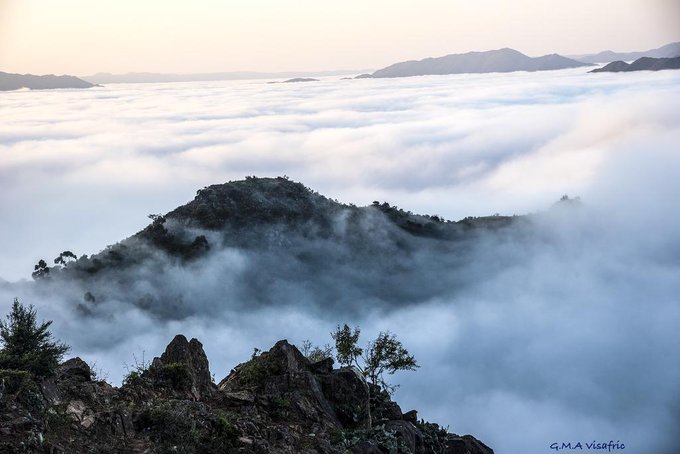
Assab is located, in the Southern Red Sea region. The journey is pretty exhausting and sleeping seems to be the only way, to escape the effect. But then, it’s unwise to miss interesting encounters with nature and so you fight with all your might to stay awake holding your camera. The weather gets harsher as you drive farther but you are completely taken by the unusual, yet fascinating, exhibition of the region’s rich endowments you see through the car’s window, especially for first timers from the highlands. The view of the beach follows you until your final destination on one side and on the other side, it seems as though the mountains are racing with your car. It’s quite exhilarating, to be a first hand witness of such a wonder.

As you set foot on the land, you would be rocked back and forth by the excitement of having the privilege to visit such a beautiful place and the warm air sends you words of comfort saying:
it won’t take long until it gets cold and you can then celebrate the soothing reception offered in the evening.
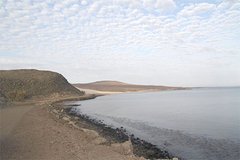
The fatigue from the long bumpy ride fades away, as you feel accepted by the gentle whisper and you head towards the beach after taking a bath.


The blue gold totally relieves your mind, from being obsessed with the hot weather and the scorching sun. The dignified motion of the tide giving birth to foams is a beautiful display of nature at its best and the palm trees give it a rather delightful atmosphere. It gets one wondering:
if it has this kind of effect on those who observe from far, how is it for its inhabitants who live in the limitless riches of its great being?
One completely goes oblivious of the world and travels to celebrate the essence of infinity, at the mysterious ends of the sea. Lost in the desire to live in the moment forever, you wish to build a shack right there and right then and live at the beach. Before you know it you find yourself swimming and soaked wet.

Assab looks its best in the evening, when its residents and visitors are all over the town to have fun. Most people choose to spend the evening at recreational centers, close to the sea. The refreshing air, the sound of the calm tide, the trees dancing to the gentle wind and the reflection of the moon on the sea are just a heavenly scenery in which one rejoices.

Another majestic encounter one should never miss, while visiting Assab is: the sunrise. It looks as if it’s making a grand entrance to a show with its piercing rays, right from the sea. This panorama testifies to the enormity of creation, and the soul rejoices in the look of this breathtaking view that looks like a work of art.

The main residents of the port city of Assab, are from the Afar ethnic group. Other ethnic groups Tigrinya, Tigre, the urban-hafa (descendants of the Rashaida that migrated towards the area long time ago) also live in the city.

The Afar mainly earn their living, by fishing and herding animals. They are very attached to their land and the sea and they thankfully receive what it serves. Rice and fried fish is almost their everyday food, and they like to eat together. They shop for the day, which is peculiar and uncommon in other regions and communities of Eritrea. I asked an old man, why they like it that way and he said,
Tomorrow is not ours to worry about but God’s; we merrily live for today.
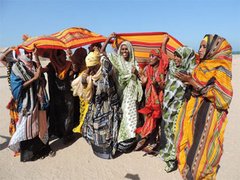
This is practically their motto and it has always shaped their life style.


Afar women are equally strong and dazzlingly beautiful. Most are moderate in height, slim, dark skinned, cheerful with captivating smiles. They are great dancers too. Their traditional dressing, jewelry and hair styles (braids) are so amazing, with a potential to be adopted as fashion in Eritrea and even abroad. The most common dress is called “deri’e”, a plain two-layered dress. It’s amazing, how a garment that big could look great on their slim bodies. I was surprised to see that globalization failed to make an impact on their attire, despite the great influence Arab countries have on the area.

A traditional liquor called Doma, which is extracted from palm trees is popular among the Afar. It is sweet, with a little kick of alcoholic taste. Abaeke, is also another traditional drink and is alcohol free. It’s served at weddings and on religious holidays (Eid). Dessert is a big part of the Afar meals, which they never skip. Their dessert incudes: dates and mukbasa (bread with banana or honey).

The wedding ceremonies are very festive. The Arar are very serious, about arranging the best servings at their weddings. People dance, the keke (it’s danced by lifting one leg at a time and the right hand with it). The bride sits with her groom the whole day and covers her face, so that no one could see her. They don’t go out but people visit them in the room they are in. Almost half of the wedding ceremonies’ expense, is covered by the groom. It is his way of showing his in-laws, that the bride is in good hands and that he can be trusted. It is common for the groom to live with his in-laws after the wedding, unless he can afford a house.

Apart from the long and tiring journey, every part of Assab is a pleasure to the eyes and to the heart. I was compelled to write about it, after I witnessed what Assab could offer.

Zmeselo
Senior Member+
Posts: 36907
Joined: 30 Jul 2010, 20:43

Re: Journey to Assab

Post by Zmeselo » 12 Feb 2020, 13:53


Zmeselo
Senior Member+
Posts: 36907
Joined: 30 Jul 2010, 20:43

Re: Journey to Assab

Post by Zmeselo » 12 Feb 2020, 13:57

Eritrea: Desert Locusts control operations still underway

Wednesday, 12 February 2020

Written by MoA


Control operations against Desert Locusts in Eritrea exceeded 34,500 hectares until February 6, 2020. According to Mr. Tedros Sium, Head of the Migratory Pests Control Unit of the Ministry of Agriculture, control operations are still underway in the Northern Red Sea Region of the country. Five control base stations namely; Marsa-Gulbub, Sheeb, Wekiro, Girat (Emahmime) and Foro are still functional in combating the locusts. Moreover, starting from the first week of February 2020, the desert locust infestation in Aytos, Ara’eta Sub-zone of the Southern Red Sea Region has developed in to an outbreak of hopper bands. Hence, the Ministry of Agriculture is preparing to deploy control operation teams to the infestation site.

Ecological conditions in the locust breeding areas are still favorable. This will obviously make the control operations more prolonged. In addition, a number of locust swarms are still coming from different directions of neighboring countries to the Northern as well as to the Southern Red-sea regions. Even though Eritrea has so far saved its crops and range lands with almost no or insignificant damage, more resources are needed to strengthen the control operations.


For there is still a probability of locust swarm coming from our neighboring countries and even across the Red sea, the Government of Eritrea is closely surveying and monitoring the potential infestation areas with its limited resources.

Ministry of Agriculture Newsletter, Issue No 20, February 2020

Zmeselo
Senior Member+
Posts: 36907
Joined: 30 Jul 2010, 20:43

Re: Journey to Assab

Post by Zmeselo » 12 Feb 2020, 14:00


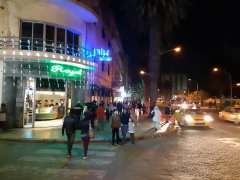
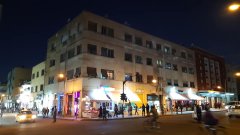
Asmara, by night!
(Wedi Gejeret : @Wedi_Alfaromaio)

Zmeselo
Senior Member+
Posts: 36907
Joined: 30 Jul 2010, 20:43

Re: Journey to Assab

Post by Zmeselo » 12 Feb 2020, 14:02


Last edited by Zmeselo on 12 Feb 2020, 15:02, edited 1 time in total.

Zmeselo
Senior Member+
Posts: 36907
Joined: 30 Jul 2010, 20:43

Re: Journey to Assab

Post by Zmeselo » 12 Feb 2020, 15:01

Ministry introduces hydroponic and aqua-ponic farming to farmers

Wednesday, 12 February 2020

Written by MoA


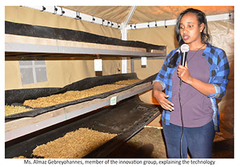
The Ministry of Agriculture is introducing hydroponic and aqua-ponic farming to farmers, to enhance animal fodder security; as well as to show them alternative ways of improving food and nutrition security. Hydroponic fodder production involves supplying cereal grain with moisture and nutrients, all outside of a growing medium such as soil, and then harvesting the resulting green shoots and root mat. This kind of production system, is used in a number of different livestock systems internationally. Eventhough the most commonly used cereal grain is barley, a range of cereals can be utilized for fodder production, including oats, wheat and maize.

Aqua-ponics is also the integration of hydroponics and aquaculture, which is gaining increased attention as a bio- integrated food production system in the world.

Eritrea, having a short period and unreliable rainy season, needs to increase its food and feed production by adopting modern technologies. Availability of fresh or dried grass and roughages as a whole for animal feed during dry seasons, has been a great challenge for farmers for years.

The Ministry of Agriculture, is constantly seeking ways and means of mitigating these challenges and obstacles. The adoption of hydroponic fodder production, as well as aquaponic farming is indeed prompted by these considerations and in order to enhance human and animal nutrition security.

As a preliminary measure, the Ministry has established, in December 2019, a demonstration area inside the premises of its main Headquarters. The demonstration site is run by a group of young experts, who have been doing well in various innovative programmes.

It is worth mentioning here that a number of studies have been conducted in the past years in various countries, to evaluate the effectiveness of hydroponic fodder. As a matter of fact, the hydroponic fodder produced in the Ministry was tested in chicken, rabbit, pigs and horses with a number of feed parameters. The results were found to be promising.

Furthermore, around 50 farmers from different zobas were made to visit the demonstration area. The farmers told this newsletter, that the new technology is easy to adopt and very important in alleviating animal forage problems they face. Most of them promised to practice it, in their farms.

Fodder- sheds produce a large quantity of green fodder; with just one kg of grain producing 6 - 10kg of fodder sprouts (as green feed). Hydroponic fodder can be used as a supplementary feed and during dry seasons, as a main feed for animals.


So far, the innovation group in the Ministry has managed to produce fodder from barley and maize. Some farmers in the pilot group assert, that they normally provide around 7 kgs of grain for just one cow. Observing 6-10 kg green fodder produced from 1kg of grain, has aroused their interest.

The Ministry of Agriculture has a plan to train extension workers from its regional offices, so that the technology cascades down to the village level.

Ministry of Agriculture Newsletter, Issue No 20, February 2020

Zmeselo
Senior Member+
Posts: 36907
Joined: 30 Jul 2010, 20:43

Re: Journey to Assab

Post by Zmeselo » 12 Feb 2020, 15:06

This Day in Eritrea's History.

On Feb. 11, 1967 the Ethiopian Army massacred, burnt and bayoneted the inhabitants of Adi Ibrahim and surrounding villages.

On Feb 12, 1967, 21 detainees, most of them teachers and government employees were summarily executed in Tessenei prison.

Between Feb & April 1967, the Ethiopian Army burned 62 villages, including Mogoraib, Zamla, Ad Ibrahim, Gerset Gurgur, Adi Bara, Asir, Fori & Ad Habab. The Army used artillery & aerial bombardment (using incendiaries). 402 civilians were killed & about 60,000 cattle & camels slaughtered.
(History of Eritrea: @Erihistory)

Zmeselo
Senior Member+
Posts: 36907
Joined: 30 Jul 2010, 20:43

Re: Journey to Assab

Post by Zmeselo » 12 Feb 2020, 15:13

Operation Fenkil: the final push towards independence

Written by Ruth Abraham

http://www.shabait.com/articles/q-a-a/3 ... ependence-

Articles - Q & A


Most of the time soldiers are armed with different kinds of lethal weapons when they go to the battlefield. But you must have heard of patriots armed only with a camera who have managed to survive dangerous wars such as the Eritrean Fenkil Operation. Mr. Fitsum Ghebrai is a veteran freedom fighter and war photojournalist. We have invited him to our page today to see the side story of the man and his camera in the battlefields of the Eritrean armed struggle, especially the intense Massawa’s bombardment, named Qbxet, by the Ethiopian regime in 1990.

Mr. Fitsum, thank you for your time. Please introduce yourself to our readers?

Sure, that is what I am here for. My name is Fitsum Ghebrai, I was born in Asmara and I joined the Eritrean People’s Liberation Front (EPLF) in 1977. To begin with, I was not a cameraman. I was just a student who lived off his family. Of course, I remember that I had interest in painting, but I didn’t have any knowledge about camera or shooting. After I joined EPLF, my first experience of war was in the battle of Semhar, in Massawa. Then after two years, I became a barefoot doctor for my platoon, which I think was the most dangerous and demanding work in any battle. Thereafter, with the growth of the EPLF, the need for documenting became essential. That is why some of us were taken from the combatant divisions to the liberated areas to take courses on photographing in 1980 and shooting motion pictures in 1984. After that, I remained a cameraman until 1991 and worked at the Ministry of information until 1995. I got married in 1992 and I am a father of three beautiful daughters. Now, I live in America and I am engaged in family business, here, in Eritrea.

What do you think was the reason for you to be selected for that task?

During the two years in the combatant army, I used to try painting using a red fruit plant, which we called HaQ and charcoal for black. In addition, I also arranged programs in the cultural development section of the EPLF. So, I think my interest in art could have been one of the factors that had me selected.

You have been in many wars as a cameraman and a combatant. So, personally, what do you think makes Qbxet and Fenkil operation different?

After I took the courses, I did not have a specific unit but was dispatched to every battle. Fenkil is unique not only for me but for every fighter. It is different for many reasons -- the immensity and breadth of the war, the aridness of the weather, the unbalanced number of Ethiopian and our military. As a cameraman, I have taken many pictures but never got an opportunity such as that to document a battle. It was very productive and because the pictures came out nice the closer you get to the scene; it was risky. We were always determined, but the determination we had in that time was unbelievable. Seeing how they threw themselves to the fire, I was wondering how a human being could accept death and fight so hard? So, Fenkil operation was a battle where the bravery of the Eritrean fighters was most powerful. The other side of what makes Fenkil different is the Ethiopian military’s approach. Usually, troops fight against troops, and it’s possible to have civilian causalities. But the bombardment of Massawa was the most inhumane act I have ever seen. The atrocity of the bombardment was so extreme that everyone thought, “This is it, it can’t get any worse.” Children’s and old men’s and women’s bodies cut into pieces, mothers trying to save their children and others waiting helplessly to die. But it was also the battle in which we saw freedom coming our way, crystal clear.


How did you feel witnessing all that? Ever cried?

No, never. None of us did. We were very broken, but just held it in. I sometimes wondered if we even were humans, how come no one drops a single tear? But no, the rage just burned our hearts and turned to strength.

Back to your camera, what efforts did you make to preserve the pictures you shot in battles?

It’s true that every time I and my camera were at risk. But we had an efficient system of transferring the captured photos to the liberated areas. Messengers who brought food and other messages or we carried our cassettes back to the safe areas.

Have you ever lost or destroyed your cassettes?

Technically, I destroyed some of the cassettes in 1984 when we tried to liberate the northern east of Sahel and failed. We were surrounded and our only choice was to cross the battlefield. You see your comrades getting shot beside you, but you just run, some others also committed suicide. That day, the cassettes I had were videos and photographs of important leaders in meetings; it would reveal all our secrets. That is why I just exposed the films and destroyed them.

You went to Massawa last week. How do you feel about Massawa now and when you were a cameraman?

The residents of Massawa are very kind and welcoming. When we captured Massawa, they shared everything with us. They fed and took care of us. I remember once, we had a comrade whose family lived in Massawa and so we went to visit. His mother was very delighted that she put together whatever she had and made food for us. In our culture, guests tend not to eat too much, in consideration of the host. But maybe it is because we had been away for so long, without second thought we ate all that was served and the woman was very happy and told us that she felt safe with us in Massawa. We could not protect her from bombs and bullets, but she still believed that we were her shield and no death would come near her. They had faith in their children and on my last visit I saw that they are as trusting and kind as ever. As a cameraman, for me Massawa is as attractive for a camera as it used to be, but in a different way. I shot war-torn and devastated Massawa in the past, but the beautiful Massawa now holds peace and beauty for a camera. As I went over all the places I have been before as a fighter, I got flashbacks and many other memories. The fact that we toured Massawa along with former fighters, like me, from our battalion also fascinated me most. Even though I was there in the same battle as my comrades, we all have our own side stories. While chatting, we were saying “I did this and this in this spot”. “Was it you?” “I was shooting from the other side?”… The conversation just went on.

You and your pictures are a living history for Eritrea. How do you feel about it?

I feel proud, but no more special than my other comrades. I believe my best accomplishment in life is being part of this history, being able to participate in and capture it, and especially being able to tell the story to my children. My daughter once asked me if I ever thought I would one day watch the footages I shot with my children. I was amazed, but she is right; I never thought I would, but I did and I feel very lucky and grateful to have survived almost fifteen years of fighting.

Do you think the history all of you freedom fighters and your camera hold are being properly transferred to the new generation?

I think we have not done enough in this case. Nowadays, the youth are oriented to audiovisual effects than lectures. That is why we should use all the possible means, even social networking sites, to reach the youth and share all that we have with them.

What about in America, what activities do you do regarding the history you have witnessed and been part of?

To your surprise, we are not as active there either. We do conduct exhibitions in festivals. For example, I once printed some of the pictures and magazines printed during the armed struggle and put them for exhibit and we also created a separate section for freedom fighters’ exhibit, where we talked about our memories and it’s an effective kind of therapy for us. There is always a new story from the same battle. It is an endless story; I only got to capture my side story, which is enough if they are told effectively. But one thing we all need to know is that in battles, firing at each other is not the only definition of war; living is also part of war. We fought to free our land and people, but at the same time we fought to survive.


Singing the National anthem #Fenkil4Development in Massawa

Finally, if you would like to say anything to our readers or to the youth …

If you refer back to the history of the African colonization era, the colonizers’ tool of destruction was portraying the local people’s culture as harmful, backward and malicious and then presenting their ways and culture as the authentic and safe one. That way, many people lost their original taste of values and culture and began to adopt the Western style and consume Western goods and be dependent with no strong hold of their identity. I would like to remind everyone that neglecting your history is threatening your values and, hence, your identity and survival. There is a saying that goes, “To capture a society, you need to capture their mind.” If we use this principle wisely, we can manage to survive the psychological war the youth faces and stick to our identity. Our generation did enough to bring independence, but if we can’t pass our history to the next generation, it’s all pointless. So, work hard, keep going and always remember our values and live up to them. There are former fighters everywhere. So, please, no matter how simple they seem while laughing and joking around their work place, they are an untold living history. Take care of anyone in need and be courageous; that is my living and deceased comrades’ reward. Thank you.

Thank you, Mr. Fitsum!

pastlast
Member
Posts: 2250
Joined: 19 May 2019, 18:02

Re: Journey to Assab

Post by pastlast » 12 Feb 2020, 23:02


simbe11
Member
Posts: 2088
Joined: 23 Feb 2013, 13:02
Location: Addis Ababa

Re: Journey to Assab

Post by simbe11 » 12 Feb 2020, 23:08

Zmeselo bizey mesel,

When was the last time you travelled to Eritrea?
Hmmmmmm in the 1990s. Right?
Don’t tell us what you didn’t see.
I travelled to Asab and there is nothing done yet. People are waiting to see things move. But nothing on the ground yet.

pastlast
Member
Posts: 2250
Joined: 19 May 2019, 18:02

Re: Journey to Assab

Post by pastlast » 12 Feb 2020, 23:20

simbe11 wrote:
12 Feb 2020, 23:08
Zmeselo bizey mesel,

When was the last time you travelled to Eritrea?
Hmmmmmm in the 1990s. Right?
Don’t tell us what you didn’t see.
I travelled to Asab and there is nothing done yet. People are waiting to see things move. But nothing on the ground yet.
Schitmeselo, is most likely like Amanuel Biedemariam, or Sirak Bahlbi...two Useless PFDJ Clowns in the West (US and Sweden) who are paid with money or food to promote the Dictatorship in Eritrea amongst Americans and Europeans. Schitmeselo is paid in Eritrean children he can molest at the Eritrean embassy when he travels within the West.


Post Reply